
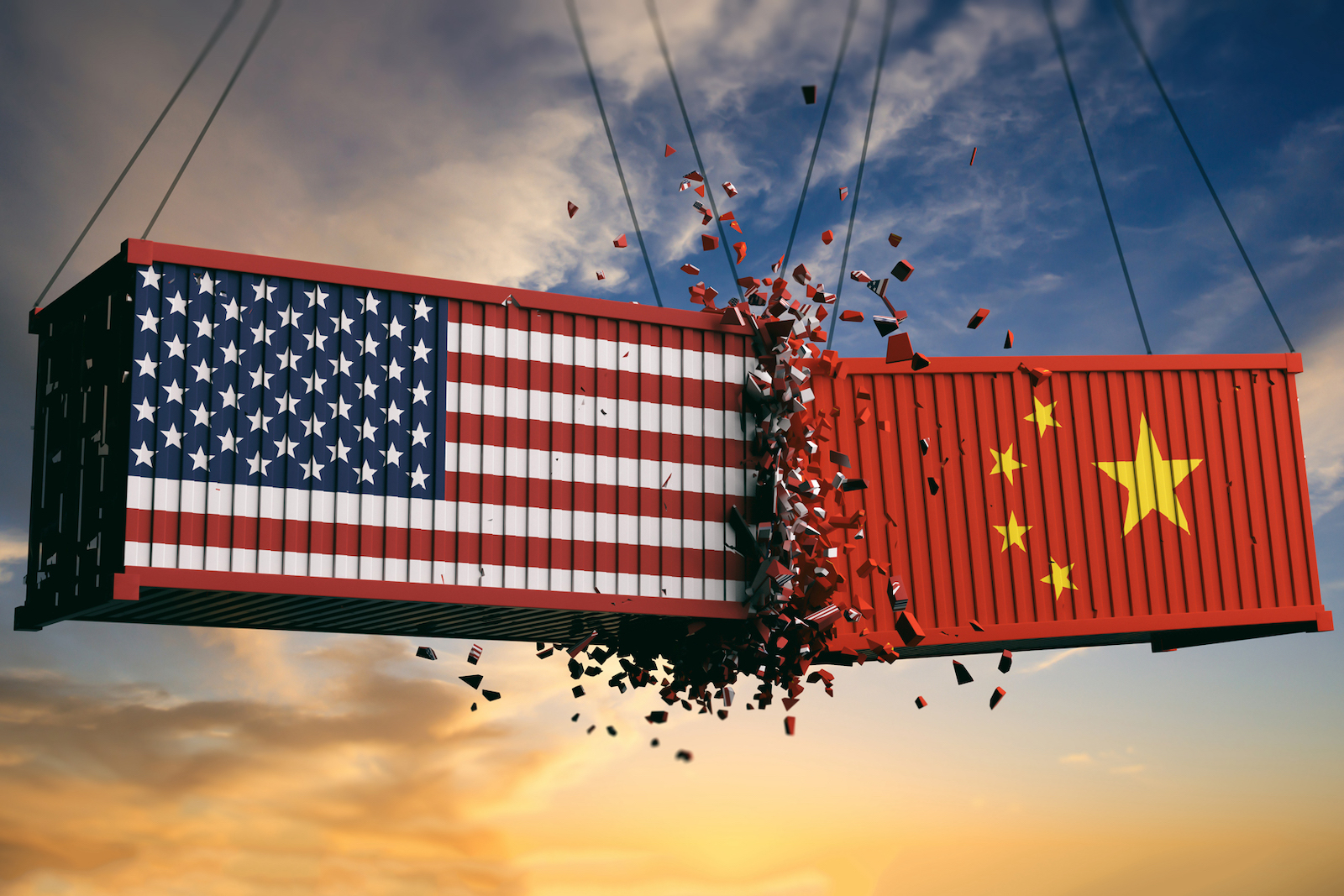
Tensions between the United States and China are rising quickly as both nations prepare for what could become a major trade war.
US President Donald Trump has announced plans to raise tariffs on Chinese imports to over 100 percent, starting Wednesday. In response, China has vowed not to give in and has already placed new trade barriers of its own. This tit-for-tat move is creating uncertainty around the world as experts try to predict how far this trade conflict will go.
The trade relationship between the US and China is one of the biggest in the world. Last year, goods exchanged between the two nations were worth around 585 billion dollars. However, the US imported far more from China than it exported, leading to a 295 billion dollar trade deficit. Despite this large gap, it’s still far below the one trillion-dollar figure that Trump has claimed. Over the years, US reliance on Chinese imports has fallen, but China remains a key trade partner.
Tariffs are already in place from both sides. Trump’s previous term in office saw the first round of major tariffs, which were later maintained and extended by President Joe Biden. These trade barriers have already reduced the amount of Chinese goods entering the US, but analysts say many of those goods are now coming through other countries like Vietnam, Thailand, Malaysia, and Cambodia. The new tariffs will target products routed through these countries, making a wide range of items more expensive for American buyers.
Both countries buy and sell different products to each other. The US mostly sends soybeans, oil, medicine, and aircraft parts to China. Meanwhile, China exports smartphones, laptops, batteries, toys, and communication equipment to the US. American companies like Apple are already feeling the effects. Apple’s stock price has dropped by 20 percent in the past month due to concerns about the rising costs of products made in China.
If the new tariffs take effect, the cost of goods in both countries is expected to rise sharply. American families may find electronics, phones, and household items more expensive, while Chinese consumers will likely see price increases for imported food, fuel, and medical products. Businesses in both nations will also face higher costs, which could lead to layoffs or reduced profits. This will likely slow down consumer spending and push up inflation.
Other effects are already being considered. China controls much of the global supply of important industrial metals like lithium and copper. These are used in products such as electric cars and military equipment. China may decide to make it harder for the US to get these materials, just as it did last year with gallium and germanium. At the same time, the US might tighten rules on high-tech exports to China, including advanced microchips that China still depends on from overseas.
If this trade war grows worse, it could affect the whole world. Other countries that trade with the US and China may face delays, price hikes, and economic strain. Factories and businesses in Asia, Europe, and Africa could see disruptions in supply chains, leading to lower production and higher prices globally. Investors are also worried, and stock markets are reacting with caution. With no sign of talks or peace between the two nations, the global economy could be headed for a turbulent time.