
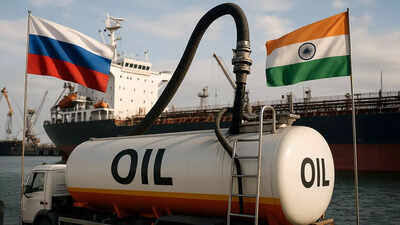
On August 18, 2025, White House trade adviser Peter Navarro published a piece in the Financial Times urging New Delhi to end its reliance on Russian crude.
He warned that the oil supply helps finance Moscow’s war in Ukraine and noted India’s role as a major hub—refining embargoed oil and exporting it as higher-value products, thereby channeling needed funds to Russia.
Navarro also expressed concern that India’s closer ties with both Russia and China make it risky for the U.S. to share advanced military technology.
He urged India to align its actions with its aspirations to be regarded as a true strategic partner.
As a response, President Trump has raised tariffs on Indian goods by another 25%, bringing the total to a staggering 50%, explicitly linking the increase to India’s ongoing oil trade with Russia.
India’s top refiner, Indian Oil Corp (IOC), confirmed that Russian crude accounted for around 24% of its refining operations in the June quarter—a slight rise from the 22% average seen in the 2024–25 period.
It stated that oil imports continue based on economic rationale, noting ongoing discounts of about $1.50 per barrel compared to the Dubai benchmark.
Indian officials argue that the country is being unfairly targeted, pointing out that the U.S. and EU still engage in substantial trade with Russia.
Meanwhile, energy markets responded immediately: oil prices ticked up, with Brent crude rising nearly 0.5% and U.S. crude similarly climbing.
Beyond energy, this conflict is contributing to growing strain in U.S.–India relations.
Earlier this month, Trump’s administration canceled a planned visit by trade negotiators to New Delhi—delaying prospects for a U.S.–India trade agreement and further increasing tensions.
As India navigates these pressures, its deepening ties with China—including pending diplomatic visits—and its prioritization of energy cost advantages suggest a broader strategy of strategic autonomy.