
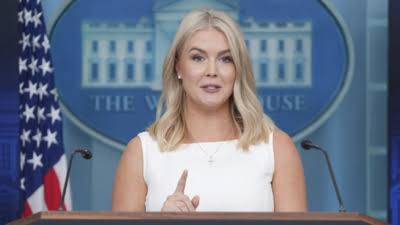
During a press conference on Tuesday, White House Press Secretary Karoline Leavitt stated that U.S. President Donald Trump has imposed steep tariffs on Indian imports to exert pressure on Russia and speed the end of the Ukraine war.
Trump has raised India’s tariff rate to 50 percent, adding a new 25 percent levy on top of an earlier 25 percent imposition, marking a strong shift in U.S. trade policy aimed at diminishing Russia’s global support network.
These sanctions are part of a broader U.S. strategy to target nations that continue to engage economically with Russia, particularly through energy transactions.
Trade advisor Peter Navarro criticized India’s continued purchase of Russian crude, calling it profiteering and underlining the move as enforced reciprocity.
The decision has deepened growing diplomatic friction in U.S.–India relations, sparked anew by diverging economic interests. India has vocally condemned the step as “selective and unfair,” stressing its sovereign prerogative to pursue energy security.
This action also aligns with a broader push by the U.S. Senate, where legislation is being considered to impose up to 500 percent tariffs on countries that continue purchasing Russian oil, signaling how deeply energy strategy now intersects with wartime diplomacy.