
By SUNDAY ABBA, Abuja
The Transmission Company of Nigeria (TCN) has dismissed a social media publication of Wednesday, April 2, 2026, by the Port Harcourt Electricity Distribution Company (PHEDC) that TCN’s wheeling capacity stands at 7,300MW, with an operational capacity of between 4,000MW and 5,000MW as not current and therefore incorrect.
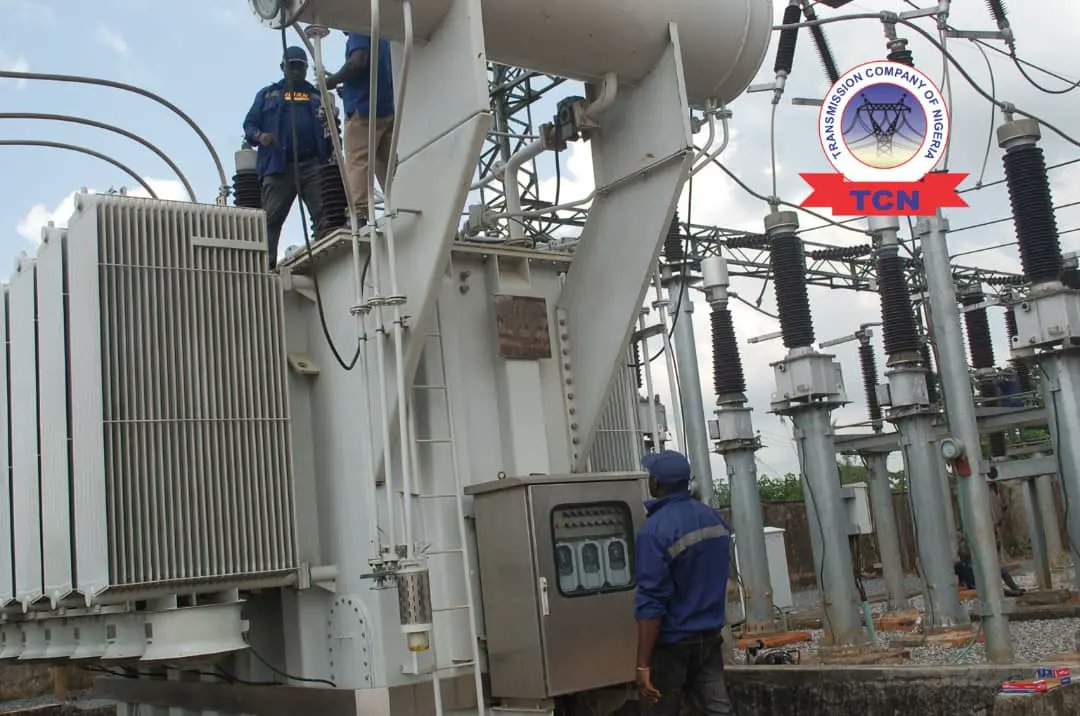
TCN in a statement signed by its general manger, Public Affairs, Ndidi Mbah, said categorically that through sustained, capital-intensive infrastructure investments, including transformer installations, substation construction, and transmission line reconductoring, among others, TCN has progressively expanded its wheeling capacity to a verified 8,700MW.
It also clarified that the 4,000 -5,000MW Operational capacity claim by the said distribution company (DisCo) in its publication fell below the milestones achieved by the transmission company in terms of peak generations in recent times.
TCN buttressed its position by clarifying the quantum of power generated, wheeled, and distributed (daily output on the national grid) at any particular time is a function of of what the DisCos nominate, what the GenCos declare they can generate, and what TCN declares it can wheel, failure to meet which attracts penalty any defaulting party.
“First, it’s important to note that the daily output on the national grid is a function of what the DisCos nominate, what the GenCos declare they can generate, and what TCN declares it can wheel. There is a penalty against any of these three players if they fail to meet what they declared.
“The question is: “Do the DisCos nominate beyond 4,000MW to 5,000MW?” This is a question for Port Harcourt DisCo to verify before making distracting publications. Every day–ahead, the Nigerian Independent System Operator (NISO) looks at what each player declares and tries to strike a balance, which is what is then generated, transmitted, and distributed.
“The fact is that 8,700MW is the simulated capacity by the Independent System Operator (ISO) when it was still part of TCN. Through sustained, capital-intensive infrastructure investments, including transformer installations, substation construction, and transmission line reconductoring, among others, TCN has progressively expanded its wheeling capacity to a verified 8,700MW.
“This figure is a matter of public record and reflects TCN’s ongoing commitment to strengthening Nigeria’s grid infrastructure. 7,300MW cited by PHEDC is outdated and no longer representative of TCN’s current capacity. In fact, with several completed and ongoing projects since the last simulation, a new simulation would certainly show increased capacity,” TCN explained.
On the milestones achieved in transmission so far, TCN said: “Recent, verifiable sector-wide records directly contradict the assertion that TCN can only transmit between 4,000MW and 5,000MW operationally. The Nigerian power sector has, in the first quarter of 2025 alone, achieved three successive peak generation milestones, all of which were successfully transmitted by TCN:
“March 4, 2025: Peak generation of 5,801.84MW at 49.69Hz frequ’ency, with a maximum daily energy dispatch of 128,370.75MWh — the highest peak generation and maximum daily energy ever attained in Nigeria’s power sector history. TCN successfully transmitted this entire output to Distribution Companies (DisCos) during peak hours.
“March 2, 2025: Peak generation of 5,713.60MW and maximum daily energy of 125,542.06MWh, efficiently transmitted by TCN to all distribution load centres.
“February 14, 2025: Peak generation of 5,543.20MW and maximum daily energy of 125,159.48MWh, also successfully wheeled to DisCos by TCN.
“These figures, independently documented and publicly verifiable, speak for themselves.”
In its clarion call for accuracy in power sector communication, TCN cautioned that Nigeria’s electricity value chain from gas supply through generation, transmission, and distribution to end users is deeply interconnected, and that each stakeholder has a responsibility to communicate accurately about their role alone. And that where they need to communicate about others, they must take steps to verify information so as not to misinform the public.
The company reiterated its commitment to transparency, collaboration, and the continued growth of Nigeria’s power sector.