
By Abasi Ita
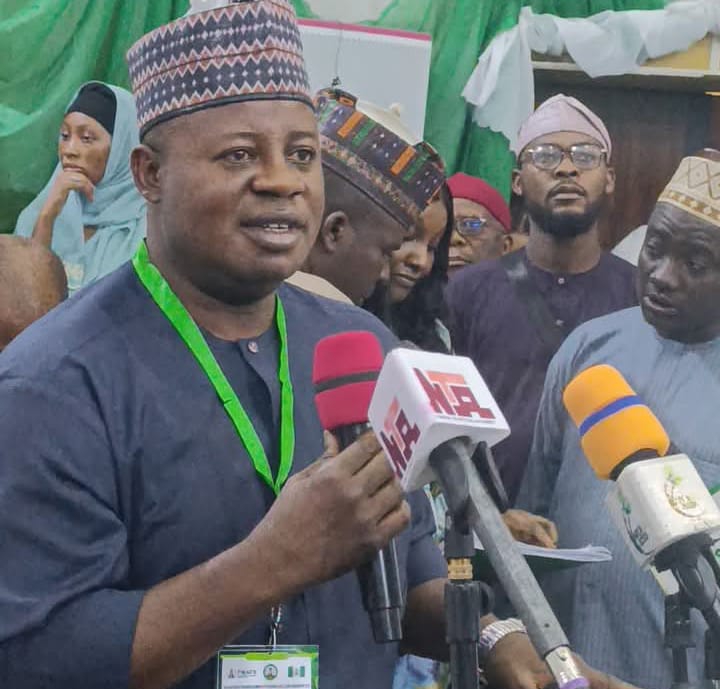
The Cross River State Chairman of the All Progressives Congress (APC), Alphonsus Eba Esq has reignited the national conversation on state creation by calling for the long-overdue recognition of Ogoja as Nigeria’s next state.
He emphasized that the clamour is not driven by political motives or elite scheming but stems from deep-seated concerns about equity, justice, and the urgent need to accelerate development in historically sidelined regions.
Speaking during a recent appearance on Arise News Night, Eba dismissed suggestions that state creation agitations are fuelled by a scramble for political advantage. He insisted that the quest for Ogoja State reflects a decades-long grievance born of marginalization and the absence of responsive governance.
“The call for Ogoja State is an innocent cry for justice,” he said. “It is about correcting a long-standing structural imbalance and ensuring that neglected communities finally have a voice and a platform for progress.”
He explained that Ogoja, a former colonial province that comprises nine local government areas in Northern Cross River, remains the only such province yet to be granted statehood, despite other colonial-era provinces such as Calabar, Benin, and Kano having long been transformed into full-fledged states, with some even split into two.
While acknowledging that state creation has historically formed part of Nigeria’s evolving federal structure, especially for minority and marginalized regions, Eba noted that the case of Ogoja is especially pressing. He emphasized that the neglect of Ogoja is not just political, it reflects a glaring historical imbalance that must be addressed if Nigeria is serious about inclusive development and fairness.
In making the case for Ogoja, Eba also stressed the practical developmental concerns that underline the agitation. He pointed out that within the current Cross River structure, it takes up to nine hours to travel across some parts of the state, making governance remote and ineffective for communities in the far north. According to him, distance and disconnection have made it difficult for many residents to feel the impact of state government interventions.
As part of his argument, the APC chairman underscored the viability of the proposed Ogoja State, highlighting its population strength and economic potential.
He revealed that Ogoja has over 2.7 million people and a landmass of around 13,000 square kilometers, making it larger than some existing states in Nigeria. He asserted that the region is more than capable of standing on its own economically.
He further elaborated on Ogoja’s resource base, describing it as an agrarian-rich region with solid mineral deposits and vast opportunities in tourism. He referenced world-class destinations such as the Obudu Mountain Resort, Agbokim Waterfalls, and the Yala Salt Lakes, stating that with the right investment and autonomy, the region could become a significant contributor to national GDP.
Drawing comparisons with thriving tourism and agricultural economies in places like Kakun in Mexico and rural Kenya, Eba stressed that Ogoja’s assets could support a self-sustaining sub-national economy. He also invoked the legacy of Dr. Michael Okpara, the late Premier of the Eastern Region, who once spearheaded investments in cocoa, oil palm, and rubber plantations in the area—commodities that are currently in high demand globally.
Despite arguments that focus should remain on fixing leadership rather than creating new states, Eba insisted that bringing governance closer to the people is not a distraction—it is a solution. He maintained that governance becomes meaningless when access, representation, and accountability are out of reach for large populations.
Extending the conversation to the national level, he highlighted the broader issue of geopolitical equity, especially the imbalance between Nigeria’s regions. He noted that the South-East remains stuck with just five states, while the North-West already has seven and continues to push for more. He questioned how national unity can be achieved when some zones remain underrepresented in both political and fiscal structures.
Eba also addressed concerns about the financial sustainability of proposed states like Ogoja. He argued that the real issue is not whether Nigeria can afford more states, but whether the country is willing to embrace true federalism and fiscal autonomy. According to him, the time has come for states to generate and manage their own resources, rather than depend solely on monthly allocations from the federal government.
“We can’t continue to depend on Abuja to survive,” he declared. “If given control over its own resources, Ogoja State can generate enough internally to sustain itself and contribute to national growth.”
He criticized the current revenue allocation formula as deeply unjust, noting that while states like Delta and Akwa Ibom receive upwards of ₦40 billion monthly due to oil revenue, Cross River, which has lost access to its oil-rich Bakassi Peninsula, receives barely ₦2 billion. He said this financial disparity severely limits the ability of any administration in the state to achieve meaningful development, making decentralization all the more urgent.
In conclusion, Eba reiterated that the call for Ogoja State is not about elite ambition or sectional politics, but about correcting a historical wrong and building a more just, equitable, and responsive Nigerian federation.
“This is a moral imperative,” he stated. “The people of Ogoja have waited long enough. It’s time for Nigeria to act.”