
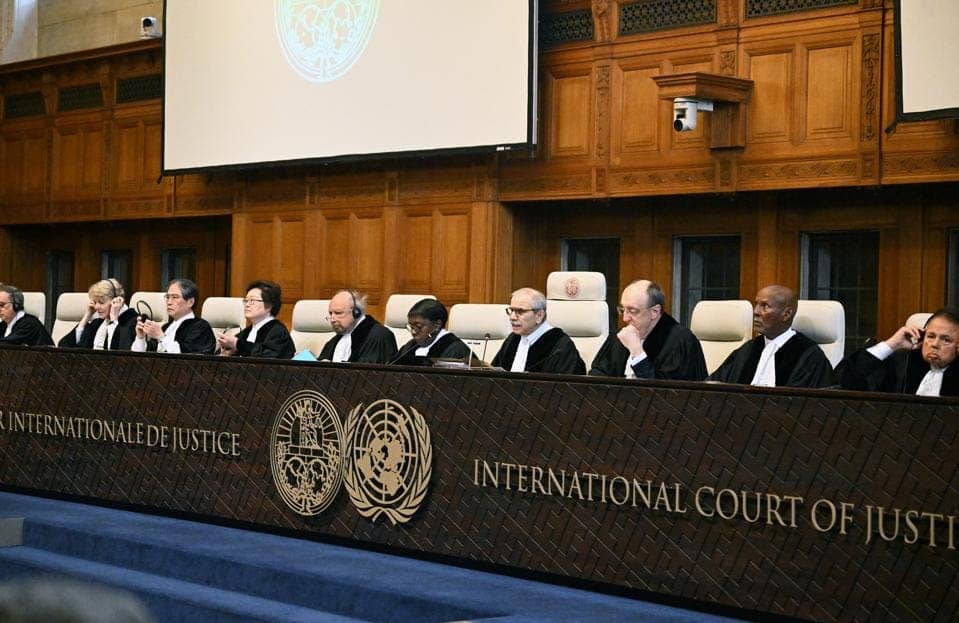
On July 23, 2025, the International Court of Justice in The Hague issued a sweeping opinion stating that wealthy nations must follow international treaties aimed at reducing greenhouse gas emissions.
The court warned that failure to meet these obligations could expose those countries to legal liability, potentially requiring them to compensate vulnerable nations suffering the effects of climate change.
In a unanimous decision, the 15 judges said that national efforts alone are not enough—it’s a global task that requires cooperation and legal compliance.
The ruling includes not only state emissions but also those produced by companies under national control, broadening the responsibility of governments.
The court linked its findings to existing climate agreements such as the Paris Agreement, the UN Framework Convention on Climate Change, and customary international law.
It stated that breaching these obligations could amount to a wrongful act under international law, triggering duties for states to stop harmful practices, prevent recurrence, and provide full reparation—such as restitution or compensation—if a clear connection between emissions and harm is shown.
Small island nations and other developing countries welcomed the opinion. Vanuatu led the initiative, backed by more than 130 UN member states, with strong support from youth groups and civil society.
Legal experts see this as a new legal tool for affected countries to seek compensation and push for stronger climate action globally.
While the opinion is not legally binding, it carries weight and is expected to influence future court rulings and government policies, especially regarding fossil fuel subsidies and national emission targets.
Some major emitters, including the United States under President Trump, have rejected the ruling’s implications, stating that their climate policies will continue to reflect national priorities.