
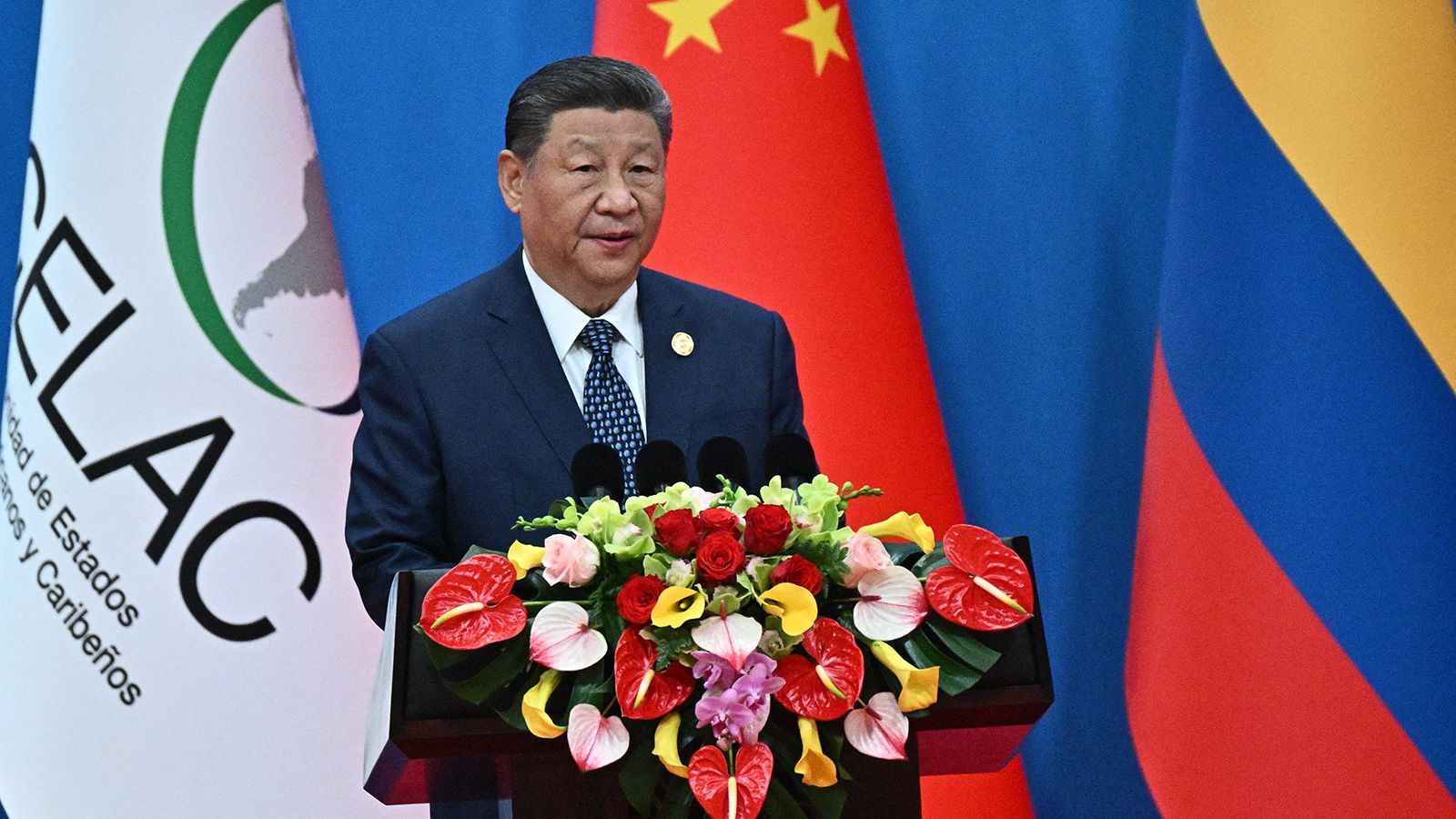
Chinese President Xi Jinping has spoken out against what he described as bullying and dominance in global affairs, just a day after China and the United States agreed to ease tariffs in their ongoing trade dispute.
His comments were made during a summit with leaders from Latin America and the Caribbean, held in Beijing as part of efforts to build stronger ties with the region.
The summit brought together heads of state from Brazil, Colombia, Chile, and other nations under the China-CELAC Forum, an initiative launched in 2014 to deepen cooperation between China and members of the Community of Latin American and Caribbean States (CELAC). As tensions with Washington remain high, Beijing is looking to build new partnerships and reduce its reliance on traditional trade channels dominated by the West.
Speaking at the forum, Xi described the current global landscape as one of fast-moving change, with nations needing cooperation more than ever. He stressed that no one wins in trade disputes and warned that attempts to dominate others or use pressure tactics would only lead to isolation. Though he didn’t mention the United States directly, the remarks were seen as a clear message following recent trade negotiations.
The latest agreement between Washington and Beijing includes a 90-day suspension of new tariffs, a development that has offered a temporary relief to businesses and investors around the world. Yet, despite the truce, both sides remain cautious. Xi’s speech reflected China’s broader diplomatic effort to position itself as a reliable partner, especially to nations wary of U.S. influence.
Latin America is central to this strategy. Trade between China and CELAC countries reached more than $500 billion last year, showing the scale of Beijing’s growing economic footprint in the region. China has become a top trading partner for several of these countries. For example, over 70% of Brazil’s soybean exports went to China last year.
Xi pledged more financial support to Latin America, announcing a package of 66 billion yuan — about $9.2 billion — in new credit lines. These loans will be issued in Chinese currency, part of a push to increase the use of the yuan in international trade and reduce dependence on the U.S. dollar.
He also called for unity among Global South nations, describing independence and fairness as shared goals. In his words, development is not a privilege but a right, and countries in the Global South should pursue their futures free from external interference.
As Beijing expands its global reach, it’s also using platforms like the China-CELAC Forum to promote its political and economic model, especially in regions where U.S. influence has traditionally been strong. With growing investments and trade deals, China is positioning itself as a long-term partner offering alternatives to countries facing economic and geopolitical pressures.
Xi’s latest speech shows that while Beijing may be easing tensions with Washington for now, it remains committed to building alliances elsewhere — and Latin America has become a key part of that strategy.