
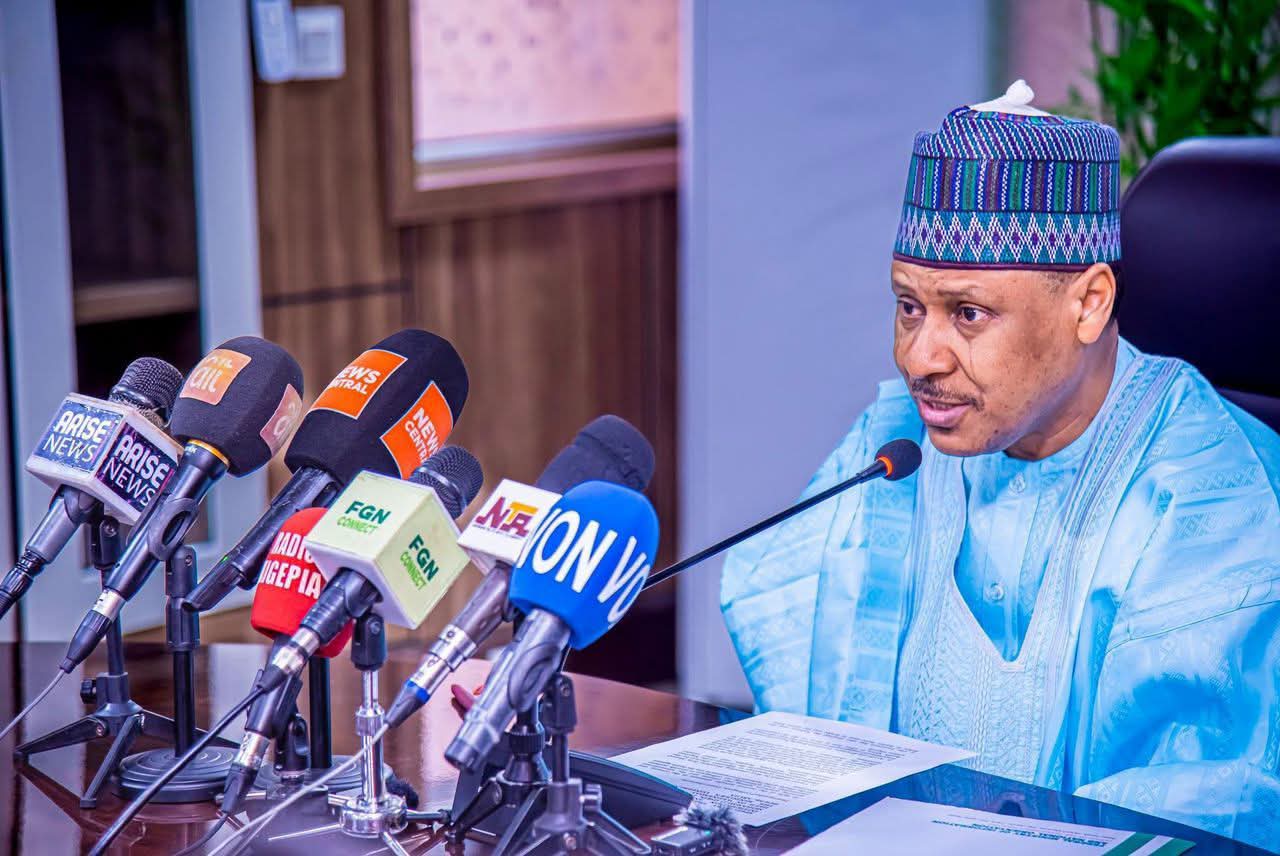
The Minister of Information and National Orientation, Mohammed Idris, says as the country approaches 2027 general elections, Nigerians will assess the Federal Government’s reforms of recent years by their impact on everyday life.
Mr Idris said this on Monday in Abuja at the North Central Stakeholders’ Development Summit, themed: “The Great Leap Forward: A 20-Year Economic, Infrastructural and Social Development Plan for the North Central Region.”
He said the economic direction of the administration was to stabilise the economy, improve infrastructure, increase electricity generation, boost food production and attract investment.
The minister said the government was also focused on expanding manufacturing, adding value to Nigerian resources and developing human capital to enable private enterprises to thrive across the country.
“As we approach 2027, Nigeria will understandably assess the reforms of recent years by their impact on everyday life,” Mr Idris said.
He said the removal of petroleum subsidy and other reforms introduced by President Bola Tinubu were necessary to move the country away from an economic model that consumed huge public resources without creating sufficient productive capacity.
According to him, the subsidy removal has created economic headroom for the Federal Government as well as state and local governments to execute development projects.
He said prior to the Tinubu administration, 27 of the 36 states, including the Federal Capital Territory, were unable to pay workers’ salaries.
Idris said the policy had provided governments with additional resources to pursue development and support the administration.
He said the convergence of the administration’s policies held enormous promise for the North Central region, particularly in agriculture, infrastructure, mining and human capital development.
According to him, highways connecting farms to markets, local processing of minerals and the development of hydroelectric resources will help create an integrated regional economy.
He said agricultural produce must feed processing plants while skilled young Nigerians must have access to productive employment to strengthen the region’s economy.
“These various regions have to come together. There must be something that connects them together so that the development that all of us so aspire can take hold,” Idris said.
The minister, however, stressed that none of the economic and infrastructural initiatives could be sustained without adequate security.
He said the Tinubu administration had strengthened the national security architecture through additional recruitment into the armed forces and the police.
Idris said the number of military divisions had also increased from eight to 12 as part of measures to strengthen national security.
He added that the administration had improved the salaries and wages of security personnel who worked day and night to protect Nigerians and their communities.
The minister said the measures were already producing results in different parts of the country, including the North Central region.
He said 308 abducted Nigerians were rescued in August in Kwara and Niger states through a coordinated intelligence-driven operation.
Idris said the operation involved the armed forces, the Department of State Services, the police and the National Counter-Terrorism Centre, among other security agencies.
He described the operation as the largest same-day rescue operation carried out by a security team, stressing the importance of intelligence and inter-agency cooperation.
The minister said the administration recognised that military and security operations alone could not guarantee lasting peace in the region.
He said security operations were therefore being complemented by early warning systems, community engagement and efforts to create productive economic opportunities for young people.
Idris said such measures were necessary to discourage young men and women from taking up arms against their fellow citizens.
He also urged stakeholders to support the ongoing efforts toward establishing state police, saying the central policing system had faced several challenges.
According to him, localising policing will enable communities to have greater access to security and improve responses to local security challenges.
Idris said the establishment of regional development commissions would help convert the economic advantages of the various regions into sustainable development beyond individual and political interests.
He said the Federal Government was putting important building blocks in place through the establishment of four additional regional development commissions.
The minister said the commissions were evidence of Tinubu’s vision to drive prosperity closer to the people of the various regions.
He cited major road projects in the North Central, including the Buruku overhead bridge and the Makurdi-Boko Road in Benue State.
He also mentioned the expansion of the Mararaba-Keffi corridor in Nasarawa State and the Akwanga-Keffi-Gombe-Biu-Maiduguri Superhighway.
Idris said the projects would strengthen connectivity among major towns and cities in the North Central and North Eastern parts of the country.
He added that the Nasarawa-Abuja Superhighway would create another strategic axis linking the North Central with southern Nigeria.
According to him, the road would facilitate the movement of agricultural produce, manufactured goods and people, thereby strengthening economic activities across regions.
Declaring the summit open, President Tinubu said the Federal Government would continue to provide political and financial support to the North Central Development Commission and other regional development commissions.
Tinubu, represented by the Secretary to the Government of the Federation (SGF), Sen. George Akume, said the SGF had been directed to ensure that all funds accruable to the commissions were released as and when due.
He said the regional development commissions should explore alternative sources of financing, including Public-Private Partnerships, donor funding and development financing.
He said the summit’s 20-year development plan was well conceived and should provide a consensus-based policy framework for transforming the North Central region.
The president said the region must harness its potential in agriculture, food production, agro-processing, solid minerals, industrial development, peace and security, stressing that the time had come to change its development trajectory.
Tinubu urged stakeholders to scrutinise the development plan and ensure that it reflected the aspirations of the people and aligned with the Renewed Hope Agenda.
He warned that the summit must lead to implementation rather than merely producing reports that would gather dust on shelves.