
By Abasi Ita
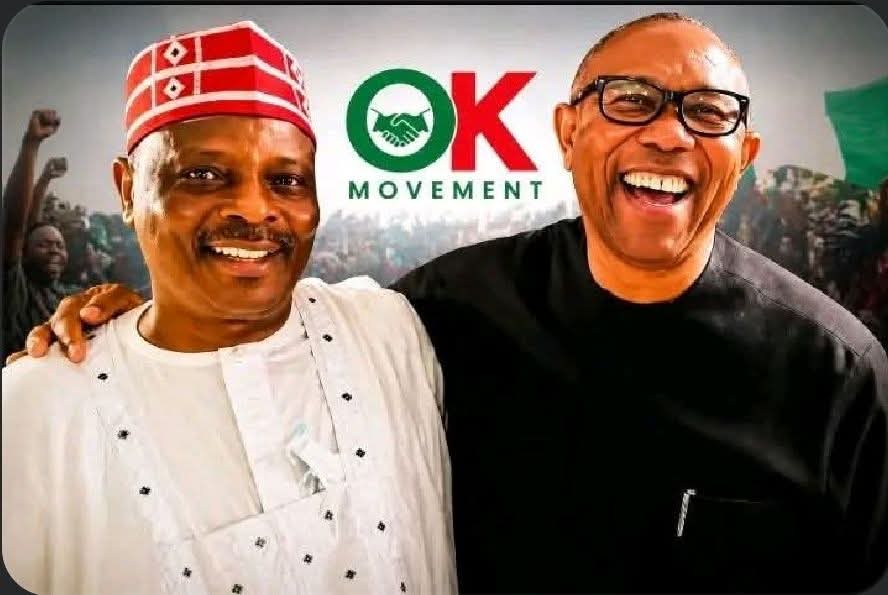
Fresh cracks have emerged within the African Democratic Congress following the exit of former presidential candidate Peter Obi and former Kano State governor Rabiu Musa Kwankwaso from the party.
The development is seen as a major setback for opposition coalition efforts ahead of the 2027 general elections.
Also leaving the ADC are prominent political figures including Victor Umeh, Kabir Marafa, Aishatu Dahiru Binani, Kabir Gaya, Ehiozuwa Johnson Agbonayinma, Victor Ogene and former IPAC chairman Peter Ameh.
Most of the defectors are reportedly aligning with the Nigeria Democratic Congress, a platform associated with former Bayelsa State governor Seriake Dickson.
Political observers say the exits have weakened what was once regarded as one of the strongest opposition coalition platforms formed in 2025.
The coalition had initially drawn support from influential politicians across the country, raising hopes of a united opposition front capable of challenging the ruling party in 2027.
However, disagreements over zoning of the presidential ticket, the mode of selecting candidates and internal power sharing reportedly triggered tensions within the alliance.
Supporters of Obi were said to have pushed for the presidential ticket to be zoned to the South, while some party leaders insisted that the most electable candidate should emerge regardless of region.
The disagreement reportedly created distrust among key stakeholders, particularly amid the influence of politicians aligned with former Vice President Atiku Abubakar.
Internal disputes within the party were further complicated by ongoing legal battles over the party’s leadership structure.
The leadership tussle involving factions linked to former Senate President David Mark and rival groups has continued in court, creating uncertainty over the party’s direction ahead of the elections.
The situation has also raised concerns over compliance with guidelines of the Independent National Electoral Commission, especially regarding submission of membership registers required for participation in the 2027 polls.
Speaking on the development during an interview on Arise Television, Victor Umeh confirmed his resignation from the ADC and announced his move to the NDC.
“I resigned from the ADC on May 1 and I am moving to the NDC,” he said.
Umeh explained that the coalition began with high expectations but gradually lost stability due to legal disputes and unresolved internal disagreements.
“When the coalition came together last year, Nigerians were hopeful that opposition leaders had finally united. But legal complications and internal disputes later weakened that confidence,” he stated.
He also accused some party members of deliberately destabilising the ADC through court actions.
Despite the defections, the ADC insisted that the party remains strong and united.
The party’s National Publicity Secretary, Bolaji Abdullahi, admitted that the departure of Obi and Kwankwaso was significant but maintained that it was not enough to destroy the party.
“These are major politicians, so naturally their exit will be felt, but it is not a mortal blow to the ADC,” he said.
Abdullahi dismissed claims that the party was overwhelmed by legal troubles, insisting that only a few court cases existed and describing them as insignificant.
He also argued that some of the defectors were not fully committed to building the party structure before leaving.
Political analysts believe the departure of Obi and Kwankwaso has reduced the coalition’s national spread, with Obi commanding strong urban and southern support while Kwankwaso retained influence across parts of northern Nigeria.
The latest development is expected to reshape opposition politics ahead of the 2027 elections as parties continue negotiations and realignments across the country.