
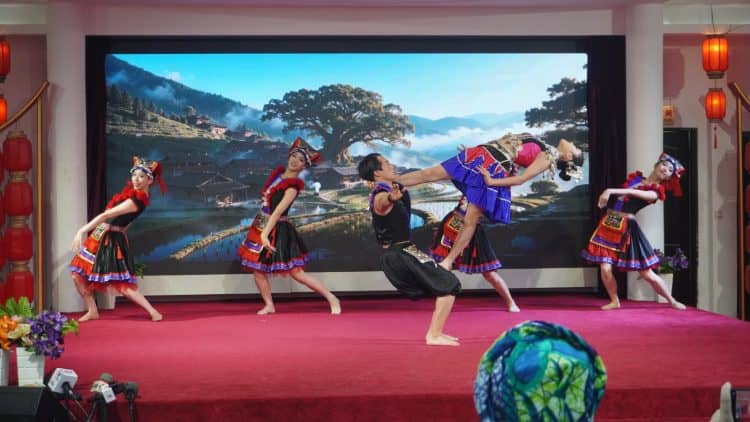
Nigeria and China have reaffirmed commitment to deepening cultural ties and people-to-people exchanges through culture, tourism and the creative economy at the “Share the Moon, Share the Moment, Meet in Africa: Hunan Culture and Tourism in Nigeria” event held in Abuja.
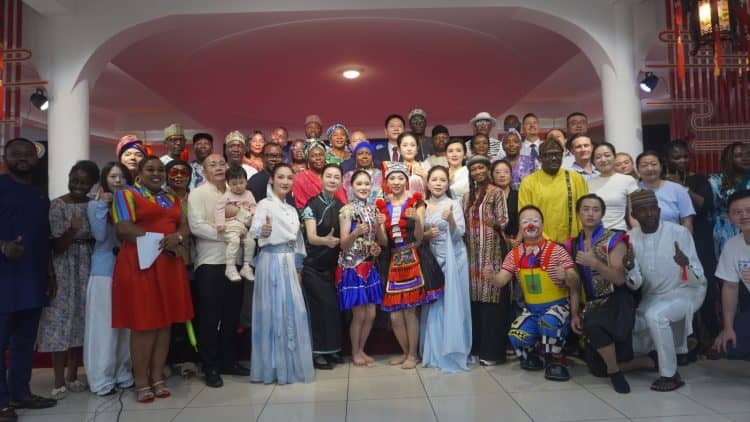
The event, organised ahead of China’s Mid-Autumn Festival, drew government officials, diplomats, artists and cultural stakeholders from both countries to celebrate growing friendship and cultural cooperation.
Speaking at the event, Director of the China Cultural Centre in Nigeria, Yang Jianxing, said the Hunan arts and culture delegation was in Nigeria not just to showcase Chinese culture but to build greater understanding and friendship.
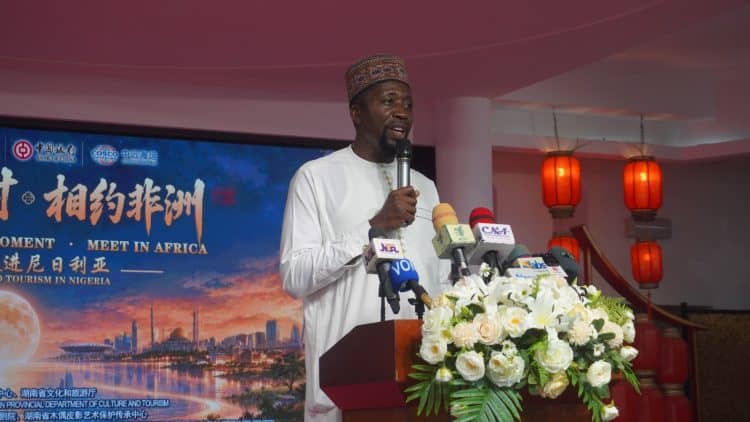
He noted that the Mid-Autumn Festival symbolises family reunion, harmony, peace and pursuit of a better life, values he said resonate deeply with Nigerian traditions.
“Cultural exchanges remain important for deepening mutual understanding between nations. Culture and art have the power to transcend borders and connect people across continents,” Yang said.
He highlighted Hunan Province’s rich cultural heritage, tourism potential and longstanding engagement with Africa, particularly through the China-Africa Economic and Trade Expo hosted in Changsha.
According to him, this year marks the 55th anniversary of Nigeria-China diplomatic relations and has been designated as the China-Africa Year of People-to-People Exchanges, making cultural cooperation even more significant.
Representing the Permanent Secretary of the Federal Ministry of Art, Culture, Tourism and Creative Economy, Abdulkarim Ozi, Special Assistant Musa Alhamdu said cultural diplomacy remains vital for strengthening international relations, promoting tourism and creating opportunities for creatives.
He said both countries have expanded cooperation in culture, agriculture, education, infrastructure and trade, stressing that cultural exchanges provide platforms for artists and audiences to collaborate and learn.
Alhamdu noted that Nigeria’s heritage in music, dance, festivals, visual arts, literature, film and creative industries offers strong foundation for sustainable cooperation with China.
“The moon that shines over China is the same moon that shines over Nigeria. It reminds us that although our history and culture may be different, we share a common humanity and a common world,” he said.
Also speaking, Permanent Secretary, Social Development Secretariat of the Federal Capital Territory Administration, FCTA, Olubunmi Olowookere, described culture as one of the most powerful bridges between peoples and nations.
“Cultural engagement enables people to understand each other through music, dance, food, fashion, storytelling and tourism long before they interact through policies or trade agreements,” Olowookere said.
She said Abuja as capital city serves as meeting point for diverse cultures and offers opportunities for collaboration with Hunan in cultural exchange, heritage preservation, tourism development, destination branding, creative industries and skills acquisition.
She called for long-term institutional partnerships between artists, museums, cultural centres, tourism professionals and creative entrepreneurs, stressing that exchanges should grow beyond one-off events into sustainable cooperation.
President of the Society of Nigerian Artists, Muhammad Suleiman, said culture is the soul of international partnerships, noting that while Nigeria and China have collaborated for decades in trade, infrastructure and education, cultural exchange is essential for deeper people-to-people connection.
He advocated recurring Nigeria-China cultural festivals, artistic collaborations, youth exchange programmes and joint creative projects, noting that Nigeria’s over 250 ethnic nationalities and China’s 56 ethnic groups both understand culture as source of identity and mutual respect.
The event featured performances by the Hunan cultural delegation alongside Nigerian presentations in music, dance and acrobatics to promote mutual appreciation of both countries’ heritage.