
By AARON MIKE ODEH
At defining moments in a nation’s history, leadership reveals itself not only through official power but through ideas that move government to action. Nigeria’s ongoing security reform—particularly the review of police withdrawal from VIPs and political office holders—has produced such a moment. Central to this shift is the role played by Hon. Clement Jimbo, whose intervention has helped redirect the national conversation from abrupt policy execution to capacity-driven reform.
Today, with the Federal Government approving the immediate recruitment of 50,000 new police officers, many observers believe Jimbo’s contribution goes beyond advocacy. It is increasingly seen as nation-building leadership worthy of presidential recognition.
A Debate That Demanded Depth
The policy to withdraw police officers attached to VIPs and political office holders was driven by public discontent over the perceived misuse of limited security resources. While the intent was understandable, Hon. Jimbo quickly identified the danger in a blanket withdrawal without prior expansion of police manpower.
His argument was clear: security reform must not weaken governance or expose public office holders—symbols and operators of state authority—to avoidable risks. In a fragile security environment, reform needed structure, sequencing, and strategy, not symbolism.
From Television Advocacy to Presidential Action
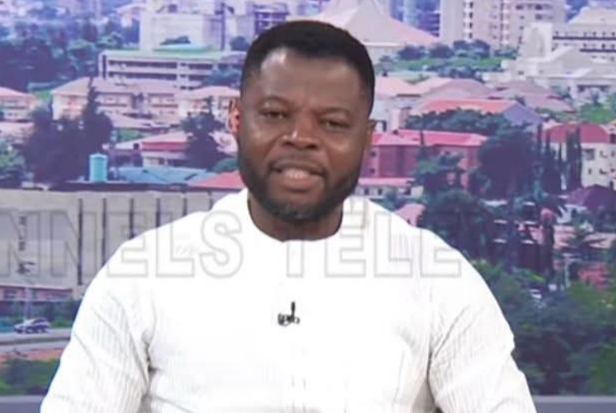
That clarity came to national prominence during Hon. Jimbo’s interview on Channels Television, where he advised the Federal Government to urgently recruit 15,000 additional police personnel. His reasoning was both practical and patriotic: you cannot redistribute what is already insufficient.
Soon after, the country witnessed a major policy response. President Bola Tinubu directed the Inspector-General of Police, Kayode Egbetokun, to commence the recruitment of 50,000 personnel into the Nigeria Police Force—more than triple the number Jimbo initially proposed.
The sequence of events sent a powerful signal: ideas, when well-articulated and rooted in public interest, can move the highest level of government.
Expanding Security Before Redistributing It
At the heart of Jimbo’s position is a philosophy now reflected in policy: capacity first, redistribution next. He has consistently argued that withdrawing officers from VIP duties should be phased, intelligence-led, and risk-based, not abrupt or politically emotive.
With 50,000 new recruits approved, the Federal Government now has the institutional breathing space to redeploy officers to communities without creating security vacuums around sensitive public offices.
Security as a Choice, Not a Privilege
Another notable element of Jimbo’s advocacy is his proposal for an additional, regulated layer of paid protective services, accessible to any Nigerian willing to pay for it. This model, he argued, would:
Reduce pressure on frontline policing.
End the perception that protection is reserved for the elite.
Professionalize personal security within a transparent legal framework.
The new recruitment drive significantly strengthens the feasibility of this idea, aligning public safety with fairness and choice.
A Case for Presidential Recognition
In many democracies, individuals whose ideas directly shape transformative policy are formally recognized. Increasingly, voices within policy and civil society circles argue that Hon. Clement Jimbo deserves a national—indeed, presidential—award for instigating the conversation that led to the immediate recruitment of 50,000 police officers.
Such recognition would not merely honor an individual; it would celebrate responsive governance and intellectual leadership, reinforcing the message that constructive engagement with government can yield concrete results.
Leadership Beyond the Moment
Beyond the immediate policy outcome, Jimbo’s role has sparked a broader conversation about leadership potential. His calm articulation of complex issues, emphasis on institutional strength, and ability to balance public sentiment with national interest have positioned him as a statesman in the making.
Many now see in him the capacity to serve at the highest executive levels—as a State Executive Governor and, potentially, as President in the foreseeable future. His approach to security reform reflects qualities essential for such offices: foresight, inclusiveness, and decisiveness anchored in data rather than emotion.
Strengthening Democracy Through Smart Reform
The alignment between Jimbo’s advocacy and presidential action has restored a measure of public confidence. It demonstrates that democracy works best when leaders listen, adapt, and act decisively.
As recruitment begins and reforms unfold, Nigeria has an opportunity to build a policing system that protects communities, safeguards institutions, and restores trust—a balance Hon. Jimbo has consistently championed.
In conclusion,Nigeria’s security reform journey has reached a pivotal juncture. With the approval of 50,000 new police recruits, the nation is better positioned to pursue equitable policing without risking institutional stability.
Hon. Clement Jimbo’s intervention stands as a reminder that ideas matter, leadership matters, and timing matters. His contribution not only shaped policy but also revealed a leadership depth deserving of national recognition.
If sustained and institutionalized, this approach could define a new era of governance—one where reform is intelligent, inclusive, and driven by leaders with the vision to serve Nigeria at the very highest level.
AARON MIKE ODEH
A Public Affairs Analyst, Media Consultant and Community Development Advocator,
Write from Post Army Housing Estate, Kurudu, Abuja