
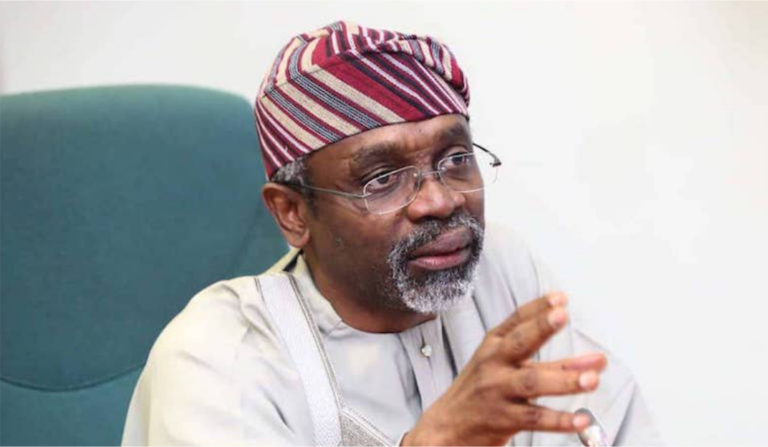
The Chief of Staff to the President, Femi Gbajabiamila, has called on political actors to preserve the principle of a rotational presidency between the north and the south to sustain Nigeria’s peace and unity.
He made the call on Saturday in Abuja at a national summit organised by the National Forum of Former Legislators (NFFL), with the theme “National Unity and Nation Building: Beyond 2031.”
Mr Gbajabiamila, a former speaker of the House of Representatives, said that the rotational arrangement was deliberately designed to manage differences, ease tensions, prevent needless conflict, and keep Nigeria steadily moving forward on the path of unity and progress.
“The principle of a rotational presidency between the north and south stands as one of the clearest expressions of principled compromise in the service of our national interest,” Mr Gbajabiamila stated.
He added, “It was not borne out of weakness, but of the wisdom of earlier generations of political leaders who understood that in a diverse nation such as ours, inclusion is the foundation of stability.”
The former legislator said that building unity across ethnic and tribal lines required deliberate effort, sustained dialogue, cross-regional alliances, and inclusive narratives that affirmed the dignity of all groups.
According to him, political leaders must consistently communicate that disagreement is not hostility, that diversity is not disloyalty, and that compromise in the national interest is not weakness but statesmanship.
The former lawmaker said those seeking to upend the rotational presidency principle in pursuit of narrow, short-term political ambitions must pause and reflect.
He stressed that no personal aspiration and transient political gain should be allowed to endanger the hard-won balance that sustains the country or to place individual desires above the enduring interests of Nigeria and the collective well-being of its people.
Mr Gbajabiamila identified the temptation to mobilise identity as a shortcut to power as a critical challenge facing Nigerian politics.
He said that ethnic and tribal affiliations, deeply rooted in history and culture, could easily be transformed into instruments of political exclusion.
The former speaker said that while such strategies might yield short-term gains, they could inflict long-term damage on national cohesion.
“When political competition is conducted in ways that amplify ethnic suspicion, tribal rivalry, or religious fear, it corrodes trust and weakens the foundations of the state,” he warned.
Mr Gbajabiamila said a prolonged internal division would have extended and devastating consequences for Nigeria’s well-being.
He said it would impair the ability to respond to external economic shocks, deepen existing social and security challenges, and leave Nigeria vulnerable in a world where weaker states are often compelled to accept unfavourable terms in trade, finance, and security.
According to him, disunity at this moment does not merely delay progress; it multiplies risk, magnifies vulnerability, and transmits insecurity across generations.
“Without unity, development plans falter, reforms lose momentum, and the promise of prosperity recedes further from reach,” he said.
Mr Gbajabiamila expressed President Bola Tinubu’s administration’s commitment to engaging Nigerians across all divides in a spirit of fairness, inclusion, and shared responsibility.
He said the administration was also committed to strengthening unity through equitable development and responsive governance.
“Let us commit to a politics that seeks to persuade rather than provoke, to unite rather than divide, and to elevate rather than diminish our common humanity,” he added.
(NAN)