
By SUNDAY ABBA, Abuja
The power generation companies (GenCos) in Nigeria has blamed lack of implementation of certain key components of the Power Purchase Agreements (PPAs).
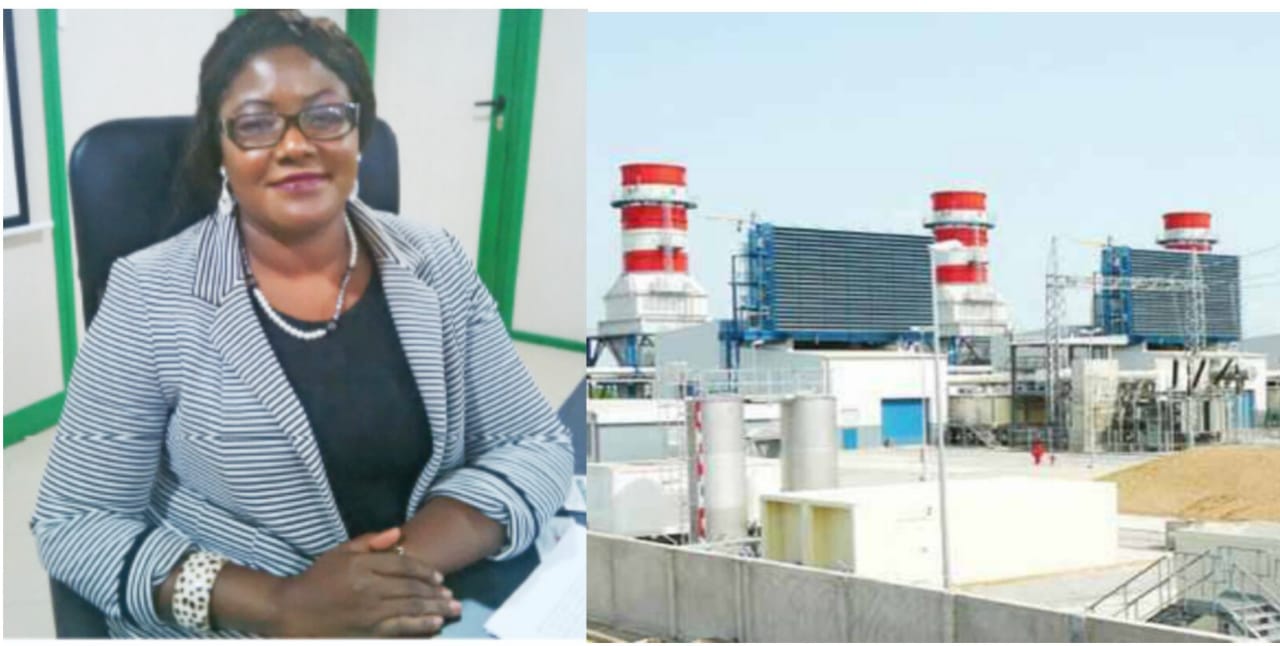
This was disclosed in a statement signed by Dr (Mrs) Joy Ogaji, Chief Executive Officer (CEO), Association of Power Generation Companies (APGC), aimed at clarifying perceived misconceptions regarding capacity payments, Power Purchase Agreements (PPAs), and the operational realities within the Nigerian Electricity Supply Industry (NESI).
According to the APGC, the umbrella body of the GenCos, attention has not been given to some of the major components of the PPAs, including payment for Available capacity, nominated capacity, metered energy, and deemed capacity in running the sector in Nigeria, thus discouraging investments that could lead to the recovery of an estimated 7,000 – 15,000 megawatts (MWs) grid installed capacity.
“Unfortunately, in Nigeria, the capacity made available has been removed from PPA consideration, disincentivising any desire to invest in recovering mechanically unavailable capacity, which can be estimated at 7,000MW of the 15,500-grid installed capacity.
“With the current commercial treatment of capacity made available, it should not be surprising that the quota attributable to the magnitude of faulty machines grows.
Unfortunately too, even the capacities nominated/declared by GenCos and
confirmed by System Operators (SO) are fraught with issues.
This practice also negates a key pillar of the Power Sector Recovery Programme,
approved by the Federal Executive Council (FEC), which seeks to establish a contractbased electricity market, as it restricts and undermines the robustness of the electricity market.
In addition, it can deflate the appetite or ability of investors to invest, with a detrimental long-term effect of decreasing power plant financing options,” it explained.
Describing NESI’s scenario as “an absurdity of sorts”, the GenCos said the fact that NBET claims to have only “five active PPAs” entails that most of the power plants do not have power purchase agreements (PPAs), adding that the situation is a scary one for any investor, as no guarantee of any sort is in place to ensure any form of
return on investments.
The power generators noted that, “the non-availability of the active PPAs has made it impossible to secure a gas supply agreement (GSA), as there is no backstop to support such agreements. The economics behind this denial or ostracism in the same market where the same gas, similar O&M costs, etc., exist is indescribable”.
According them, the lack of PPAs also means that the GenCos are exposed to the vagaries in the downstream in the electricity market in such a manner that when the transmission company is unable to wheel power efficiently, load rejection occurs, resulting in idle generation capacity, and when the DisCos are unable to distribute available power efficiently, load rejection also occurs.
A third exposure the GenCos face, according to the statement, occurs when the DisCos are unable to efficiently collect revenue for energy distributed and sold and hence cannot
make payments for energy taken, and the inability to enforce performance and efficiency towards optimal utilisation
will lead to all computations for a full return on investment to no avail.
They averred that sanctity of contracts might continue to remain a mirage in the power sector, except constraints on security of supply imposed by other critical stakeholders were addressed, stressing that the current market design, as envisaged, is not reflected adequately in the incentives and enforcement measures for performance.
The GenCos further lamented that despite the huge investment and the long term electricity investments require to recoup, they have not been receiving full payment for the electricity supplied by them, while the gas suppliers have also not been receiving full payments for gas supplied to the GenCos.
“This has accounted for the sub-optimal growth, inefficient operation, and the current dire situation of the GenCos, which has a huge negative impact on the entire power sector.
“The current state of the market, where a generation company is short-changed
for the benefit of other market participants negates the tenets of the Multi-Year Tariff Order (MYTO), a tariff model for incentive-based regulation that seeks to reward performance above certain benchmarks, reduce technical and non-technical/commercial losses and lead to cost recovery and improved
performance standards from all industry operators in the NESI.
“From the foregoing, the legacy GenCos and the NIPP plants in the market have
been operating without adequate sector risk protection, hence exposed to
various operational and regulatory risks.
“This singular reason has kept the sector at about 4,000 MW of average grid
generation, for many years, notwithstanding an installed capacity of 15,500MW.
“This is a clear anomaly in the market, and GenCos, for the record, have kept the records of such losses to date, as a regulatory risk,” said the DisCos.
The GenCos who affirmed that they have kept to the terms of all industry and privatisation agreements as well as the PPA since the takeover on the 1st of November, 2013, lamented that, in exchange, they had been rewarded with
liquidity challenges, default on contractual terms, regulatory risks, and
increased market volatility, lackluster performance of agencies and
participants, leading to disregard for the sanctity of contracts.
“The foregoing goes to buttress the fact that GenCos’ outstanding amount,
which is over ₦6.2 trillion, does not represent all their entitlement,
contractually,” they said, noting that the debt has continued to accumulate despite incurring high costs for gas supply, plant maintenance,
foreign exchange exposure, and financing obligations.
“This persistent nonpayment has rendered most GenCos technically insolvent and severely
constrained their ability to invest in capacity maintenance and expansion.
“In summary, GenCos are not beneficiaries of the current subsidy regime but are, in fact, its biggest victims. GenCos are only requesting their receivables, which have accumulated over the years, as can be verified from the MYTO and NBET documents for power generated and consumed, but only 35% is paid, leaving a huge contagion that is not cash-backed since 2015 to date,” the statement concluded.