
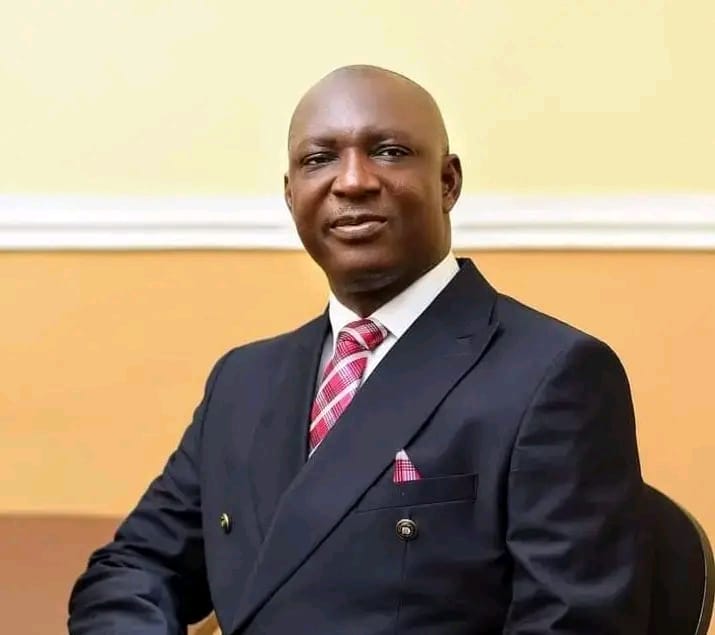
By Achile Danjuma
Christian leaders across the 19 Northern states and the Federal Capital Territory (FCT) have formally adopted a new identity, unveiling the “Forum of Northern Christians, also known as the Northern Christian Association,” in a move aimed at clarifying their mandate and strengthening their regional voice.
The decision followed days of deliberation in Kaduna during a well-attended stakeholders’ meeting of chairmen of the Christian Association of Nigeria (CAN) from the 19 Northern states and the FCT, alongside their secretaries and representatives of youth and women wings.
The meeting, held Wednesday and Thursday, coincided with the first anniversary of the Northern Chairman, Rev. Dr. John Joseph Hayab.
The body was previously referred to as “Northern CAN,” a description leaders said often created misunderstandings regarding its relationship with the national leadership of CAN.
Addressing journalists after the meeting, Rev. Hayab clarified that the change does not signify a breakaway from the national body but rather a return to historical roots.
He explained that the association traces its origin to 1964 in Kaduna when it operated as the Northern Christian Association before evolving into the national Christian umbrella body in 1976.
According to him, the adoption of the old name is intended to restore that original identity while maintaining full allegiance to CAN under its current President, Bishop Daniel Okoh.
“We are CAN. We are Christians and we remain members of CAN,” Hayab said. “But when addressing issues affecting Christians in Northern Nigeria, we believe we should have a distinct and clear identity. There is no quarrel with the national body. Any contrary impression is a misunderstanding.”
He added that the deliberate exclusion of the word “Nigeria” from the revived name was to avoid confusion with the national structure and demonstrate respect for the parent body.
He disclosed that the Forum has now been duly registered and incorporated as the Forum of Northern Christians and the FCT, formerly known as Northern CAN.
Hayab said the association would focus on challenges confronting Christians in the region, including concerns over religious freedom, access to education, shortages of Christian Religious Knowledge teachers in schools, and what he described as limited admission opportunities for Christian children in certain parts of the North.
“These are serious issues that demand focused attention,” he said. “Our priority is to ensure our people are treated as equal citizens, respected, and given the opportunity to contribute meaningfully to nation-building, especially in Northern Nigeria.”
Providing historical context, the first General Secretary of Northern CAN, Engr. Samuel Salifu, recalled that the Northern Christian Association was founded in 1964 in Kaduna and later transformed into the Christian Association of Nigeria in 1976 when Christian leaders nationwide agreed to operate under one umbrella.
He noted that the formal registration process was completed during the administration of former military leader Olusegun Obasanjo, when the then Interior Minister, Shehu Shagari, formalised it.
Salifu explained that the recent name clarification was prompted by persistent misconceptions that the regional body was functioning in opposition to the national CAN.
“There was never a Northern CAN as a separate entity from CAN,” he said. “There were Christians in the North organising themselves. To avoid confusion and unnecessary suspicion, the name has now been properly registered. We are together in CAN as one body.”
He stressed that the association’s core values remain fairness, equal treatment and the protection of constitutional rights for Christians in the region.
Also speaking, elder cleric Rev. Emmanuel Dziggau said the 1964 formation of the Northern Christian Association was born out of what he described as a struggle for survival by Christians in the region.
“We had to organise and fight for ourselves to survive,” he said, urging the present leadership to remain steadfast in pursuing justice and equity.
In a virtual address, elder statesman Prof. Yusuf Turaki lamented the prevailing insecurity across Northern Nigeria, stating that many Christian communities have suffered kidnappings, displacement and destruction of livelihoods.
He urged the Forum to continue advocating lawful and constitutional means of protecting vulnerable communities.
At the end of the meeting, stakeholders passed resolutions reaffirming their loyalty to the national CAN leadership and pledging continued collaboration with the central body while maintaining a clearly defined regional structure.