
By Achile Danjuma
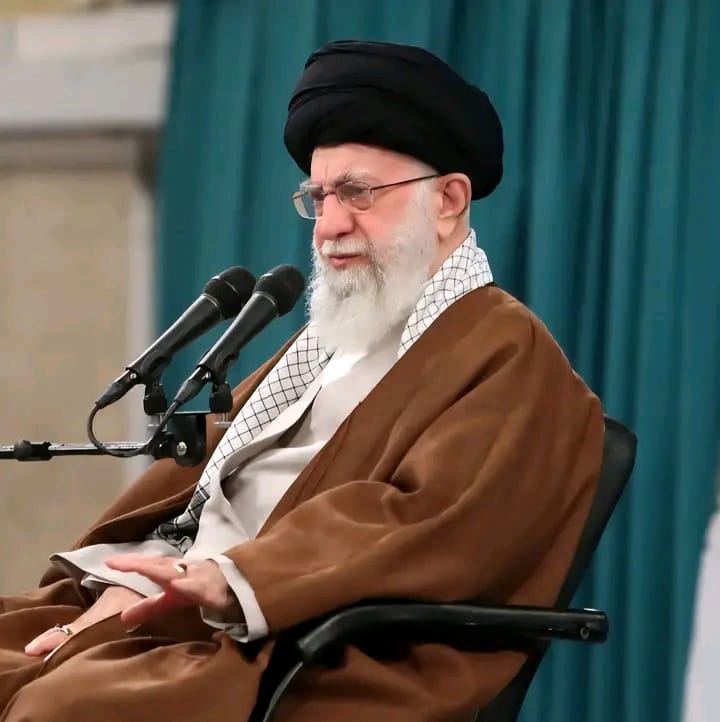
Iran’s official state media outlets confirmed on Sunday the death of the country’s Supreme Leader, Ayatollah Ali Khamenei, plunging the Islamic Republic into a period of national mourning and triggering a critical succession process.
The announcement was first carried by the state broadcaster, IRIB, which declared that “the Supreme Leader of Iran has reached martyrdom.” The state-affiliated Mehr News Agency echoed the confirmation, eulogizing Khamenei as “this great scholar and mujahid who sacrificed his life to lift Iran… and is now in the grand presence of martyrs above.”
In the wake of the announcement, the Iranian government declared 40 days of national mourning, a traditional period of profound religious observance.
The announcement follows claims from officials in the United States and Israel, who allege that Khamenei was killed during a series of coordinated joint military strikes on targets within Iran. There has been no independent verification of these claims, and the precise circumstances surrounding the Supreme Leader’s death are currently unclear.
Khamenei, who was 85, had held the position of Supreme Leader since 1989, succeeding the founder of the Islamic Republic, Ayatollah Ruhollah Khomeini. His death marks a seismic political event for Iran and the wider Middle East, creating a power vacuum at the heart of the regime.
According to the Iranian constitution, the Assembly of Experts—a body of 88 clerics elected to choose and supervise the leader—is expected to convene urgently to select a successor. In the interim, it is anticipated that a council comprising the president, the head of the judiciary, and a member of the Guardian Council will temporarily assume the leader’s duties.
The international community is closely monitoring the situation, as Khamenei’s death could have profound implications for Iran’s domestic stability, its nuclear program, and its network of proxy forces across the region.
More Details Shortly…