
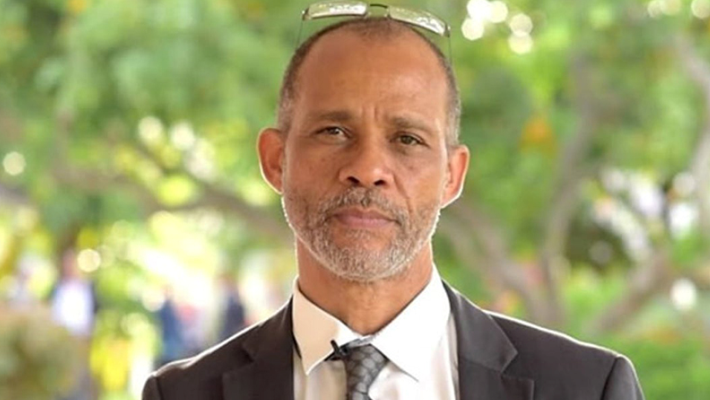
The Lagos State commissioner for health, Akin Abayomi, says the ministry will fully digitalise the public health sector within the next six to nine months.
Mr Abayomi made this known during the launch of the Data Science and Medical Image Analysis Training for Improved Healthcare Delivery in Nigeria (DATICAN) and the High-Performance Computing Facility.
The launch, held at the Lagos State University Teaching Hospital, was cheered by notable professors and dignitaries.
He said the Lagos State government had commenced the smart health information platform, an initiative aimed at fully digitalising the state’s public healthcare system.
He said the project covered general hospitals, teaching hospitals, and more than 300 primary healthcare facilities in the state.
“Lagos State has commenced a project called the SHIP.
“This is an initiative to completely digitalise the public health space in the first instance, which is all our general hospitals, our teaching hospitals, and our 300 primary healthcare facilities.
“We have been at it for almost 18 months. We have gotten 50 per cent of the way, and in the next six to nine months, the entire public health space is going to be digitalised,” he said.
Mr Abayomi said initiatives like DATICAN could complement the state’s digital health programme by supplying trained personnel and providing data resources for research and policy development.
He noted that data governance remained critical, particularly because citizens were most concerned about the security of their financial and health information.
According to him, Lagos State is guided by national, continental, and global regulatory frameworks in managing health data to ensure privacy, security, and public trust.
“The data that belongs to the people must be safe in the custodianship of the government.
“While we use it to drive innovation and economic development, we must also guarantee the privacy and security of citizens,” he said.
The programme director of DATICAN, Benjamin Aribisala, during his address, said the initiative was aimed at strengthening healthcare delivery and was established to address gaps in data-driven medical research in Nigeria.
Mr Aribisala said DATICAN, one of its kind, was designed to build capacity in data science and foster collaboration between medical professionals and computer scientists.
“Data science has become central to decision-making in modern society, including in the health sector.
“Data science has the capacity to influence everything we do because it helps generate insights from data.
“Anywhere you see data, that is where data science can be applied,” he said.
He said the health sector requires strong data systems to improve service delivery and support the development of artificial intelligence tools.
He, however, noted that the adoption of data science technologies in Nigeria and Africa remained uneven compared to developed countries.
According to him, one major challenge is the shortage of skilled manpower capable of applying data science in the medical domain.
“To apply data science technology in medicine, you need medical professionals who are interested in technology, artificial intelligence, and data science.
“Also, computer scientists who are interested in medical use cases. That collaboration is still limited,” he said.
He added that another challenge was the lack of multidisciplinary research collaboration, noting that professionals in medicine and computing often worked separately rather than jointly.
Mr Aribisala also identified limited access to relevant data as a major constraint, particularly the absence of a national repository of medical images of Nigerians living in the country.
He said DATICAN would address these challenges by building capacity in data science and medical image analysis to generate insights that could improve healthcare delivery.
He said the initiative had also developed a medical data repository, which would be demonstrated during the event.
He said the programme included outreach efforts to secondary school students and undergraduates to promote early interest in technology and data science.
He added that the project was implemented through collaboration involving four partner institutions, including the University of Chicago in the United States and Lagos State University.
Also speaking, the minister of education, Tunji Alausa, said the initiative represented a major step towards strengthening Nigeria’s research ecosystem and promoting digital innovation in healthcare.
The minister was represented by David Atuwo, a technology professional.
He congratulated the leadership and partners behind the initiative, particularly Fumilayo Olopade, chairman, steering committee, DATICAN, and Mr Aribisala.
The minister also commended the collaborating partners, describing it as a model of global and local partnerships needed to accelerate innovation in Nigeria.
He said the launch highlights the growing intersection of medicine, data science, and advanced computing, fields that were rapidly transforming healthcare globally.
The minister said the newly launched Medical Image Repository would address this gap by providing thousands of curated medical images for research and development.
“As the first repository of its kind in Nigeria, it will enable researchers to develop AI-powered diagnostic tools tailored to Nigerian and African populations,” he said.
He said the development aligned with the Renewed Hope Agenda of President Bola Tinubu, which emphasised human capital development, digital innovation, and strengthening the country’s research capacity.
The minister also commended visiting scholars from the University of Chicago for providing training for Nigerian professionals.
(NAN)