
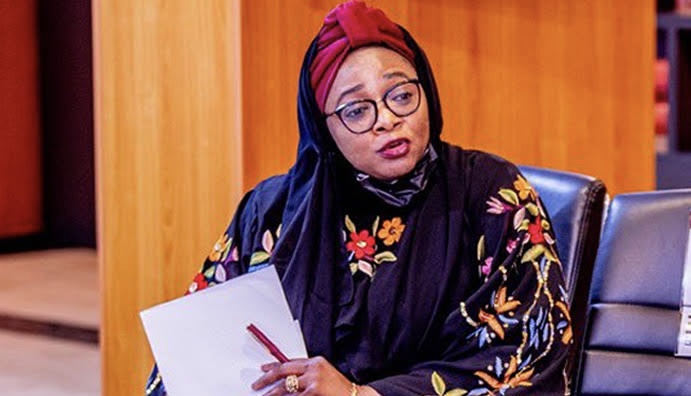
The federal government said it is strengthening the country’s community-based care and support services, including assistance for families and carers, in response to the rising cases of autism spectrum disorder (ASD).
Imaan Sulaiman-Ibrahim, Minister of Women Affairs and Social Development, disclosed this in Abuja on Thursday, marking the 2026 World Autism Awareness Day.
Ms Sulaiman-Ibrahim said the move aligns with efforts to address autism as a growing global public health and social development concern, noting that available estimates indicate that around one in every 100 children is on the autism spectrum.
According to the minister, although Nigeria faces data limitations, emerging national and regional assessments indicate a rising prevalence, with thousands of families directly affected.
She noted, however, that many cases remain undiagnosed or are diagnosed late due to limited awareness, stigma, and gaps in access to specialised services.
Ms Sulaiman-Ibrahim emphasised that autism extends beyond individuals to families and society, adding that over 70 per cent of caregiving for children and persons with developmental conditions is provided by women and girls, often unpaid and unrecognised.
“This places autism within the broader framework of the care economy, where the burden of care, if not properly supported, can reinforce gender inequality, reduce women’s participation in the labour market, and limit household economic stability,” she said.
The minister said it has become imperative to prioritise autism in national development plans, particularly to strengthen Nigeria’s care systems.
She added that the ministry, in alignment with the Renewed Hope Agenda of President Bola Tinubu and the 2026 Presidential Declaration as the Year of Families and Social Development, is advancing a structured and inclusive approach under the Nine-Pillar Renewed Hope Social Impact Intervention (RHSII-774).
Discover more
Politics
Newspapers
She noted that investing in the care economy is both a social obligation and an economic necessity, as supporting carers would improve productivity, enhance family well-being, and promote inclusive growth.
“Investing in the care economy is not only a social obligation but also an economic imperative.
“By supporting carers through social protection, access to services, skills development, and respite care, we unlock productivity, improve family well-being, and promote inclusive growth,” she said.
Ms Sulaiman-Ibrahim listed key priorities of the ministry, including the development and promotion of the Revised National Child Policy, the expansion of community-based care and support services, and advocacy for increased public investment in the care economy.
Other priorities, she said, include developing national nutrition guidelines, establishing a dedicated Department of Nutrition, and promoting nutrient-dense, locally sourced food blends such as Tom Brown.
She added that plans are underway to establish Tom Brown Centres as community hubs for food distribution and nutrition education.
The minister called on stakeholders, including government institutions, civil society, the private sector, and development partners, to collaborate in building a responsive and inclusive system for persons with autism and their carers.
She stressed the need to reduce stigma, expand access to services, and invest in care infrastructure as national priorities.
“As we mark this important day, I extend my deepest solidarity to all individuals living with autism and their families. Your resilience continues to inspire national action, and your rights remain central to our policy commitments,” she said.
The minister reiterated the federal government’s commitment to building a society where every life is valued, care is recognised and supported, and inclusion is institutionalised.
(NAN)