
By Farouk Ozigi Onimisi
(The White Orator)
Dear Accountant General,
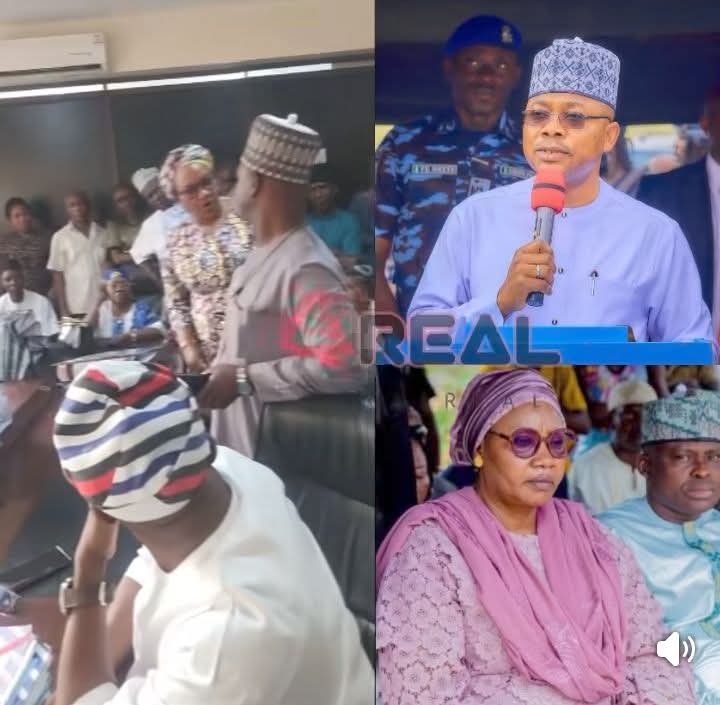
I write with profound respect, a measured sense of civic duty, and an unwavering commitment to the ideals of fairness, accountability, and institutional integrity in our dear Kogi State under the administration of His Excellency, Gov. Usman Ahmed Ododo. Recent developments that have animated public discourse—particularly the video circulated by one Facebook handler, Ramat Molo Aliyu and watched on one Ebira 4 Real Facebook page—have elicited widespread concern and necessitate a response that is thoughtful, dispassionate, and anchored in the principles of good governance.
At the centre of this controversy lies a leaked audio attributed to a Director within the state’s Ministry for Youths and Sports. It is important, in the spirit of intellectual honesty, to state unequivocally that I do not align with her assertion that the Ebira people are being systematically marginalised or excluded in government engagements and recruitment exercises. Such a sweeping claim, in my considered view, risks oversimplifying a complex administrative landscape and may inadvertently inflame ethnic sensitivities in a state that thrives on plurality and coexistence.
That said, disagreement must not be conflated with the suppression of expression. The Director, notwithstanding the contentious nature of her remarks, retains the fundamental right to hold and express opinions. However, as a senior civil servant occupying a strategic and influential position, she is also bound by the ethics, discipline, and procedural expectations of the public service. One would reasonably expect that concerns of such magnitude—particularly those bordering on equity, recruitment and youth inclusion—ought to have been formally articulated through established administrative channels. Her office, by virtue of its hierarchy, affords her access to decision-making corridors, advisory platforms, and institutional mechanisms through which such grievances could have been constructively ventilated. Regrettably, the path taken has exposed her to avoidable public scrutiny and placed her professional standing, as well as her personal dignity, in jeopardy.
More disconcerting, however, is the conduct of the individual who deemed it fit to publicise what was ostensibly a private communication. The act of leaking the voice note represents a grave breach of trust and decorum, transforming what should have remained an internal administrative matter into a public spectacle. Such indiscretion not only erodes confidence within the system but also cultivates a culture of surveillance, suspicion, and internal sabotage. It is imperative that equal, if not greater, attention be accorded to this dimension of the issue, as it strikes at the very heart of institutional cohesion and ethical responsibility.
Madam Accountant General, ma, it is also necessary to address, with utmost candour and respect, the tone and implications of the public response that has followed. Any perception—whether explicit or implied—that dissenting views may attract punitive repercussions raises legitimate concerns within the polity. Governance, in its most enlightened form, does not thrive on coercion or intimidation, but on dialogue, inclusion, and mutual respect. When concerns—particularly those relating to youth employment, opportunity, and representation—are met with what appears to be hostility or veiled threats, it risks widening the chasm between leadership and the citizenry.
Permit me to humbly submit that power is inherently transient. No office, regardless of its influence, is perpetual. What endures, however, is the legacy forged through the exercise of that power. The manner in which authority is deployed today will invariably shape the historical narrative of tomorrow. The people, though often silent, are neither indifferent nor oblivious. They observe keenly, reflect deeply, and, when the moment demands, respond decisively. Silence, in such contexts, is not acquiescence—it is contemplation.
In light of the foregoing, I respectfully urge that this matter be approached with restraint, prudence, and a sense of proportion. While the Director’s actions may warrant administrative caution, an excessively punitive approach may inadvertently reinforce the very narrative the government ought to dispel—that of intolerance towards criticism. Rather, this presents a unique opportunity to demonstrate magnanimity in leadership, reinforce due process, and affirm a commitment to fairness and inclusivity.
It is also worth considering that the officer in question is approaching the twilight of her career, with retirement anticipated in 2028. This, perhaps, is a moment better suited for guidance, institutional correction, and measured admonition rather than severe sanction. Drawing her closer, engaging her perspective within formal frameworks, and addressing the underlying concerns—whether valid or misconceived—may ultimately serve the broader interests of governance and public trust.
Furthermore, this episode offers the government a valuable opportunity to recalibrate public perception. By responding with composure, fairness, and a demonstrable respect for lawful expression, it can decisively counter the growing narrative that criticism is met with suppression. Let it be evident that while accountability remains sacrosanct, dignity and justice are never sacrificed at its altar.
In conclusion, I appeal to your esteemed office to rise above the distractions of misinformation, blackmail, and incendiary rhetoric. Let this moment be defined not by reaction, but by reflection; not by severity, but by statesmanship. In doing so, you will not only resolve the matter at hand but also reinforce the enduring values of leadership that inspire confidence, command respect, and foster unity.
Please accept the assurances of my highest regards.
Signed:
Farouk Ozigi Onimisi
(The White Orator)