
By Dr. Uche Akunebu
“I found Rome a city of bricks and left it a city of Marble” -Augustus, former Roman Emperor.
Rome, nicknamed the “Eternal City” (Roma Aeterna) by the poet Tibullus and other Roman writers, had its aesthetics profoundly redefined by Emperor Augustus, who reigned from 27 BC to 14 CE. It was for this reason that Augustus proudly declared in his Res Gestae Divi Augusti (The Deeds of the Divine Augustus) that he transformed Rome from a city of bricks into one of marble. His remarkable rebuilding efforts are evident in landmarks such as the Palatine Hill, the Roman Forum, and the Campus Martius, where his Mausoleum and the Ara Pacis (Altar of Augustan Peace) still stand as enduring testaments.
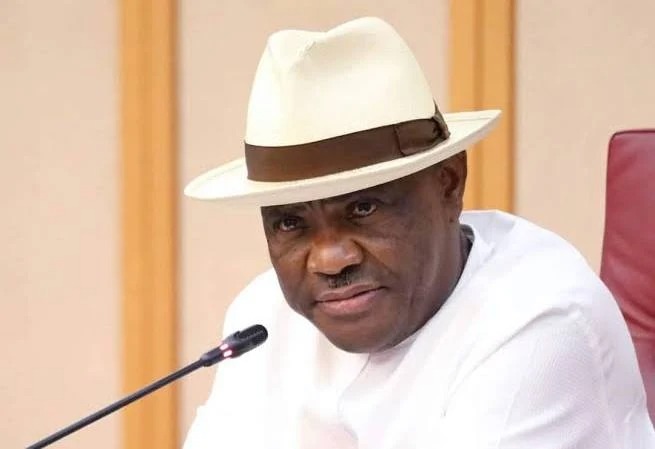
If Augustus could boast of transforming Rome, this writer equally asserts that the Minister of the Federal Capital Territory (FCT), Nyesom Wike, is reshaping Abuja the Centre of Unity into a city of irresistible beauty. The transformation is striking, almost enchanting, reminiscent of the allure of Cleopatra, whose charm captivated Julius Caesar.
Over the years, ministers have come and gone in the FCT. Apart from Nasir El-Rufai, who prioritized transportation and the restoration of the Abuja Master Plan, few have matched Wike’s intensity in urban renewal and infrastructural development.
The scale of projects executed under Wike is substantial. His administration has completed major road networks, including the Southern Parkway from the Christian Centre to Ring Road 1, and the Outer Southern Expressway (OSEX) linking to Ring Road 1. There has also been the rehabilitation of B6 and B12 Circle Roads, alongside the commissioning of access roads in Sector Centre B (Dakibiyu District) and newly constructed roads such as Esther Bali Street and Kez Udezue Street in Mabuchi District.
Further developments include the construction of access roads to the FCT Fire Service Station, erosion control projects in Kaura District featuring three-span bridges, and the development of Transit Way II linking the Central Area to Wuye District. The ongoing design and construction of the Mohammed Isa Road Extension in Asokoro, rehabilitation of the 15-kilometre Old Keffi Road from Kado Village to Dei-Dei Junction, and infrastructure provision in Guzape and Asokoro districts all underscore a coordinated push toward modernization.
Additional projects such as a new dual carriageway connecting Arterial Road N5 to the Airport Expressway, road upgrades in Kuje and Saburi communities, and multiple access roads across districts reflect a sweeping transformation. The scale and pace of development in the FCT today are widely regarded as unprecedented.
The driving force behind this transformation is Wike himself, once described as “Mr. Projects” by former Vice President Yemi Osinbajo. Even now, new projects continue to emerge under his leadership.
Drawing from his tenure as Governor of Rivers State, Wike built a reputation for relentless infrastructure development. For eight years, his administration in Rivers was marked by continuous project commissioning, an approach he now appears to be replicating in Abuja. His governance style suggests a deep commitment to delivering tangible dividends of democracy through infrastructure.
Traditional ruler Adeyeye Ogunwusi once suggested that Wike’s leadership style should be studied in universities. This proposition holds merit, particularly in a political environment where effective project execution is often lacking despite abundant resources.
Wike’s developmental strides place him in the company of notable Nigerian leaders who left lasting legacies. Figures such as Ahmadu Bello, Obafemi Awolowo, Michael Okpara, and Sam Mbakwe are remembered for transformative governance in their respective regions. Their legacies endure because of their tangible contributions to development.
In a similar vein, Wike’s impact on the FCT is becoming increasingly visible. Even critics acknowledge the scale of infrastructural progress under his watch.
As Abuja continues to evolve, it is only fitting—whether as supporters or observers to acknowledge the ongoing transformation. In doing so, we echo the sentiment of Marcel Proust:
“Let us be grateful to the people who make us happy; they are the charming gardeners who make our souls blossom.”
– Dr. Uche Akunebu is a UK-based author and media consultant.