
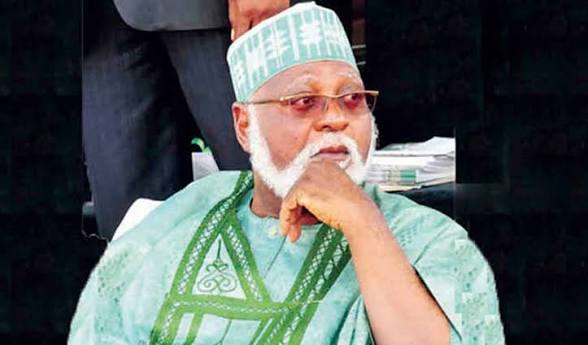
Former Head of State, Gen. Abdulsalami Abubakar (retd.), has recounted how late military ruler, General Sani Abacha, allegedly pushed him to accept the position of Chief of Army Staff after the November 1993 coup that toppled the Interim National Government.
The revelation appears in his autobiography, Call of Duty, where he detailed the tense power shifts within the military following the political crisis triggered by the annulment of the June 12, 1993 election.
According to him, he initially turned down the offer twice, insisting he did not want to be drawn into internal military politics or used by politicians working through the armed forces.
Abdulsalami said the first signs of an impending coup came through a warning from a senior naval officer who hinted that top army officers were planning a takeover and that the Navy would not participate. He said he immediately distanced himself from the plot, stressing that he was not involved.
Shortly after, he said he was again informed of unfolding political tension when a former senior officer contacted him, suggesting moves were underway to remove the head of the interim government. Abdulsalami maintained he had no prior knowledge of the plan at the time.
He recalled that on the night the interim government collapsed, pressure began building around him to attend a high-level military meeting, but he refused on the grounds that he was not formally invited. He said even after being told his loyalty might be questioned, he stood his ground.
Despite declining, he later made a brief stop at the meeting venue, only to be turned back at the gate because his name was not on the attendance list, an experience he described as embarrassing.
Abdulsalami said events escalated the following day when he received a phone call from an officer who informed him that the Head of State wanted to see him and that he had been selected for appointment as Chief of Army Staff. He said he reacted angrily and dismissed the call, questioning the manner in which military decisions were being handled.
Shortly after, he was invited for a private meeting with Abacha. During the discussion, Abacha reportedly asked if he would work with him if appointed Army Chief. Abdulsalami said he agreed in principle but placed conditions, including that he should be allowed to retire quietly in future if the need arose, rather than being publicly dismissed.
He added that although Abacha appeared to accept his conditions, the situation changed quickly. According to him, he later learned that plans to appoint him Army Chief were altered after he left the meeting, and he was instead listed among officers to be retired.
However, that decision also shifted. Abdulsalami said he was later surprised to discover that he had been appointed Chief of Defence Staff, the highest military position at the time, following a last-minute change in the hierarchy.
He also reflected on his long-standing relationship with Abacha, noting that they had known each other since their early military days and had served in different capacities during the civil war, a relationship that later placed him at the centre of key national decisions.
Abdulsalami, who eventually succeeded Abacha after his death in 1998, later oversaw Nigeria’s transition to civilian rule in 1999.
The account, he said, is part of a broader reflection on loyalty, power struggles, and the unpredictable nature of military politics during one of Nigeria’s most turbulent political periods.