
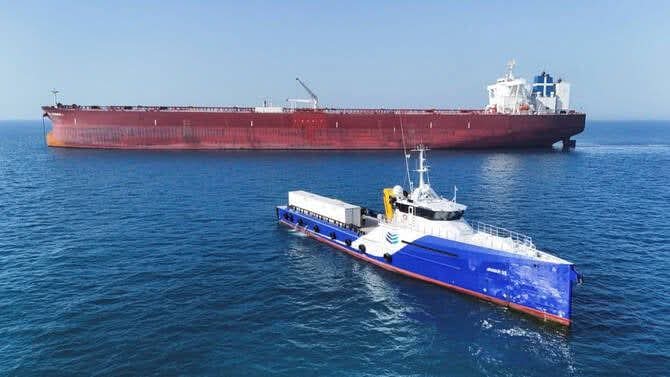
Iran’s powerful Islamic Revolutionary Guard Corps (IRGC) has declared that control of the strategic Strait of Hormuz has “returned to its previous state,” blaming what it described as the United States’ continued blockade of Iranian ports.
In a statement issued by its joint military command and cited by state broadcaster Islamic Republic of Iran Broadcasting (IRIB), the IRGC accused the US of engaging in “acts of piracy and maritime theft under the guise of a so-called blockade.”
The Iranian military said it has now imposed strict control over the critical waterway, warning that the situation will persist unless Washington restores full navigation rights for Iranian vessels.
“Control of the Strait of Hormuz has returned to its previous state, and this strategic waterway is now under strict management and control by the armed forces,” the statement read.
It added that freedom of movement through the strait remains conditional: “Until the United States restores full freedom of navigation… the status of the Strait will remain tightly controlled.”
Meanwhile, Iran’s security apparatus claims it has dismantled several espionage networks allegedly linked to the United States, Israel and the United Kingdom.
According to Fars News Agency, the IRGC’s intelligence wing uncovered “spy cells” operating in East Azerbaijan, Kerman and Mazandaran provinces.
Authorities allege the groups were involved in espionage activities, building covert networks and attempting to incite unrest across the country.
Iranian officials are also hardening their stance diplomatically. Parliament Speaker Mohammad Bagher Ghalibaf dismissed recent claims by US President Donald Trump, accusing him of spreading falsehoods.
“Trump made seven claims in one hour, all seven of which were false. They didn’t win the war with these lies, and they will certainly not get anywhere in negotiations either,” Ghalibaf said.
On the Strait of Hormuz, he made Iran’s position explicit: “The continuation of the blockade means the strait will not remain open. Passage will be based on designated routes and Iranian authorisation.”
He stressed that decisions regarding the strait would be based on “facts on the ground, not social media,” signalling Tehran’s intent to assert direct operational control.
It was reported that Iran may allow limited commercial passage during the remaining days of a fragile ceasefire, while restricting military vessels.
The IRGC has also reportedly introduced new maritime routes close to Iran’s coastline, a move seen as both strategic and symbolic.
Amid escalating tensions, Pakistan’s Prime Minister Shehbaz Sharif has concluded a regional diplomatic tour covering Saudi Arabia, Qatar and Turkey.
According to Foreign Minister Ishaq Dar, Sharif also attended the Antalya Diplomacy Forum, where he held talks with Turkish President Recep Tayyip Erdogan.
Pakistan is reportedly intensifying efforts to mediate between Washington and Tehran, having already hosted peace talks in Islamabad last week.
The Strait of Hormuz remains one of the most sensitive geopolitical flashpoints globally, handling a significant portion of the world’s oil supply. Any disruption or restriction in its flow could trigger widespread economic and security consequences.
With both Iran and the United States digging in, and regional actors stepping up diplomatic engagement, the situation continues to evolve with potentially far-reaching implications.