
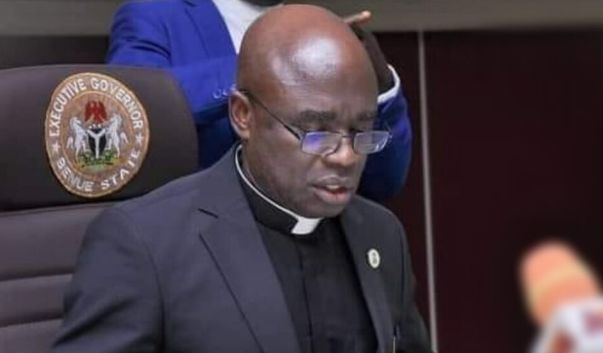
Communities across Benue on Monday signed a statewide natural resource-sharing agreement to strengthen peaceful coexistence, prevent conflicts, and promote the equitable management of land, water, and other shared resources.
Governor Hyacinth Alia said the agreement is a practical framework for resolving disputes through dialogue and fostering justice and cooperation among farmers, pastoralists and host communities.
Mr Alia, represented by Deputy Governor Sam Ode, said the agreement was facilitated by the Centre for Humanitarian Dialogue (HD), in partnership with the Benue State Commission for Peace and Reconciliation (BSCPR).
He said the agreement reflected his administration’s commitment to building lasting peace and sustainable development.
He also said the state government would work with relevant agencies, traditional institutions, security agencies and development partners to ensure full implementation of the agreement.
The governor called on the people to shun violence, embrace dialogue and support responsible resource sharing.
He emphasised that peace remains the foundation for investment, agriculture, business and prosperity.
Earlier, the Country Manager of CHD, Nigeria, Chris Agoha, described the agreement as a landmark initiative that institutionalises cooperation, dialogue and peaceful coexistence among communities in the state.
Mr Agoha said the agreement reflected the collective commitment of stakeholders to promote peace, security and sustainable development through dialogue and collaboration.
He said the CHD had previously facilitated the 2022 Agatu peace agreement and the 2023 Oju/Konshisha resource-sharing agreement, in collaboration with the BSCPR.
He also said that the agreement sought to address both the visible and hidden impacts of violent conflict, including loss of lives, damaged institutions, mistrust, broken social relationships and psychological trauma.
The Tor Tiv, Prof. James Ayatse, advised that the agreement should become part of the people’s daily lives and values rather than a ceremonial document.
Mr Ayatse said that lasting peace could only be achieved when individuals and communities consistently prioritise peaceful solutions to disputes over land, water and other natural resources.
He commended the Benue Government for creating an enabling environment for peacebuilding through the establishment and support of the BSCPR, and for attracting development partners back to the state.
Also, the Och’Idoma, Elaigwu Odogbo, described the agreement as a historic covenant that promotes dialogue over violence, cooperation over conflict, and understanding over suspicion.
Mr Odogbo said that years of conflicts over land and natural resources had resulted in loss of lives, displacement, destruction of livelihoods and stalled development.
According to him, forgiveness, reconciliation, integrity and collective responsibility remain essential to sustaining peace across Benue.
In a remark, the Director-General of BSCPR, Josephine Habba, thanked traditional rulers, community leaders and stakeholders for endorsing the agreement.
Habba said that peace could not be imposed but must be willingly embraced, describing the agreement as the beginning of a continuous journey towards reconciliation.
The guest lecturer, Prof. Member Genyi, described the agreement as a significant step towards sustainable peace and inclusive resource governance.
Genyi, who is the Deputy Vice-Chancellor of Fr. Adasu University, Makurdi, said conflict over scarce resources, particularly land, had become more complex due to climate change, population growth, displacement and insecurity.
She said that land represents the identity, heritage and survival for many communities, making effective governance and dialogue essential for transforming conflicts into peaceful outcomes.
The don warned that persistent conflicts had disrupted farming, livestock production and local markets, with implications for food security beyond Benue.
Leonard-Angelo Viashima, the Director-General of the Benue State Bureau for International Cooperation and Development (BICD), commended the governor for his commitment to promoting peace, security and sustainable development in the state.
He said the BICD remained committed to mobilising international partnerships to make the Benue peace process a model that could be replicated in other conflict-affected regions.