
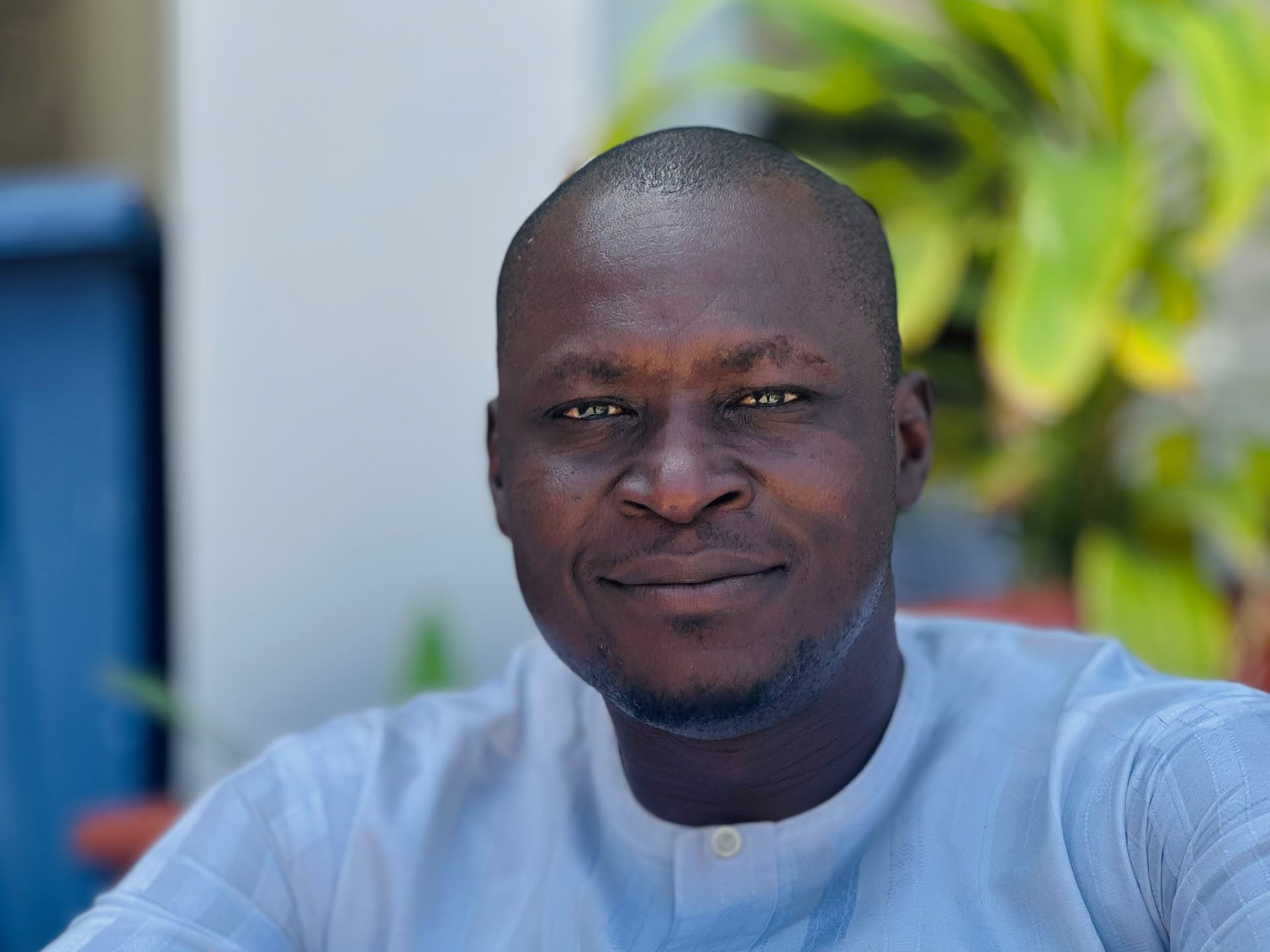
By Cliff Stanley
President Bola Ahmed Tinubu’s visit to Plateau State on 14 November 2026 formed part of the All Progressives Congress (APC) North-Central presidential campaign activities. The occasion was framed as an opportunity to reconnect with a state scarred by prolonged insecurity, killings and mass displacement. Yet the day’s events, captured in contemporaneous reporting, revealed a more complex political landscape than either triumphant mobilisation or outright popular repudiation. The dual imagery of organised APC enthusiasm and spontaneous chants of “Ba ma yi” (“We don’t want”) illuminates the difference between party machinery and genuine popular consent, while underscoring the limits of symbolic politics in a region where security remains the decisive currency of legitimacy.
The visit unfolded against a specific local grievance. Tinubu had previously travelled to Jos after the deadly Anguwan Rukuba attack but remained at the airport, meeting stakeholders without entering the affected communities. On this occasion he addressed the criticism directly: “When I last visited the other time, I was limited to the airport. Forgive me if you didn’t see me in the hinterland. But I saw the devastation; I got the report from the governor. I saw the horror in the faces of our people.” He promised the return of displaced persons, the rebuilding of communities and decisive security action. The apology was politically calibrated—an acknowledgement of perceptual failure intended to reset the relationship with Plateau’s electorate.
The reception, however, split along predictable lines. APC supporters lined routes with songs, dancing and party flags, producing the colourful spectacle expected of a well-resourced campaign event. Interviews with some traders and youth leaders expressed personal affection for the president and hope for federal projects. Simultaneously, video footage recorded residents behind barricades chanting “Ba ma yi” as the convoy passed. The reporting is careful not to claim that the chants represented every Plateau resident; it does establish that support was not unanimous and that visible dissatisfaction coexisted with organised welcome.
This contrast invites a sharper analytical distinction. Large-scale campaign rallies in Nigeria are rarely pure expressions of spontaneous public will. They are products of party organisation: mobilisation of loyalists, transportation of supporters, coordination of spectacle and the deployment of incumbency resources. The enthusiastic segments of the Plateau reception fit this pattern of effective party mobilisation. The “Ba ma yi” chants, by contrast, emerged without comparable orchestration. They functioned as a low-cost, high-visibility signal of residual or active discontent, directed at the presidential presence itself. In political science terms, the day displayed the difference between organisational capacity and affective popular support. The former can be engineered; the latter must be earned through performance, particularly on security.
Security, not symbolic forgiveness, dominates resident discourse. A farmer from Riyom captured the material stakes: “Abundance without security is a harvest left to rot. A farmer who cannot sleep in his village cannot wake up to farm.” A trader in Jos South added that economic confidence returns only when the cockcrow, not the gunshot, becomes the morning sound. These voices locate the political problem in lived experience rather than elite narrative. For communities that have endured repeated attacks, displacement and the collapse of agricultural livelihoods, an apology without subsequent measurable improvement in safety is unlikely to convert scepticism into durable support. The unanswered questions after the visit—whether displaced families will return safely, whether rural communities will be protected, whether promised forest guards and surveillance will materialise—remain the true tests of credibility.
What does this portend for the 2027 elections in the North-Central zone? Plateau and the wider Middle Belt occupy a strategically significant position. The region’s Christian-majority and ethnically diverse populations have historically been swing or contested terrain rather than automatic bastions of any single party. Persistent insecurity has eroded trust in successive federal administrations. Tinubu’s apology and the APC’s mobilisation demonstrate that the ruling party recognises the electoral necessity of engagement. Yet the simultaneous expression of rejection indicates that organisational strength alone may prove insufficient if security metrics do not improve between now and 2027.
Incumbency confers advantages in logistics, media access and the ability to announce projects. It does not automatically confer legitimacy where citizens experience daily threat. If the federal government translates promises into sustained reductions in violence, the safe return of displaced persons and the restoration of farming and commerce, the 2026 visit could be remembered as an inflection point that began to close the gap between party loyalty and popular consent. If, conversely, the gap between rhetoric and results persists, the “Ba ma yi” sentiment risks becoming a more organised political current that opposition parties can mobilise. North-Central voters have repeatedly shown that they reward competence on security more readily than they reward campaign theatre.
The broader implication extends beyond Plateau. Nigerian presidential politics increasingly turns on the capacity of the centre to deliver basic public goods in peripheral regions that feel both neglected and instrumentalised. Symbolic visits and appeals for forgiveness can open political space, but they cannot substitute for institutional performance. The 14 November 2026 events therefore stand as a microcosm of the challenge facing the Tinubu administration: converting the machinery of party mobilisation into a broader social compact grounded in security and economic recovery.
Whether that conversion occurs will shape not only the North-Central outcome in 2027 but the durability of the current political settlement itself.
In the final analysis, the Plateau visit was neither pure popular acclamation nor pure rejection. It was a revealing collision of organised loyalty and residual discontent. The political significance of that collision will be determined less by the volume of the chants or the size of the flags than by the subsequent trajectory of insecurity and displacement in the Middle Belt. For an international readership accustomed to reading African elections through the lens of elite bargains and ethnic arithmetic, the lesson is more prosaic and more demanding: in places where citizens cannot sleep safely, the most sophisticated campaign machinery remains vulnerable to the simplest of popular verdicts.
Cliff Stanley political scientist public theologian wrote from Jos Ecwa Theological seminary (JETS)
cliffstanley3@gmail.com
07032826319