
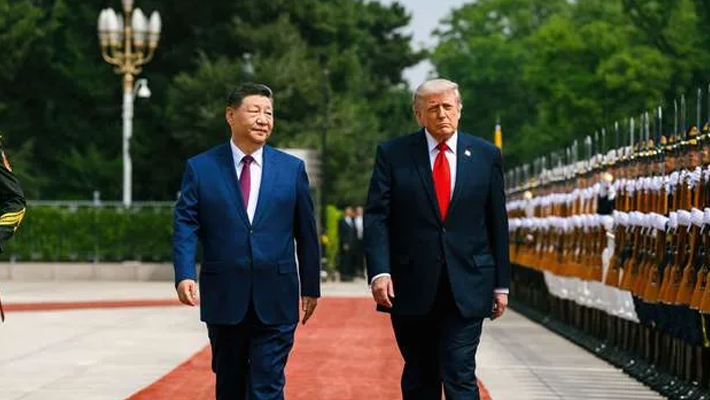
China and the United States have reached an agreement to cut tariffs imposed on $60 billion worth of goods imported from each other.
The cuts are expected to affect several products, ranging from US corn and cosmetics to Chinese household appliances and toys, among others.
In a statement on Sunday, US Trade Representative Jamieson Greer said both countries also recommended $30 billion worth of trade in non-sensitive goods for more favourable tariff treatment under the US-China Board of Trade.
Mr Greer noted that the agreement was meant to unlock improved market access for about 30% of US exports to China.
The agreement was reached at the second summit between Chinese President Xi Jinping and President Donald Trump, hosted in Washington last week.
“The United States and China will consider the following list of US products for import into China and list of Chinese products for import into the United States with a view toward providing reduced tariff treatment to those goods in a reciprocal manner, consistent with their respective domestic laws and processes,” the White House said in a statement on Sunday.
The list showed that China planned to trim duties on a variety of US agricultural goods, including corn, wheat, sorghum, meat, dairy, vegetable oils and meals. It did not include soybeans.
The country also planned to reduce levies on American fish and seafood, logs and wood products, cosmetics and medical devices.
Another list also indicated Washington’s reciprocal tariff cuts for Chinese small appliances, including coffee makers and toasters, tableware, blankets and bed linens, among others.
On Monday, China’s commerce ministry noted that a two-month extension of a trade truce with the US through to January 10 would make it possible for both countries to assess the ongoing arrangement aimed at resolving economic and trade issues, while considering how to advance on those fronts.
According to the ministry, the extension also provides a “relatively stable and predictable policy environment” for cooperation among companies and continued active discussions.
It added that both sides would hold regular talks on potential investment opportunities and barriers, enhance policy transparency and predictability, and respond to enterprises’ concerns.
The latest reciprocal tariff cuts announced by the two countries suggest a temporary de-escalation of their trade war.