
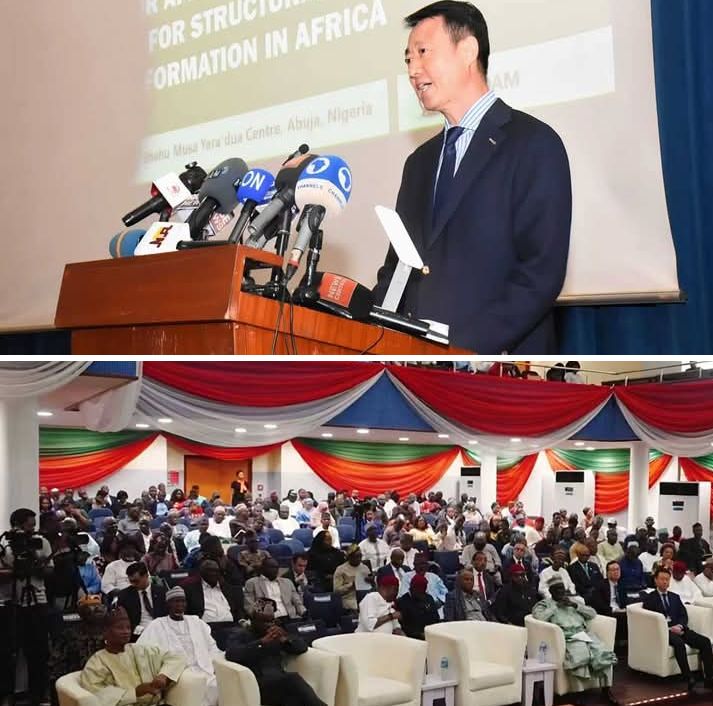
China’s Ambassador to Nigeria, Yu Dunhai, has said the country’s zero-tariff policy for African nations is already producing significant economic benefits, particularly for Nigeria.
Speaking at a seminar on “China’s Zero-Tariff Measures and Africa’s Economic Structural Transformation” held at the Yar’Adua Conference Centre in Abuja on Friday, Yu said China-Africa trade reached a record $207 billion in the first half of 2026.
According to the envoy, Chinese imports from Africa rose to $29 billion between May and June, representing a 24 per cent year-on-year increase, while the zero-tariff policy was estimated to have increased overall African exports to China by about six per cent.
He said Nigeria had recorded particularly strong growth, with bilateral trade between both countries reaching $18 billion in the first half of the year, a 35 per cent increase from the same period in 2025. Chinese imports from Nigeria also surged by 80 per cent to $2.3 billion.
Yu explained that the policy, which took effect on May 1, 2026, grants zero-tariff treatment to all 53 African countries that maintain diplomatic relations with China.
He said the measure was designed to reduce trade costs, expand market access and encourage African countries to move beyond the export of raw commodities towards local processing and value addition.
Highlighting Nigeria’s gains, the ambassador said tariff reductions of between three and 10 per cent had already generated substantial savings for Nigerian exporters. He noted that every 100 tonnes of sesame exported to China could save about $11,000, while the annual export of 7,000 tonnes of cattle bone granules could save nearly $450,000.
He also cited a shipment of 23,000 tonnes of Nigerian liquefied propane that reportedly saved $300,000 in taxes on the first day of the policy.
Yu said the policy was also helping Nigerian businesses expand into processing, logistics, warehousing and other related sectors, with the potential to create more jobs and strengthen the country’s industrial base.
The envoy urged Nigeria to focus on improving product quality, strengthening supply chains and expanding local processing to maximise the benefits of tariff-free access to the Chinese market.
He said China was prepared to support Nigerian businesses with technical assistance, equipment, technology and training, including through proposed joint industrial demonstration parks.
Yu further called for stronger institutional cooperation between both countries, including agreements on trade facilitation, investment protection and quarantine standards.
He said China was also encouraging Nigerian small and medium-sized enterprises to take advantage of platforms such as the China International Import Expo, Canton Fair and China-Africa Economic and Trade Expo to connect with Chinese buyers.
The ambassador described Nigeria as a “cornerstone partner” for China in Africa, noting that the two countries were marking 55 years of diplomatic relations this year, alongside the 70th anniversary of China-Africa diplomatic relations.
He said the Chinese Embassy in Nigeria would continue supporting the implementation of the zero-tariff policy, with the goal of increasing Nigerian exports to China and strengthening industrial cooperation between the two countries.