
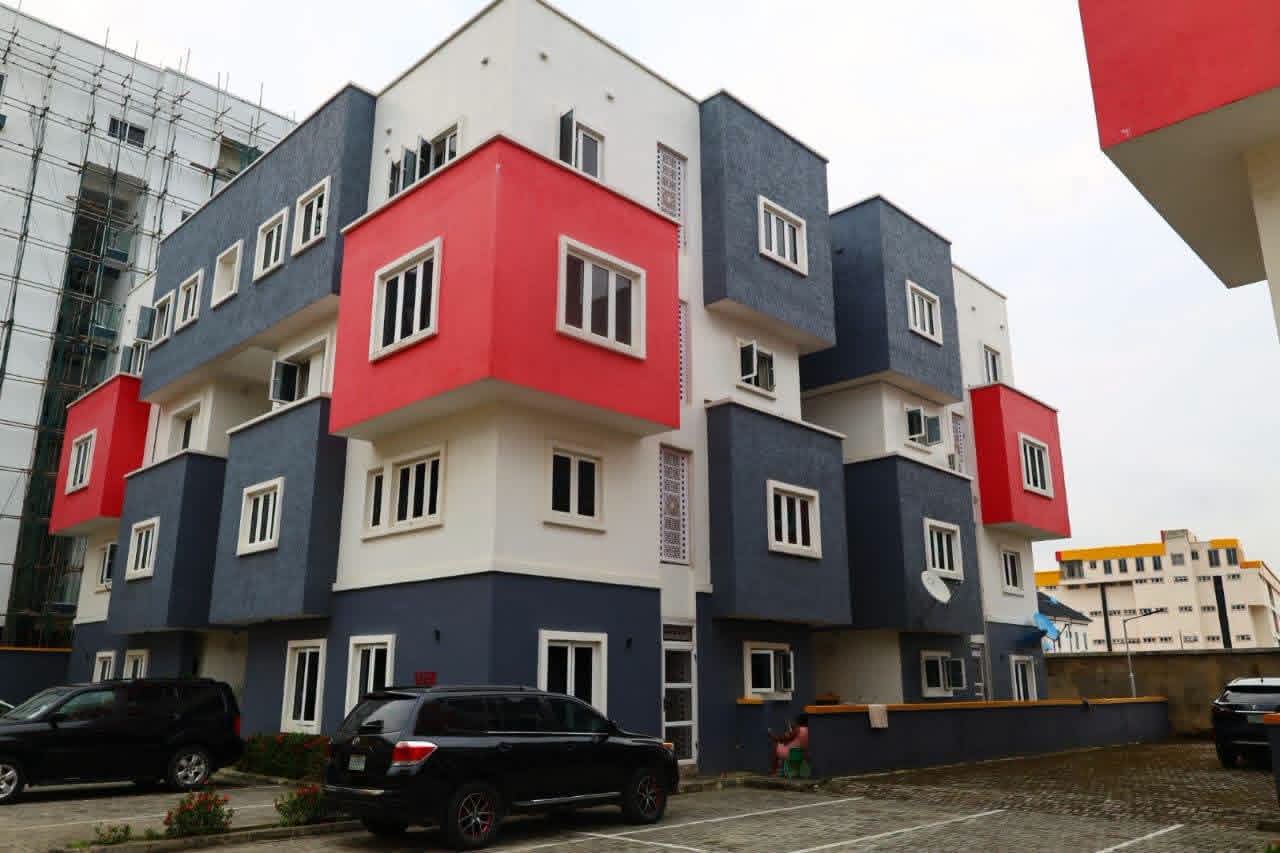
A Federal High Court sitting in Ikoyi, Lagos, has ordered the final forfeiture of 52 terrace and maisonette units in the Lekki area of Lagos to the Federal Government after ruling that the properties were reasonably suspected to be proceeds of unlawful activities.
Justice Alexandra Owoeye delivered the judgment on Wednesday, granting the application filed by the Lagos Zonal Directorate 2 of the Economic and Financial Crimes Commission, EFCC.
The properties, located at Mercyville Estate, Covenant Way, off New Road, Ilasan, Lekki, were recovered from Fielddreams Limited, Ifeanyi Nweke and Amex Savings and Loans Limited.
The anti-graft agency, through its counsel, Franklin Ofoma, had approached the court seeking the final forfeiture after earlier securing an interim forfeiture order on August 14, 2024, from Justice Akintayo Aluko.
Following the interim order, Justice Aluko directed the EFCC to publish the forfeiture notice in a national newspaper to enable any interested party to show cause why the properties should not be permanently forfeited to the Federal Government.
In response, the respondents filed an affidavit opposing the application. However, the EFCC argued that the respondents presented conflicting claims regarding the source of funds used to develop the estate.
According to the Commission, the respondents initially stated in their affidavit that the development of the 52 terrace and maisonette units was financed from proceeds realised from the sale of 29 other housing units valued at N1.9 billion.
The EFCC, however, told the court that the respondents later contradicted themselves by alleging that the third to nineteenth applicants had failed to complete the construction of the buildings, despite their earlier claim that the proceeds from the sales had been used to complete the furnishing, interior decoration and construction of the remaining units as far back as 2020.
While moving the motion for final forfeiture, Ofoma informed the court that the Commission had fully complied with the publication requirement contained in the interim forfeiture order.
He further stated that the application was supported by a 31-paragraph affidavit deposed to by Afolabi Seyi Oladele, a litigation officer in the EFCC’s Legal Department, maintaining that the properties were reasonably suspected to be proceeds of unlawful activities.
The EFCC also informed the court that the second respondent, Ifeanyi Nweke, was a fugitive facing criminal charges and had failed to appear before Justice R.A. Oshodi and Justice Okunuga in two separate criminal cases for his arraignment.
According to the Commission, Nweke had also jumped the administrative bail earlier granted to him by the EFCC, while two subsisting warrants of arrest had been issued against him.
In her ruling, Justice Owoeye held that the respondents’ affidavit contained irreconcilable contradictions and could not be relied upon by the court.
“Since this court cannot pick and choose which of the evidence given by the respondents to believe, it must consequently reject the entire affidavit evidence placed before it,” the judge ruled.
She consequently struck out the respondents’ affidavit filed to oppose the final forfeiture application, holding that there was effectively no valid opposition before the court.
The judge further held that the EFCC had established reasonable grounds to suspect that the properties were proceeds of unlawful activities and was therefore entitled to the reliefs sought.
“Having resolved the sole issue in this application in favour of the applicants, I hold that this application has merit and ought to be granted. Accordingly, I grant the relief sought in this application as prayed,” Justice Owoeye ruled.
The judgment effectively vests ownership of the 52 luxury housing units in the Federal Government.