
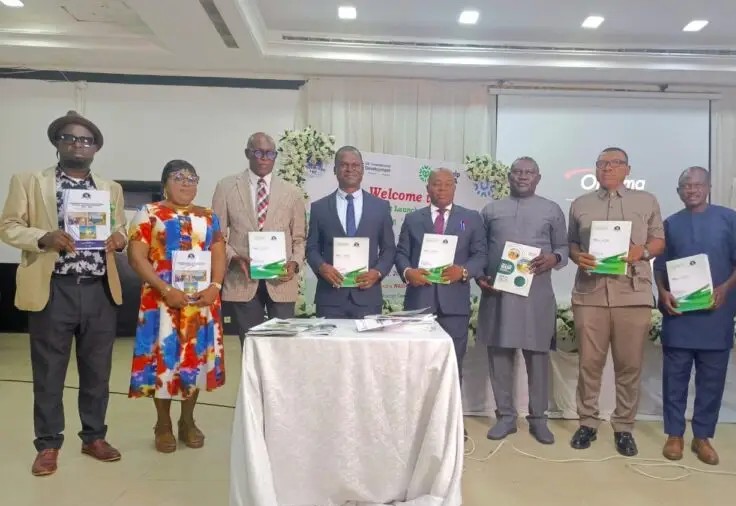
The Cross River State Government, working alongside Self Help Africa (SHA), has officially unveiled four major policy documents aimed at improving Water, Sanitation and Hygiene (WASH) service delivery across the state.
The launch ceremony, held in Calabar, featured the introduction of the Cross River State Open Defecation Prohibition Law, the Basic Sanitation Access Roadmap, the WASH Financing Strategy, and the Yala Local Government Area WASH Strategic Plan.
Representing the Governor of Cross River State, Bassey Otu, the Secretary to the State Government, Anthony Owan-Enoh, said the administration’s development agenda was designed to reach both urban and rural communities without exclusion.
He explained that the initiative aligns with the government’s “people-first” approach, stressing that sanitation and hygiene reforms are not limited to cities like Calabar, Ikom, Ogoja, and Obudu, but also extend deeply into rural areas.
Owan-Enoh noted that open defecation remains more common in rural communities, where it is sometimes seen as a cultural practice. He emphasised that the government intends to address this through sustained education, awareness campaigns, and community engagement rather than enforcement alone.
According to him, the launch is not just symbolic but marks the beginning of full implementation, with collaboration expected from local government authorities, traditional rulers, and grassroots stakeholders.
“This is not just about documents; it is the start of a long-term journey toward better sanitation and public health,” he said.
The Commissioner for Water Resources and Sanitation, Bassey Mensah, described the reform as a major milestone in restructuring the state’s WASH sector.
He explained that the newly introduced financing strategy is designed to improve investment in water and sanitation services, especially in underserved rural and small-town communities. He added that the Yala LGA strategic plan would serve as a model for localised implementation across other areas.
Mensah also stressed that achieving an open-defecation-free Cross River requires collective responsibility, calling on civil society groups, traditional institutions, youth organisations, and development partners to support the initiative.
A representative of Self Help Africa noted that the documents were developed under the WASH Systems for Health programme after wide consultations with government agencies, civil society organisations, private sector actors, and community stakeholders. The organisation said the reforms build on earlier sector policies and legal frameworks aimed at improving sanitation governance and public health outcomes.
Stakeholders present at the event included government officials, donor agencies, community leaders, and WASH sector partners, all of whom expressed support for the implementation of the new framework across Cross River State.