
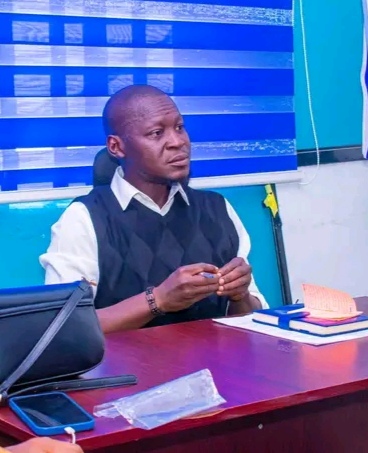
By Cliff Stanley
Every Democracy Day, Nigerian leaders invoke the memory of June 12, 1993 the election widely regarded as the freest and fairest in the nation’s history. They celebrate the sacrifices of Chief Moshood Kashimawo Abiola, Frank Kokori, Professor Humphrey Nwosu, the National Democratic Coalition (NADECO), civil society activists, journalists, labour unions, and countless ordinary citizens who resisted military dictatorship.
President Bola Ahmed Tinubu’s 2026 Democracy Day address followed this familiar tradition. It celebrated democratic continuity, defended economic reforms, highlighted infrastructure projects, and projected optimism about Nigeria’s future. Yet the central question remains: Does the Nigeria described in official speeches correspond to the lived reality of millions of Nigerians?
The answer is more complex than government narratives suggest.
Democracy’s Greatest Test: Performance, Not Ceremony
Political scientist Samuel Huntington famously argued that the legitimacy of democracy depends not merely on elections but on the capacity of institutions to deliver effective governance.
Nigeria has achieved something remarkable: twenty seven uninterrupted years of civilian rule. This is the longest democratic period in the country’s history. However, democratic endurance should not be confused with democratic consolidation.
The challenge confronting Nigeria today is not whether elections occur. It is whether democratic institutions are capable of guaranteeing accountability, transparency, justice, security, and economic opportunity.
According to the International IDEA Democracy Tracker, Nigeria performs moderately in representation and participation but remains weak in rule of law and institutional accountability. Electoral participation, judicial independence, and public trust in government continue to face significant challenges.
Economic Reforms and the Politics of Pain
President Tinubu has consistently defended the removal of fuel subsidies, foreign exchange reforms, and fiscal restructuring as necessary sacrifices for long term economic stability.
Indeed, some macroeconomic indicators have improved. Government revenues have increased, investor confidence has strengthened, and financial markets have responded positively. Reuters reports that the administration points to increased infrastructure spending, stronger public finances, and renewed investor interest as evidence that reforms are beginning to yield results.
Yet democracy is ultimately judged not by macroeconomic statistics but by human outcomes.
Millions of Nigerians continue to experience rising living costs, declining purchasing power, unemployment, food insecurity, and worsening social conditions. While economic reforms may be technically defensible, their social consequences remain profound.
The legitimacy of reform depends not only on economic efficiency but also on whether ordinary citizens can survive its consequences.
Poverty: Democracy’s Silent Emergency
One of the most troubling realities confronting Nigeria’s democracy is mass poverty.
Recent academic assessments drawing on World Bank projections estimate that more than half of Nigeria’s population may be living in poverty. Scholars increasingly identify poor governance, corruption, weak institutions, unemployment, and inadequate infrastructure as major drivers of this condition.
As Nobel Laureate Amartya Sen argued, development should be understood as the expansion of human freedoms. A democracy in which millions lack access to food, healthcare, education, and economic opportunity risks becoming procedural rather than substantive.
The ultimate purpose of democratic governance is not merely to conduct elections but to improve human welfare.
Corruption: The Unfinished Battle
Corruption remains one of Nigeria’s most persistent governance challenges.
Transparency International’s 2025 Corruption Perceptions Index ranked Nigeria 142nd out of 182 countries, highlighting continuing concerns about accountability and public sector integrity.
To be fair, anti-corruption agencies have recorded notable successes.
The Economic and Financial Crimes Commission reported recovering nearly $500 million in illicit assets and securing thousands of convictions.
Yet corruption is not merely about stolen money. It is fundamentally about the erosion of public trust.
Scholarly research consistently demonstrates that sustainable anti-corruption efforts require more than prosecutions; they require strong institutions, transparency, independent oversight, and the rule of law.
Democracy and Security
No democracy can flourish where citizens live in fear.
Despite military operations against insurgency, banditry, kidnapping, separatist violence, and communal conflicts, insecurity remains a defining feature of everyday life across many parts of Nigeria.
The persistence of violence continues to undermine economic development, social cohesion, and public confidence in state institutions.
Political theorist Robert Dahl argued that democracy requires effective citizenship.
Effective citizenship is impossible where citizens cannot travel safely, farm safely, or conduct business safely.
The Legislature and Accountability
One of the ideals of constitutional democracy is the separation of powers.
However, independent assessments continue to raise concerns about the extent to which Nigeria’s legislature effectively checks executive authority. Observers note that while legislative activity has increased, institutional independence remains a challenge.
Democracy thrives when institutions are strong enough to question power, not merely endorse it.
The Real Meaning of June 12
June 12 was never simply about elections.
It was about accountability over arbitrariness.
It was about citizenship over patronage.
It was about justice over impunity.
It was about the sovereignty of the people over the convenience of political elites.
Professor Humphrey Nwosu’s conduct of the 1993 election remains celebrated because it demonstrated that integrity is possible within public institutions. MKO Abiola became a democratic symbol because he embodied the principle that the people’s mandate matters.
The heroes of June 12 did not struggle merely for civilian rule. They struggled for democratic governance.
Conclusion:
Between Hope and Reality
President Tinubu is correct to remind Nigerians that democracy remains preferable to authoritarianism. He is also correct that difficult reforms are sometimes necessary.
However, the true measure of democratic success is not the eloquence of presidential speeches, the length of civilian rule, or the optimism of official communiqués.
The true measure lies elsewhere:
Can citizens afford food?
Can children receive quality education?
Can farmers cultivate their lands safely?
Can businesses thrive without crippling costs?
Can institutions hold the powerful accountable?
Can justice be obtained regardless of status?
These are the questions that determine whether democracy is merely surviving or genuinely succeeding.
Twenty seven years after the restoration of civilian rule, Nigeria’s democratic challenge is no longer how to win freedom. It is how to make freedom meaningful.
That is the unfinished promise of June 12.
Cliff Stanley
Political Scientist/Analyst
Cliffstanley3@gmail.com
07032826319.