
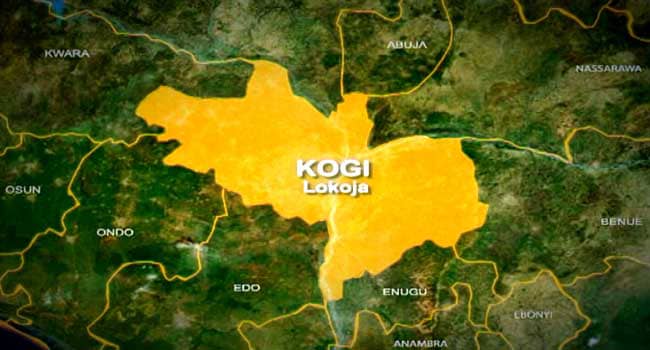
Three years after Kogi State’s declaration as an oil-producing state, Ibaji Local Government Area, the hub of this newfound wealth, remains mired in neglect. Despite the 13% derivation fund, a lifeline for oil-producing areas, Ibaji’s residents continue to suffer without basic amenities – no roads, no hospitals, no schools.
The 41.7km Idah-Onyedega road, traversable only by motorbike, is a proof to the area’s abandonment. The journey is hellish, nasty, and a nightmare, with the yearly flooding and overflow making it a death trap.
The oil discovery, meant to be a blessing, has become a curse. Governor Ibrahim Idris’s road project, once a beacon of hope, now lies in shambles, a victim of poor workmanship and neglect. The local government secondary school, a symbol of decay, crumbles, depriving children of education. The whole oil status of Ibaji appears to be a curse instead of a blessing.
The enabling oil-producing law Kogi Oil Producing Area Development Commission (KOSOPADEC) that would have assuaged the developmental grievances of the people has been rigged against the good of Ibaji. The 13% derivation funds have not impacted the life of the people, and it’s clear that something is fundamentally wrong. KOSOPADEC, the agency tasked with overseeing oil revenues, must align with relevant federal law governing the industry, like the Petroleum Industry Act, to ensure funds benefit Ibaji.
It’s time to turn oil wealth into tangible progress, not perpetuate suffering. The people of Ibaji deserve better. They deserve roads, hospitals, schools, and a government that prioritises their welfare. The current state of affairs is unacceptable, and it’s high time the authorities took notice and acted.
A visit to a primary school that was a beehive of learning and character moulding at the turn of the 60s and 70s is now a haunting reminder of neglect. The once-thrusting institution is now lifeless and overgrown with weeds, its classrooms and playgrounds eerily silent, making it more suitable for farming than nurturing young minds. The old primary and secondary schools that dotted the landscape are dead, casualties of a neglect that seems to know no bounds.
The only lifeline for those who can afford it is to relocate their children to the neighbouring Idah, a local government that has paradoxically become a haven for residents and indigenes of Ibaji. They flee their homeland because it has become intolerably uninhabitable, a stark indictment of the failure to translate oil wealth into tangible benefits for the community.
The irony is stark – Ibaji Local Government, created in 1991, still doesn’t have a functional administrative secretariat. The abandoned building in Onyedega, meant to be the seat of governance, now serves as a daily reminder of the people’s misery, a symbol of neglect and abandonment. This absence of basic infrastructure underscores the disconnect between Ibaji’s oil wealth and the reality on ground. It’s a glaring oversight that needs urgent attention – Ibaji deserves a seat of governance that reflects its status, not a monument to neglect.
These are catalogues of the woes of Ibaji, an oil-producing local government, where the promise of prosperity has given way to decay and abandonment. Schools lie in ruins, infrastructure crumbles, and people are forced to flee in search of basic necessities like education. Is this the price of oil wealth? The contrast is striking – a community endowed with natural resources, yet mired in neglect, its potential suffocated by the very wealth that was meant to uplift it.
The General Hospital in Ibaji is a mere shadow of a healthcare facility, more akin to a rudimentary clinic than a place of healing. Its inadequacies are a stark reminder of the neglect that has come to define Ibaji’s infrastructure. The recent marine accident, one of the most fatal in modern history, is a tragic testament to the authorities’ failure to live up to their responsibilities. Ibaji’s woes are compounding, and the lack of basic services like healthcare and safety measures has turned the area into a danger zone.
In a sane society, the approximately 1,377 square kilometers (km²), Ibaji Local Government Area (LGA) hyper naturally arable land would have been enough to feed North Central Nigeria, if not the whole of the country.
It’s high time the burden on Idah Local Government is eased, and Ibaji takes center stage in its own development. Ibaji, created in 1991, deserves to reap the benefits of its oil wealth, not have its challenges spill over to neighbouring Idah. Making Ibaji’s money work for Ibaji is the way forward – investing in roads, schools, hospitals, and safety measures to turn the tide on neglect.
The people of Ibaji deserve to see tangible progress, and it’s crucial authorities prioritize development and accountability in this oil-producing local government. The people of Ibaji are paying a heavy price for this neglect, and it’s imperative that those in power take immediate action to address these glaring gaps in infrastructure and services.
The people of Ibaji are not asking for charity; they’re demanding their rightful share of the oil wealth that’s been extracted from their land. It’s time for Kogi State to live up to its responsibilities and ensure that Ibaji’s oil wealth translates to a better life for its people. Anything less is a betrayal of trust and a perpetuation of the status quo.