
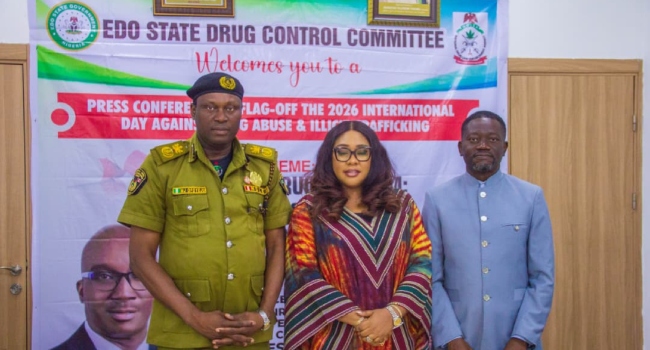
The Edo State Government has renewed its determination to curb drug abuse and illegal drug trafficking through intensified public enlightenment campaigns, preventive programmes, and community-driven initiatives aimed at creating a safer and healthier society.
Speaking during a press briefing in Benin City, the Chairperson of the Edo State Drug Control Committee and Coordinator of the Office of the First Lady, Edesili Anani, said the state remains committed to expanding drug prevention efforts, improving rehabilitation services, and strengthening actions against illicit drug activities.
According to her, the 2026 global theme, “The World Drug Problem: Persisting Issues, New Challenges and Innovative Responses,” highlights the need for governments, institutions, and communities to work together in tackling emerging drug-related challenges.
Anani identified factors such as poverty, unemployment, poor access to education, and social inequality as major drivers of substance abuse and drug trafficking. She stressed the importance of addressing these underlying issues through effective prevention measures, treatment programmes, rehabilitation services, and broader social support systems.
She also raised concerns about the growing use of new psychoactive substances, noting that combating the trend requires innovative approaches that combine law enforcement efforts with education, public awareness, and active community involvement.
The committee chair urged parents, teachers, healthcare practitioners, community leaders, civil society groups, and other stakeholders to play active roles in promoting healthy lifestyles and discouraging drug use among young people.
As part of its anti-drug campaign, the state government has lined up several activities, including awareness drives, school sensitisation programmes, and community outreach projects designed to educate residents about the dangers of substance abuse and encourage responsible decision-making.
Also addressing the gathering, Edo State Commander of the National Drug Law Enforcement Agency (NDLEA), Mitchell Ofoyeju, described drug abuse as a serious public health issue with significant social and economic consequences. He emphasised the need for sustained awareness efforts and behavioural change campaigns to reduce the demand for illicit substances.
Ofoyeju added that emerging threats, including the increasing misuse of shisha and other psychoactive substances, require modern and proactive intervention strategies.
The Commissioner for Health, Cyril Oshiomhole, reiterated the ministry’s commitment to improving mental health services, expanding rehabilitation centres, and implementing evidence-based measures aimed at reducing substance abuse across the state.