
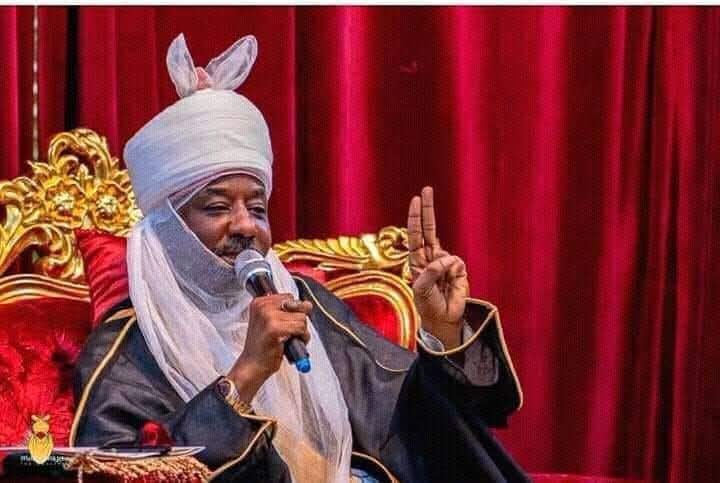
The Emir of Kano, Muhammadu Sanusi II, has called on Nigeria’s political class to abandon politics driven by domination and instead embrace leadership founded on service, accountability and competence.
He made the appeal during a national dialogue organised in Kano by PowerShift Africa, themed “Revisiting the Past, Reconciliation and Building the Future.” According to the monarch, adopting people-centred leadership would help Nigeria achieve lasting peace, prosperity and national progress.
Represented by the Danmadamin Kano and Professor of Economics at Bayero University, Prof. Abubakar Aliyu-Sanusi, the Emir urged Nigerians to promote unity, tolerance and collective responsibility. He stressed that power-sharing should go beyond regional considerations and focus on electing capable, compassionate and credible leaders committed to serving the people.
Sanusi described the dialogue as timely, noting that Nigeria was facing serious political, economic and social challenges. He said the country must reflect on its past to overcome persistent problems relating to nationhood, justice, equity and inclusion, despite more than six decades of independence.
He further argued that government policies should be measured by their impact on citizens’ welfare, insisting that any economic policy that fails to improve living conditions cannot be regarded as successful. He urged leaders to prioritise poverty reduction, higher living standards and inclusive economic growth while strengthening institutions and ensuring justice.
The Emir also identified insecurity, corruption, poverty and poor infrastructure as key obstacles to national development, adding that unresolved grievances must be addressed if the country hopes to build a stable future.
During a panel discussion, political analyst Umma Abdullahi said many of Nigeria’s challenges stemmed from divisions created over the years. She called for a nation where citizens are recognised first as Nigerians rather than by ethnic, religious or regional identity, while encouraging young people to embrace peace, patriotism and love.
Also speaking, the Eze Igbo of Kano, Igwe Ikechukwu Oliver-Abodo, emphasised the need for national unity and peaceful coexistence. He urged Nigerians to look beyond ethnic and religious differences, noting that many citizens have successfully built their lives outside their ancestral homes. He also called on leaders to improve the welfare of citizens and create more opportunities for young people.
Earlier, Executive Director of PowerShift Africa, Nso Nnamani, said the conference was designed to encourage dialogue on reconciliation and national unity. He argued that Nigeria’s greatest challenge was not inadequate infrastructure or leadership alone, but the lack of national cohesion, which continues to hinder development through ethnic divisions and political interests.
Nnamani said sustainable progress would only come through reconciliation, mutual understanding and a shared national vision. He added that the gathering would encourage conversations among Nigeria’s diverse communities and include symbolic reconciliation activities aimed at building trust and strengthening national unity.
Participants at the dialogue unanimously agreed that justice, accountability, citizen participation, reconciliation and inclusive governance remain essential for building a peaceful, united and prosperous Nigeria.