
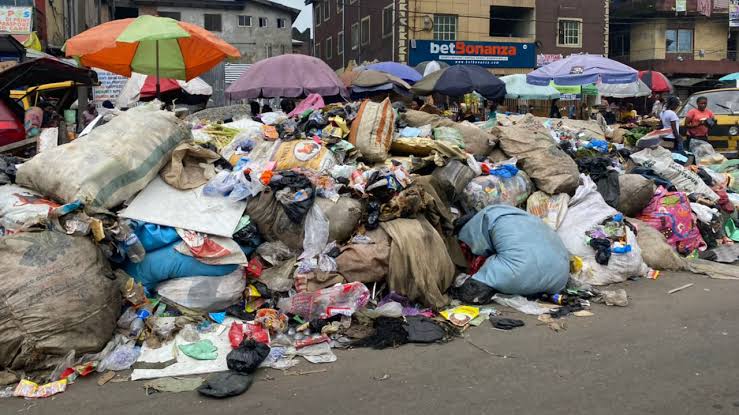
The federal government has announced it will begin enforcing the ‘Producer Pays Principle’ in the beverages and packaging sector to encourage circular economy and protect environmental sustainability.
Innocent Barikor, director-general of the National Environmental Standards and Regulations Enforcement Agency, provided this information at a stakeholders workshop held in Lagos.
Speaking at the event, Mr Barikor described the compliance enforcement as a departure from the voluntary compliance approach to a mandatory one to be instituted before the end of 2026.
He said the event came at a pivotal moment in Nigeria’s journey toward environmental sustainability.
According to him, the challenge of waste management, particularly plastic waste, has evolved into a pressing national priority demanding our collective action.
According to him, this means that producers, importers, and brand owners are now legally required to take responsibility for the entire lifecycle of their products: from when the product is designed and produced to its end-of-life.
“When disposed including collection and recycling activities. Management of the post-consumer products’ packaging is no longer just ” good corporate action or social responsibility” but a regulatory requirement for doing business in Nigeria.
“Today, we will therefore formally sensitise people on the National Guidelines for the implementation of EPR Programme in line with circular economy on plastic packaging.
“This document is not merely a set of rules, but a roadmap and masterplan that would guide you to compliance as enshrined in the emerging National Environmental (Plastic Waste Control) Regulations, 2026,” he said.
The NESREA boss urged producers to register with the authority for seamless tracking regulations.
Mr Barikor said the guideline provided, among others, clear targets regarding specific annual targets for collection, recovery and recycling, and defined the roles and responsibilities of producers and Producer Responsibility Organisations.
He commended the interface of the Food Beverage Recycling Alliance and recyclers, as well as the interplay amongst these sector players and reporting standards in relation to standardisation formats.
He stated that the EPR programme was not a “tax” levied on industries.
(NAN)