
The Federal Government has stepped up disease surveillance at the nation’s borders following the resurgence of Ebola in Uganda and the Democratic Republic of the Congo, introducing stricter health checks for incoming travellers and returning pilgrims.
As part of efforts to prevent the virus from entering the country, authorities have rolled out a mandatory health declaration process for passengers arriving in Nigeria. The initiative includes enhanced screening at airports, increased monitoring of travellers and closer coordination between health and aviation agencies.
The precautionary measures follow the World Health Organisation’s declaration of the recent Ebola outbreak, linked to the Bundibugyo strain, as a global public health emergency on May 17, 2026.
Speaking on the development, the Director of Operations, Licensing and Training Standards at the Nigerian Civil Aviation Authority (NCAA), Don Spiff, disclosed that all travellers heading to Nigeria would be required to complete an Ebola-related health questionnaire before departure.
According to him, the programme is being implemented by the Nigeria Centre for Disease Control and Prevention (NCDC) in partnership with aviation stakeholders and public health officials.
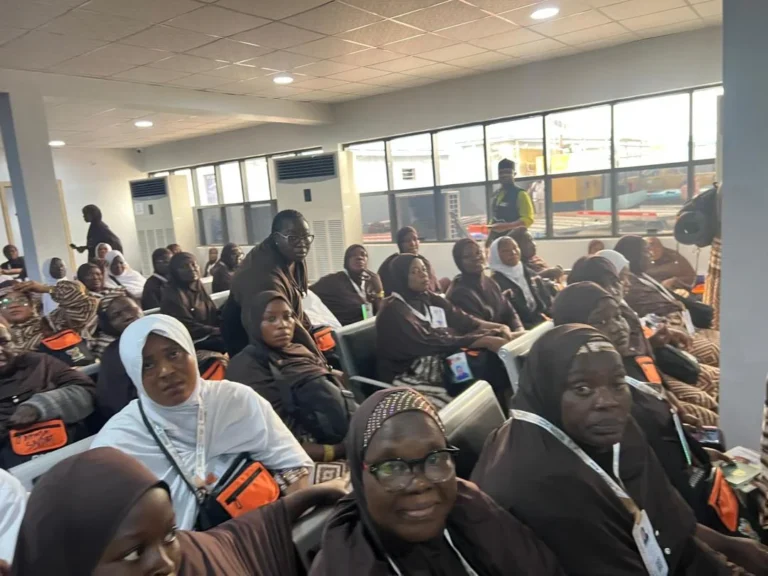
Spiff noted that the timing of the outbreak coincides with the return of thousands of Nigerian pilgrims from Saudi Arabia beginning June 4, making stricter monitoring essential at major international airports in Lagos, Abuja, Port Harcourt, Enugu and Kano.
He acknowledged that some pilgrims may experience difficulties filling out the online form due to literacy challenges but assured that tour operators, airport health officials and NCDC personnel would provide assistance.
The NCAA official further revealed that special screening arrangements had been made for flights arriving from Uganda. Ugandan Airlines services into Lagos, particularly those scheduled on Sundays and Mondays, will undergo additional checks through the Hajj terminal of the Murtala Muhammed International Airport.
He added that aviation authorities had also issued directives to international airlines, including Ethiopian Airlines, while exploring measures such as staggered flight arrivals to ease pressure on screening facilities.
In a separate advisory, the NCAA instructed all international airlines operating into Nigeria to ensure passengers complete the NCDC Health Declaration Form before arrival. The regulator said the directive forms part of broader efforts to strengthen the country’s preparedness against the disease.
The authority stressed that it is collaborating with the Federal Ministry of Health, NCDC, Port Health Services, state health agencies and international partners to bolster response mechanisms. Passengers unable to complete the online declaration would be allowed to do so upon arrival using paper forms.
At airports across the country, health officials have already begun implementing stricter surveillance measures. Arriving passengers are being subjected to temperature checks, verification of vaccination records and collection of contact information for possible tracing purposes.
Aviation authorities confirmed that heightened monitoring is underway at all international airports, although no Ebola-related case has been detected in Nigeria.
Meanwhile, the NCDC has activated nationwide preparedness protocols and advised healthcare workers to maintain a high level of vigilance. The agency warned that Nigeria remains vulnerable because of international travel and similarities between Ebola symptoms and those of illnesses such as malaria and Lassa fever.
Public health expert Prof. Tanimola Akande also urged Nigerians to support preventive efforts, stressing the importance of recognising symptoms early and seeking immediate medical attention for suspected cases.
He called for stronger surveillance at airports, seaports and land borders, warning that the Bundibugyo strain can be difficult to detect and carries a mortality rate estimated between 30 and 50 per cent.
Beyond Nigeria, international support for Ebola containment efforts continues to grow. The United States Department of State announced more than $112 million in assistance for Uganda and the Democratic Republic of the Congo to aid disease control operations. The package will fund personal protective equipment, contact tracing, laboratory testing and border screening activities.
An additional $13.5 million has also been earmarked to strengthen Kenya’s preparedness as countries intensify efforts to curb the spread of the virus.