
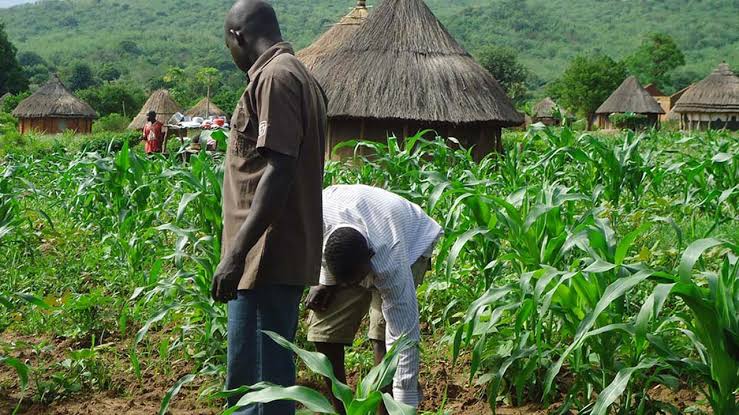
The federal government’s fertiliser and farm-input interventions have improved farmers’ productivity and livelihoods in Kano, the All Farmers Association of Nigeria has said.
AFAN’s secretary in Kano, Saleh Maigari-Tumfafi, said this in an interview on Wednesday. Speaking on behalf of the chairman, Sani Abubakar-Kofarmata, he said the interventions had increased farmers’ access to fertiliser, seeds, agrochemicals and farm equipment at subsidised rates.
Mr Maigari-Tumfari said thousands of farmers benefited from fertiliser and seeds distributed under the National Agricultural Growth Scheme-Agro-Pocket programme in 2023 and 2024. He said that wheat farmers received farm inputs, including seedlings, fertiliser and agrochemicals, at 50 per cent subsidy in December 2023.
Mr Maigari-Tumfari added that wheat farmers also received similar support at a 50 per cent subsidy in December 2024 under the National Agricultural Development initiatives. He said that rice farmers also received free fertiliser and seedlings in June and July 2024.
“Rice, maize, sorghum and millet farmers also received fertiliser, seeds and agrochemicals at 50 per cent subsidy between August and September 2024,” he said.
Mr Maigari-Tumfari said over 42,000 bags of fertiliser were distributed to farmers in 2025, with beneficiaries receiving two bags each free of charge under a programme supported by the Central Bank of Nigeria (CBN).
“In 2026, over 20,000 bags of fertiliser were distributed through the National Agricultural Development Fund (NADF) and the Federal Ministry of Agriculture and Food Security. About 5,040 farmers benefited, with each farmer receiving four bags of fertiliser free of charge,” Mr Maigari-Tumfari said.
Mr Maigari-Tumfari explained that about 80 cooperative groups and farmers’ associations also benefited from free fertiliser, farm inputs and equipment. He listed the items to include pesticides, sprayers, power tillers, herbicides, liquid fertilisers and water pumps among others.
He said the interventions had improved farmers’ access to inputs, increased productivity and encouraged more people, particularly youths, to engage in agriculture.
“Some farmers who suffered losses have returned to farming because of the support, which is helping to sustain food production,” he said.
He said the federal government had responded to farmers’ complaints over crop diseases, citing interventions for sugarcane farmers affected by stem borers and tomato farmers affected by Tuta absoluta.
He said the interventions had contributed to increased self-reliance, employment opportunities and economic activities in rural and urban communities.
Mr Maigari-Tumfari, however, called for increased investment in rural infrastructure, warehouses and processing clusters, as well as affordable single-digit interest loans for farmers.
(NAN)