
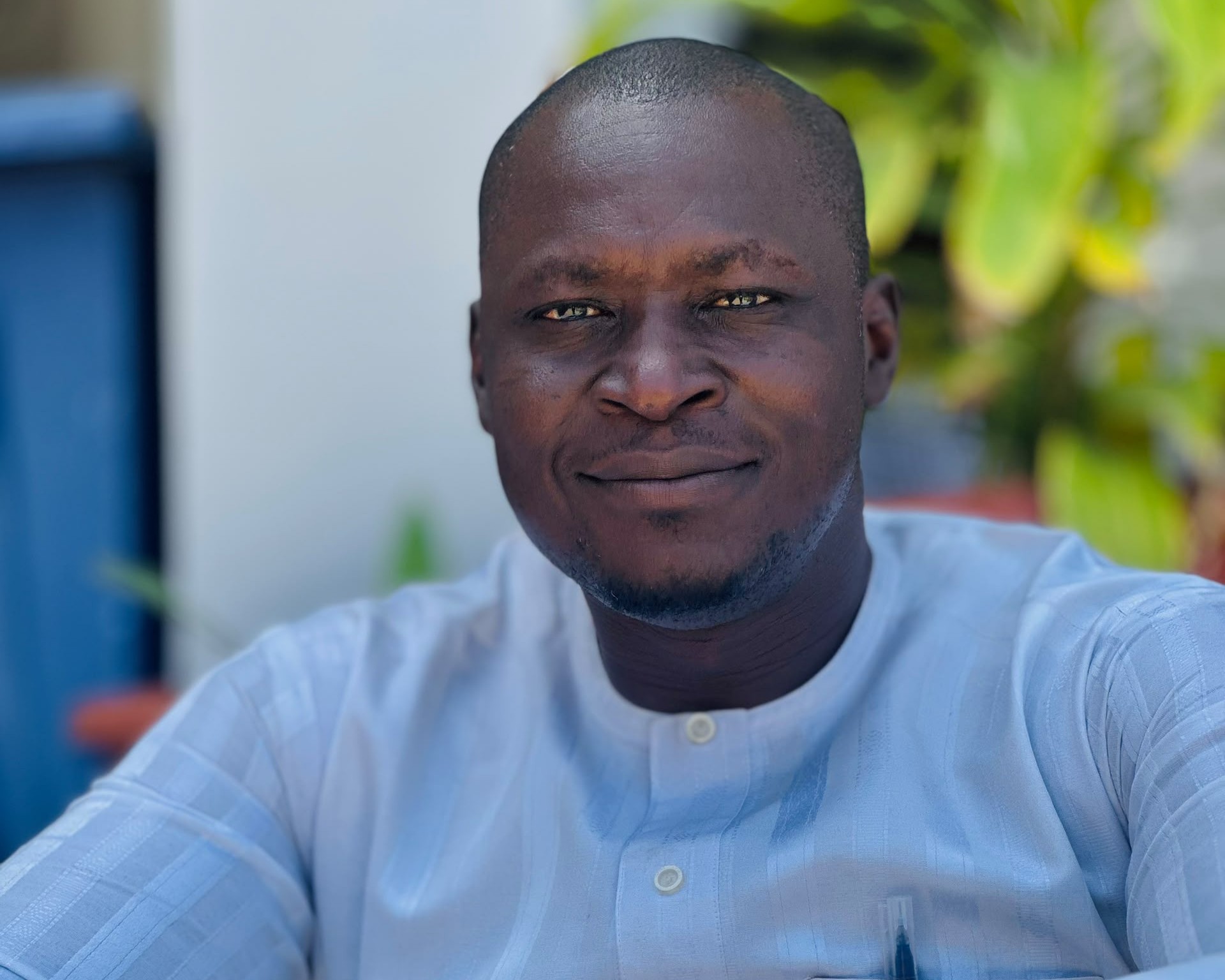
By Cliff Stanley
The Christian Association of Nigeria (CAN) marks its golden jubilee not merely as the anniversary of an institution, but as the survival story of one of Africa’s most ambitious ecumenical projects. Founded in August 1976 to give Nigeria’s fragmented Christian community a common voice, CAN has endured internal rivalries, political pressure, sectarian tension and national insecurity yet remains a central actor in debates on religious freedom, governance and peaceful coexistence.
Its anniversary theme, “Walking Together in Faith,” captures both its founding ideal and its unfinished task: to turn doctrinal, ethnic and social diversity into a disciplined public witness.
Origins: Unity Born of Necessity
CAN’s creation was not a spontaneous act of church harmony; it was a response to a practical national dilemma. On 27 August 1976, the Federal Military Government under General Olusegun Obasanjo invited Christian leaders to Dodan Barracks, Lagos, for consultations on the proposed introduction of the National Pledge and National Flag Recitation into primary and secondary schools.
The meeting exposed a strategic weakness: Nigerian Christians had no unified national platform through which to deliberate and respond. Afterward, church leaders moved to the nearby Catholic Secretariat and resolved to establish one. From proposed names, they chose the Christian Association of Nigeria; its first constitution was signed on 20 April 1977, with Cardinal Dominic Ekandem as its first president.
Scholarly accounts place this development in the political context of the late 1970s, when Christians sought a stronger collective voice in a state they perceived as increasingly shaped by Muslim political influence. CAN therefore emerged as both an ecumenical body and an advocacy platform for Christian interests in public life.
A House of Many Traditions
CAN’s greatest institutional achievement is its ability to hold together Christian traditions that once regarded one another with suspicion. Its current structure brings together five major blocs: the Christian Council of Nigeria (CCN), the Christian Pentecostal Fellowship of Nigeria/Pentecostal Fellowship of Nigeria (CPFN/PFN), the Organisation of African Instituted Churches (OAIC), TEKAN/ECWA, and the Catholic Secretariat of Nigeria (CSN).
CAN President Archbishop Daniel Okoh has acknowledged that the early journey was marked by “mutual suspicion, prejudice, marginalisation and divisions” among church traditions. Mainline churches initially saw themselves as the natural centre of Nigerian Christianity, while Pentecostals, African-initiated churches and others were often treated as peripheral participants in the ecumenical movement.
That CAN now presents a common platform across Catholic, Protestant, Pentecostal, evangelical and African-initiated traditions is therefore historically significant. Okoh has described Nigeria as the only African country where such diverse Christian traditions are united under one ecumenical umbrella.
Historical Challenges
CAN’s history has been shaped by the same forces that have tested Nigerian nationhood.
Denominational rivalry: Leadership disputes and competition between denominational interests have periodically weakened the association’s collective voice. Okoh has admitted that CAN has experienced “difficult moments, disagreements and leadership challenges.”
Religion-state tension: From the Sharia debates of the 1970s and 1980s to the controversy over Nigeria’s relationship with the Organisation of Islamic Cooperation, CAN became a principal Christian voice in contested questions of religion and national identity.
Insecurity and humanitarian crisis: Insurgency, banditry, communal violence and displacement have placed churches and church-based relief networks under severe strain. CAN’s current leadership identifies internally displaced persons, children denied education, unemployed youths, farmers unable to reach their farms, women facing violence and trafficking victims as urgent constituencies for Christian action.
Political capture and credibility: The association must speak to power without becoming an instrument of partisan politics. Okoh has warned that the Church must hold leaders accountable “without turning its interventions into partisan attacks.”
Digital-age polarisation: Inflammatory exchanges on social media now threaten the same unity CAN was created to protect.
Achievements: A Prophetic and Civic Voice
Over five decades, CAN has moved beyond denominational representation into national advocacy. Its president summarised its record as sustained engagement with “religious freedom, constitutional rights, democracy, good governance, corruption, national unity, insecurity, humanitarian crises, education, healthcare, poverty, gender justice, youth development, electoral integrity, peace-building and national development.”
Three contributions stand out.
First, ecumenical institution-building. CAN transformed a loose coalition of church leaders into a durable national structure with a constitution, leadership succession, state chapters and a framework for collective Christian action. Its motto “That they all may be one” is both a biblical aspiration and an organisational mandate.
Second, public-interest advocacy. CAN has used its moral authority to press for constitutional rights, accountable government and protection of vulnerable citizens. At the golden jubilee, Okoh insisted that silence in the face of citizens’ suffering would undermine the Church’s moral authority.
Third, peace-building and interfaith engagement. In a country where religious identity is often politicised, CAN’s continued engagement with government, Muslim counterparts and civic actors matters. The association’s call for bridge-building, tolerance and mutual understanding is not decorative rhetoric; it is a necessary contribution to social cohesion.
The Way Forward
CAN’s next fifty years will be judged less by anniversary ceremonies than by institutional depth and public impact. Its leadership has already identified the priorities: stronger Christian unity, interfaith engagement, humanitarian intervention, youth and women’s participation, institutional governance, research, financial sustainability and digital relevance.
A credible agenda should include:
Evidence-based advocacy: Establish research and policy units capable of producing credible data on insecurity, education, poverty, religious freedom and governance, rather than relying only on moral declarations. Okoh has specifically called for a more “informed, courageous and evidence-based” approach.
Youth and women’s leadership: Nigeria’s demographic future rests with young people; CAN must move women and youth from ceremonial representation into decision-making, peace-building and humanitarian leadership.
Structured interfaith dialogue: Build permanent local and national mechanisms for early-warning, conflict mediation and joint social action with Muslim and traditional institutions.
Humanitarian professionalism: Strengthen diocesan, denominational and CAN-coordinated responses to displacement, food insecurity, trafficking and educational exclusion.
Democratic integrity: Sustain non-partisan civic education and election monitoring, especially its warning that elections should be “a contest of ideas,” not violence.
Financial and governance reform: Improve transparency, leadership development and sustainable funding so that the association’s independence is not compromised.
A Jubilee of Responsibility
At its golden jubilee, CAN honoured former Head of State Yakubu Gowon, former Presidents Olusegun Obasanjo and Goodluck Jonathan, former Vice-President Yemi Osinbajo, and First Lady Senator Oluremi Tinubu symbols of the association’s long engagement with Nigeria’s public life.
But the deeper meaning of the jubilee lies in Okoh’s own framing: the anniversary is not simply a celebration of the past, but a “re-commissioning” for the next fifty years.
CAN’s founding generation built an umbrella; the present generation must build a bridge. If it can convert its diversity into disciplined unity, its moral voice into evidence-based advocacy, and its prayers into practical service, then CAN’s second half-century can help Nigeria move closer to the vision it was created to serve: a nation where faith inspires service, peace and progress.
Cliff Stanley, Political Scientist,
Write from Jos Ecwa Theological Seminary (JETS) Cliffstanley3@gmail.com
07032826319.