
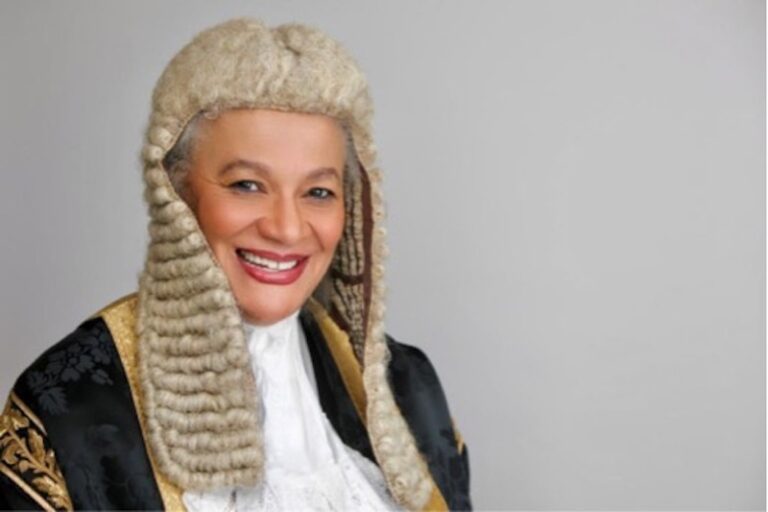
A retired Supreme Court Justice, Amina Augie, has called on political parties to respect their constitutions and strengthen internal democratic processes to prevent avoidable disputes from ending up in court.
Augie made the appeal on Tuesday in Bauchi while participating as a panellist at a democracy dialogue alongside Johnson Nketia, national chairman of Ghana’s National Democratic Congress.
She said political parties should develop effective mechanisms for resolving disagreements among their members instead of allowing internal disputes to escalate into electoral litigation.
According to her, politicians often draw the judiciary into political conflicts by disregarding their parties’ rules and failing to settle disputes internally. She noted that reducing such cases would ease the pressure on the courts.
Augie also criticised the lack of discipline among political actors, warning that their continued reliance on the judiciary to resolve preventable political crises could weaken public confidence in the justice system.
She stressed that judicial independence exists primarily to protect citizens’ rights, rather than to serve the interests of judges.
“The independence of the judiciary has nothing to do with benefiting the judge. It is a right of the citizen,” she said, adding that citizens expect judges to understand the law, study cases carefully and deliver decisions based on the facts and applicable laws.
However, Nketia disagreed with the view that the judiciary should be kept away from politics, arguing that courts have a constitutional responsibility to check the exercise of political power.
He maintained that political parties and citizens would continue to turn to the judiciary whenever democratic principles and established rules are violated.
Nketia, while discussing major electoral decisions across Africa, including the nullification of presidential elections in Kenya and Malawi, said courts must remain the final avenue for resolving electoral disputes when election management bodies fail to comply with the law.
President of the Court of Appeal, Justice Monica Dongban-Mensem, also commended the organisers of the dialogue, describing its theme as timely given the challenges confronting democratic governance across Africa.
Dongban-Mensem said changes in Africa’s political, technological and socio-economic environment made continuous discussions on the relationship between political institutions and the judiciary necessary.
She emphasised that democratic governance depends on strong institutions, respect for constitutional provisions and the rule of law, as well as a commitment to justice, accountability and peaceful dispute resolution.
The Court of Appeal president further explained that while the judiciary is responsible for interpreting the law, protecting constitutional order and safeguarding citizens’ rights, political parties remain important platforms for democratic participation, representation and leadership development.
Despite their different responsibilities, she said both institutions have a shared duty to protect democratic legitimacy and maintain public confidence in governance.