
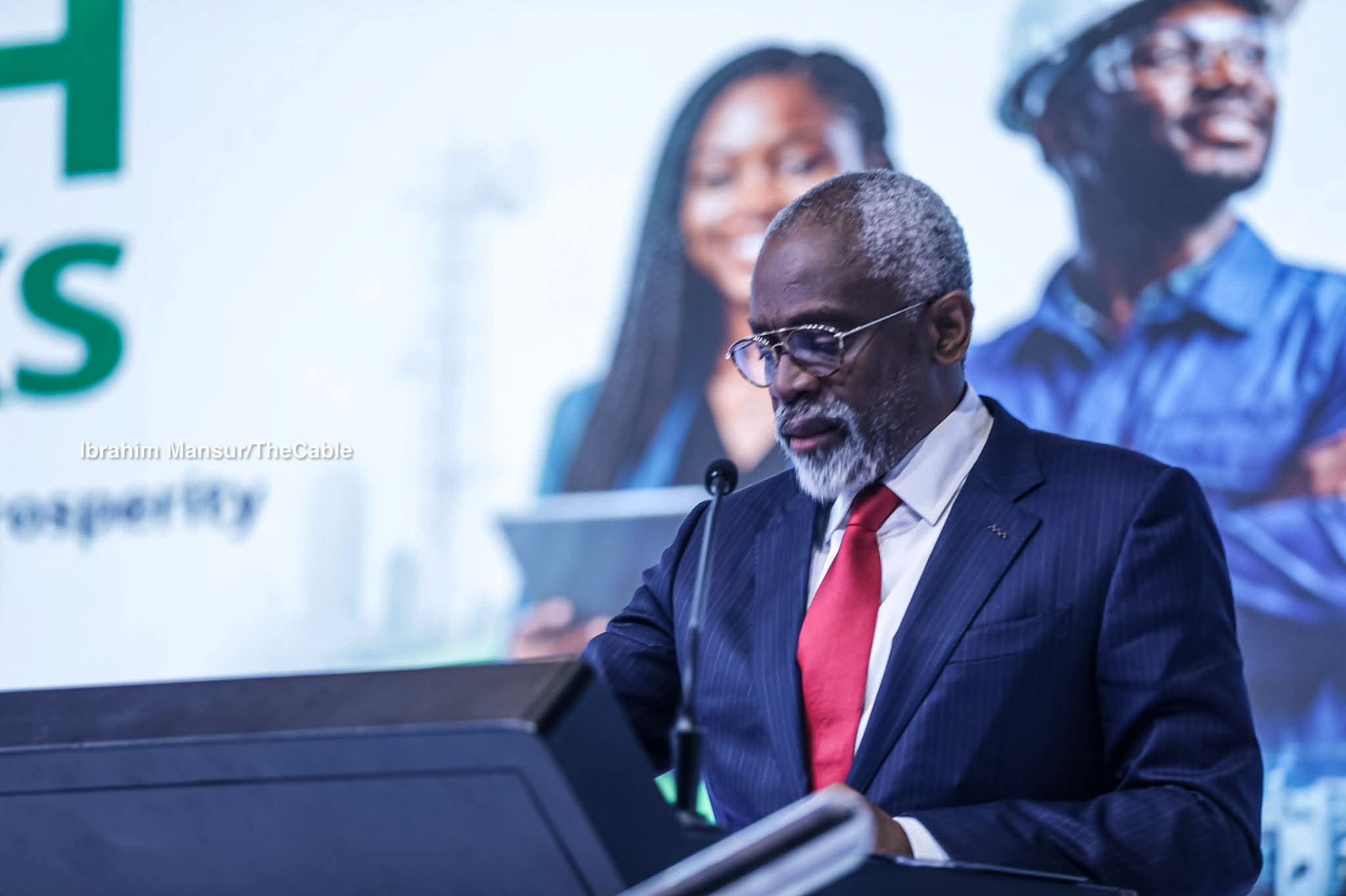
Femi Gbajabiamila, chief of staff to President Bola Tinubu, says states seeking to establish their own police forces must demonstrate the capacity to fund regular salaries and continuous training before the services begin operations.
Gbajabiamila spoke on Monday during a session on security, stability and economic resilience at the 32nd Nigerian Economic Summit.
“A state taking on policing must be able to sustain the service after the initial purchase of vehicles and uniforms,” he said.
“Regular pay and continued training are essential to professional conduct. An institution that cannot meet its obligations to its officers becomes vulnerable to provide patrons and unlawful demands on the public.
“Our framework, therefore, requires credible provision for recurrent costs before a service begins operations.
“Federal policing will continue where a state is not yet ready.”
He said military operations could dislodge armed groups, but communities also needed regular policing to detect threats early, investigate crimes and enable residents to return and businesses to reopen.
Gbajabiamila said state police formed part of the administration’s broader security reform agenda, adding that the proposal would allow willing and capable states to assume greater responsibility for public safety.
“Bringing policing closer to the communities itself can improve local intelligence and shorten the time between a call for help and an effective response,” he said.
“A capable federal service will remain indispensable where crime crosses state boundaries or requires specialist national capacity.”
Gbajabiamila said 24 state houses of assembly have approved the constitutional amendment required for the reform as of October 23.
He added that the presidential working group on state police, which he chairs, submitted a draft national policing bill and 29 consequential amendment bills to the federal ministry of justice on October 19.
According to him, the proposals would be sent to Tinubu for approval before being transmitted to the national assembly.
He said the proposed framework would give states greater responsibility for public safety while maintaining national professional standards and independent oversight.
Gbajabiamila also acknowledged concerns that state police could be used to target political opponents or vulnerable communities.
“The proposed framework combines greater state responsibility with national professional standards and independent oversight,” he said.
“The concern that police powers could be used against political opponents or vulnerable communities is serious.
“Our answer is to place enforceable limits on those powers and provide remedies when they are abused.
“A citizen’s entitlement to protection cannot depend on whom he supports or where she comes from.”