
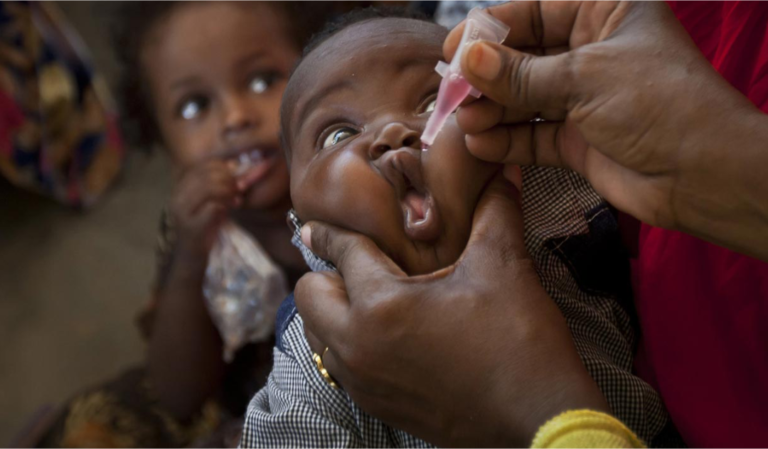
The National Primary Health Care Development Agency says Nigeria’s intensified immunisation drive has resulted in the administration of over 174 million vaccine doses within one year.
The agency said the development was greatly boosting the utilisation of primary healthcare centres nationwide.
The executive secretary of NPHCDA, Muyi Aina, disclosed this in an interview on Wednesday in Abuja. He spoke on the sidelines of the inaugural National Traditional and Religious Leaders Summit on Health.
According to Mr Aina, the immunisation push has not only expanded vaccine coverage but also restored public confidence in government health facilities.
“The immunisation scale-up, covering routine vaccines and targeted campaigns against polio and other vaccine-preventable diseases, forms part of broader reforms,” he said.
He added that the reforms were being implemented under the Federal Ministry of Health and Social Welfare to strengthen primary healthcare delivery.
Mr Aina noted that about 4,000 PHCs had been revitalised over the past one and a half years, with 2,332 facilities fully refurbished and equipped to provide a minimum package of services. He said the services include maternal and newborn care, immunisation, diagnostics and health promotion.
“These facilities are now functional, safe and accessible. Mothers and children can receive essential vaccines and other services closer to their communities,” he said.
Mr Aina said the federal government had deployed more than 10,000 solar-powered refrigerators nationwide to strengthen vaccine storage and distribution, particularly in rural and hard-to-reach communities.
He added that medical equipment, hospital beds, and laboratory equipment were supplied to over 500 facilities, alongside essential medicines, vaccines, and family planning commodities.
On human resources for health, Mr Aina disclosed that 78,000 health workers had been trained out of a target of 120,000. He said states were supporting the recruitment of community-based health workers to ensure round-the-clock service delivery.
“Incentives, including the distribution of 50,000 uniforms to frontline workers, have been introduced to boost morale and professionalism,” he said.
Mr Aina acknowledged that uptake of the pentavalent vaccine remained uneven in some areas, stressing the role of traditional and religious leaders in addressing vaccine hesitancy and strengthening community trust.
“We are leveraging community structures to close immunisation gaps and ensure no child is left behind,” he said.
He further disclosed that a digital performance management platform was being rolled out to monitor service delivery and enhance accountability across PHCs nationwide.
The NPHCDA boss said the impact of the reforms was evident in rising PHC utilisation figures, from 34 million patients in the first quarter of 2024 to 47 million by the third quarter of 2025.
Mr Aina reaffirmed the government’s commitment to expanding routine immunisation and skilled birth attendance.
He said this would be achieved through sustained collaboration with states, development partners and community leaders to ensure near-universal access to essential primary healthcare services.
(NAN)