
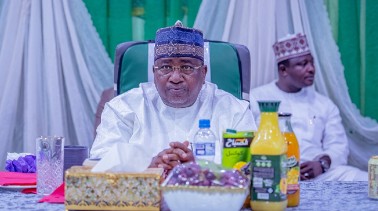
The Kebbi Commissioner for Budget and Economic Planning, Abba Sani-Kalgo, says the state has emerged as the best-performing state in fiscal management in Northern Nigeria and fifth nationally in the 2026 BudgIT State of States Report.
Mr Sani-Kalgo disclosed this at a news conference in Birnin Kebbi on Saturday while presenting the findings of the report, which assessed the fiscal performance of the 36 states of the federation based on their 2025 financial records.
“The ranking placed Kebbi first among the 19 Northern states. This is evidence of the state government’s commitment to fiscal discipline, transparency and prudent management of public resources.
“The assessment was conducted by BudgIT, an independent civic organisation known for promoting fiscal transparency and accountability in Nigeria.
“The report evaluated states based on four major indicators: fiscal performance, revenue sustainability, debt sustainability and the prioritisation of spending on critical sectors, including agriculture, health, education, water and sanitation.
“Kebbi recorded a 59.54 per cent growth in total revenue in 2025, the highest among states in the North-West,” he said.
Mr Sani-Kalgo said the state’s internally generated revenue (IGR) more than doubled, rising by 107.81 per cent to N23.62 billion, while tax revenue increased by 38.74 per cent.
He added that non-tax revenue also recorded more than threefold growth, while the state posted a fiscal surplus of N15.13 billion, the highest in the North-West.
On capital expenditure, Mr Sani-Kalgo said the state recorded a 60.08 per cent increase, representing 63.45 per cent of its total expenditure in the year under review.
He explained that the figure indicated that more than 63 per cent of every naira spent by the state went into capital projects, including roads, schools, hospitals, water facilities, irrigation and agricultural support.
The commissioner said the development reflected the administration’s deliberate policy of prioritising infrastructure and other investments capable of delivering long-term benefits to residents.
On debt sustainability, Mr Sani-Kalgo said debt servicing accounted for only 2.40 per cent of the state’s total revenue, adding that Kebbi remained the fourth least-indebted state in the country.
He attributed the performance to deliberate fiscal reforms introduced by the administration of Governor Nasir Idris, including strengthening the Kebbi Internal Revenue Service, automating revenue collection and expanding the state’s tax base.
Other measures, he said, included maintaining a credible Medium-Term Expenditure Framework, regularly publishing approved budgets and budget implementation reports, and producing citizens’ budgets to promote public access to fiscal information.
He added that the state had consistently complied with fiscal transparency, accountability and sustainability commitments under its development partnership programmes.
The commissioner, however, used the opportunity to fault the African Democratic Congress (ADC) in the state over its allegations of financial mismanagement against the government.
He said the party had, throughout the year, made several allegations through press conferences, social media and broadcast platforms without presenting verifiable evidence to substantiate its claims.
According to him, the BudgIT findings contradicted the allegations, particularly regarding the state’s fiscal surplus, low debt-servicing burden and increased allocation to capital expenditure.
He challenged the ADC leadership to study the report and acknowledge the state’s performance rather than continue making allegations without supporting evidence.
The commissioner commended civil servants, officials of the state revenue service, traditional institutions, community leaders, farmers, traders and entrepreneurs for their contributions to the state’s economic progress.
He also praised the governor for insisting on accountability and prudent management of public funds since assuming office.
Mr Sani-Kalgo said the government remained committed to sustaining the state’s position and improving the living conditions of residents through transparent and responsible governance.
(NAN)