
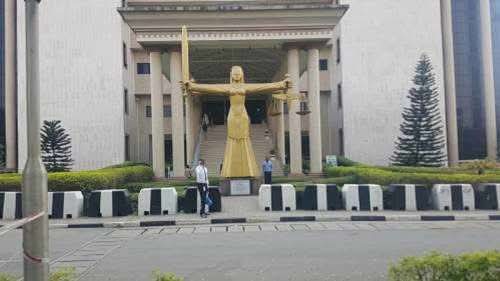
The Federal High Court of Nigeria on Monday formally ushered in a new era with the launch of its electronic filing (e-filing) system in the Lagos Division, marking a decisive shift away from manual, paper-based processes.
During the inauguration, the Chief Judge, Justice John T. Tsoho, described the transition as both inevitable and urgent, as he described digitalisation as essential to the efficiency of the justice system.
“For too long, the corridors of the Federal High Court have been synonymous with the physical weight of paper and mountains of case files.
“Today, we declare that era over. We are not just installing software; we are dismantling the barriers that have historically slowed the wheels of justice,” Tsoho said.
The CJ explained that the e-filing platform would enhance transparency and eliminate risks tied to physical documentation, including tampering, loss, and damage.
According to him, every action carried out on the system would leave a traceable digital footprint and eliminate the possibility of backdating processes and bypassing gatekeepers who seek to monetise access to the court.
“The court registry no longer closes at 2 pm. Litigants can file from any location with internet access.
“The time for a file to reach a judge’s desk has been reduced from days to seconds.
“All filing fees are processed through integrated gateways, ensuring every kobo is accounted for by the Federation,” he said.
Justice Tsoho added that legal practitioners were expected to embrace digital tools to maximise the benefits of the system.
“Lawyers are encouraged to adopt digital signatures and utilise the e-Affidavit platform for documents requiring a commissioner for oaths,” he stated.
Reinforcing the case for digital transformation, the chairman of the Judicial Information Technology Policy Committee, Justice Kashim Zannah, shared an experience from Borno State to illustrate the resilience of electronic systems.