
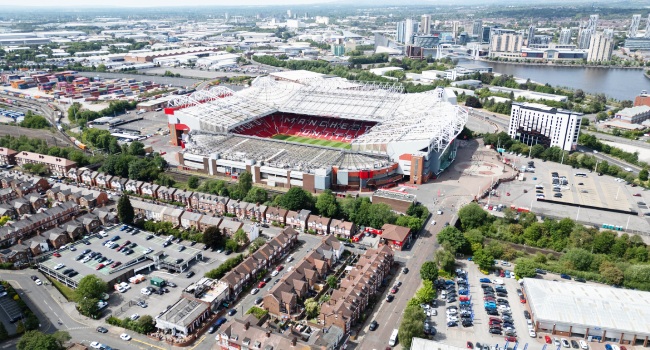
Manchester United have taken a major step towards the construction of their proposed £2 billion stadium after securing most of the land required for the ambitious project.
The Premier League club announced on Monday that it had acquired a 25-acre site located near Old Trafford, paving the way for the development of a new 100,000-capacity arena that would become the largest sporting venue in the United Kingdom.
Club officials said the newly secured triangular parcel of land, situated approximately 350 metres northwest of Old Trafford, eliminates the need to acquire neighbouring land currently occupied by freight operator Freightliner, which had previously complicated planning discussions.
The acquisition marks a significant milestone in United’s long-term vision to replace their historic stadium with a modern, world-class facility.
Collette Roche, chief executive overseeing the stadium project, described the development as a crucial breakthrough in the club’s plans.
According to her, building the new venue close to Old Trafford will allow Manchester United to preserve the traditions and matchday culture that supporters have built over generations.
She noted that obtaining the appropriate land was essential to delivering a stadium capable of honouring the club’s rich history while meeting future demands.
Manchester United first revealed plans for the £2 billion project in 2025, outlining a broader regeneration scheme that extends beyond football infrastructure.
The proposed development is expected to transform the surrounding area through a 370-acre regeneration programme that includes the construction of 15,000 homes and the creation of approximately 48,000 local jobs, alongside 90,000 employment opportunities nationwide.
A detailed master plan for the wider Old Trafford redevelopment is expected to be presented on July 9.
Co-owner Jim Ratcliffe has consistently backed the project, describing the decision to rebuild as an obvious choice after acquiring a stake in the club in 2024.
While Old Trafford has served as Manchester United’s home for more than a century, concerns have grown in recent years over the condition of the 74,000-capacity stadium, prompting calls for a modern replacement.