
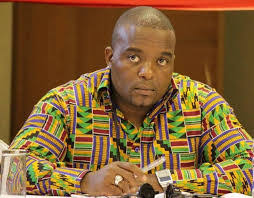
Pan-Africanist and constitutional lawyer, Brian Kagoro has urged Nigeria to adopt a more knowledge-driven approach to politics, cautioning that sustainable development cannot emerge from a system that ignores expertise and critical thinking.
He made the remarks during his presentation at the June 12, 2026 edition of The Platform, where he stressed that governance outcomes are shaped by the quality of ideas and intellectual input behind political decisions.
According to him, individuals aspiring to political leadership must be grounded in credible knowledge systems and guided by data, evidence, and scientific reasoning. He warned that it is unrealistic to expect intelligent governance in a system that sidelines intellectual capacity.
“We cannot de-intellectualise politics and expect governance to be intellectual,” he said, adding that leadership choices must be backed by science, data, or verifiable knowledge.
Kagoro noted that in a rapidly advancing global environment driven by technology and artificial intelligence, Nigeria must better position itself to tap into its large pool of skilled professionals and thinkers.
He observed that many Nigerians have distinguished themselves in top global institutions such as the Massachusetts Institute of Technology (MIT) and other centres of innovation, yet their expertise is rarely integrated into national policymaking.
He described this disconnect as a recurring gap between intellectual capacity and political authority, where governance often operates without meaningful input from experts.
“There is always a gulf between knowledge and complacent, self-indulgent power,” he said, also highlighting the tension between future-oriented thinking and present-focused political comfort.
The constitutional lawyer further called for stronger systems that connect Nigeria’s intellectual community with grassroots realities, arguing that many skilled Nigerians remain distant from domestic challenges due to migration and external opportunities.
He emphasised the need for the country to “harvest its diverse, rich intellectual class” and ensure that expertise is effectively channelled into national development efforts.
Kagoro also criticised the nature of public discourse in Nigerian politics, saying it is often dominated by trivial matters rather than issues of national importance.
He described the trend as a “Premier League of pettiness,” warning that such distractions weaken serious policy conversations and slow down progress.
He concluded by urging both leaders and citizens to elevate political discussions and focus on long-term solutions that match Nigeria’s scale, diversity, and development needs.