
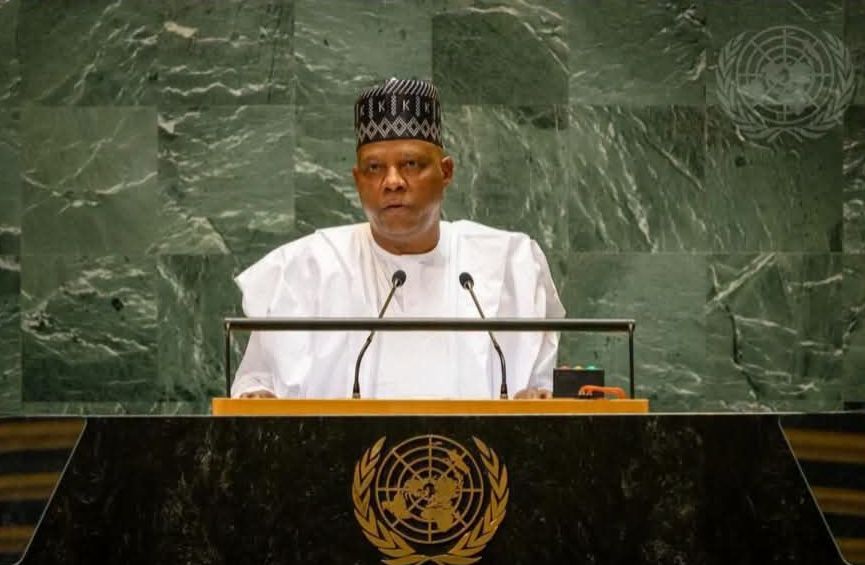
Nigeria will renew its campaign for permanent representation on the UN Security Council as Vice-President Kashim Shettima leads the country’s engagements at UNGA81.
The country will also push for wider UN reforms, stronger development outcomes for developing countries and increased international investment in Nigeria.
Foreign affairs minister Bianca Odumegwu-Ojukwu and permanent representative to the UN, Jimoh Ibrahim, said this while briefing Mr Shettima on the country’s priorities in New York.
The briefing reviewed Nigeria’s agenda, expectations and strategic engagements during the 81st session of the United Nations General Assembly.
The vice-president’s spokesman, Stanley Nkwocha, disclosed this after the meeting. Mr Nkwocha said Nigeria would build on positions advanced during previous UN engagements, particularly its advocacy for reforms that make multilateralism more responsive to developing countries.
He said Mr Shettima would communicate President Bola Tinubu’s positions across several high-level forums during the gathering.
Among the priorities is Nigeria’s longstanding campaign for permanent African representation on the UN Security Council.
Nigeria has consistently argued that Africa’s continued absence from permanent membership of the Security Council represents a major imbalance in global governance. The 15-member council has five permanent members (China, France, Russia, the United Kingdom, and the U.S.) with veto power.
Africa, despite comprising 54 UN member states and accounting for a substantial share of issues the council considers, has no permanent seat.
Nigeria has maintained that reform should reflect contemporary geopolitical realities and give Africa greater participation in decisions affecting international peace and security.
Mr Nkwocha said Nigeria would also engage strategically with governments, international organisations, businesses and development partners throughout UNGA high-level week.
Mr Jimoh said Nigeria’s participation would focus heavily on reforms that can increase the UN’s practical impact on member states. According to him, reform should ensure that multilateral institutions translate policies and resources into measurable improvements for countries and their citizens.
Nigeria’s delegation is expected to use such engagements to promote sectors including solid minerals, energy, infrastructure, agriculture and technology.