
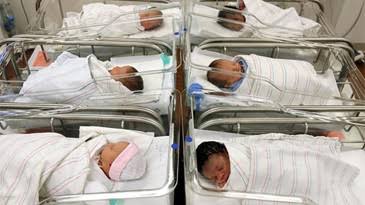
The National Population Commission (NPC) says more than 14.5 million children have been reached through targeted birth registration initiatives across Nigeria.
The commission disclosed this in a joint statement issued alongside the National Identity Management Commission (NIMC), Association of Local Governments of Nigeria (ALGON) and the United Nations Children’s Fund (UNICEF) to mark the 2026 Africa Civil Registration and Vital Statistics (CRVS) Day.
According to the organisations, the initiative is aimed at ensuring that children are registered at birth and receive legal recognition as citizens.
The registration campaign has particularly focused on children living in rural areas, hard-to-reach communities and humanitarian settings. Efforts are also being made to connect birth registration services with health facilities and community-based outreach programmes.
Bayelsa, Gombe, Jigawa, Taraba, Kebbi, Niger and Zamfara are among the states working to strengthen the connection between healthcare centres and community registration services.
NPC Chairman, Aminu Yusuf, said the commission remained committed to ensuring that every child was properly counted, protected and legally recognised.
He explained that birth registration represents a child’s first official recognition by the state and provides a foundation for accessing essential services such as healthcare, education and social protection.
The organisations also noted that accurate birth registration produces important demographic information needed by government for effective planning, service delivery and national development.
Nigeria is also working to improve its Civil Registration and Vital Statistics system through stronger cooperation among the NPC, NIMC, ALGON, development partners and local communities.
The statement said digital technology and closer integration between civil registration and identity management systems were helping to make registration services more accessible, reliable and efficient.
NIMC Director-General, Abisoye Coker-Odusote, said the development of integrated digital identity systems would allow Nigerians to have a more seamless identity record from birth into adulthood.
“Integrated digital identity systems create a seamless pathway for individuals from birth through adulthood, while improving access to services and strengthening governance,” she said.
The organisations further stressed the importance of local governments in expanding registration coverage and educating communities about the importance of birth registration.
ALGON National President, Bello Lawal, said decentralising the registration process was necessary to reach children in underserved areas.
Similarly, the Chairman of the House Committee on NPC, Okunjimi Odimayo, called for sustained political support to strengthen the country’s CRVS system.
He said effective civil registration and vital statistics systems were essential for improved government planning, service delivery and development outcomes.
Despite the progress recorded, the organisations acknowledged that major gaps remained across Africa. Current estimates indicate that only about half of children below five years of age in sub-Saharan Africa are registered at birth.
The region consequently accounts for the largest proportion of unregistered children globally, highlighting the need for continued investment in civil registration systems.
UNICEF Representative in Nigeria, Wafaa Abdelatef, described birth registration as a critical tool for safeguarding children’s rights and ensuring that no child is left without legal recognition.
“Birth registration is far more than a certificate. It is a gateway to protection, services and opportunity,” Abdelatef said.
She added that UNICEF would continue to support the Federal Government and other partners in developing integrated, decentralised and digital registration systems capable of ensuring that every child is counted, protected and able to enjoy their rights.