
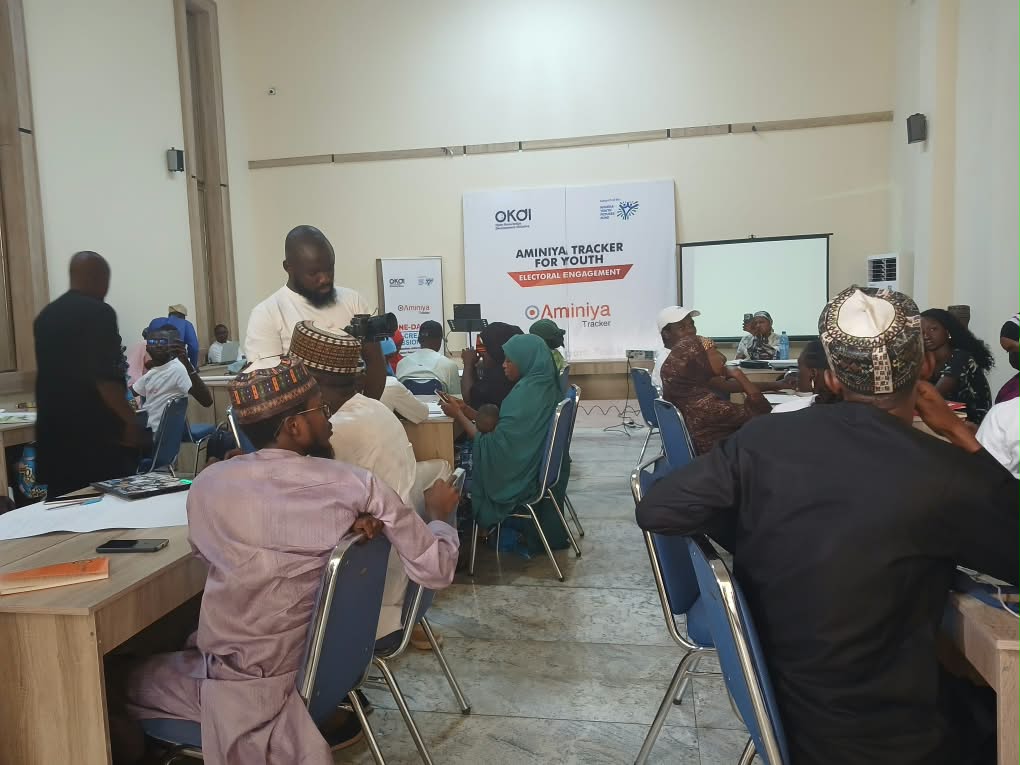
The Open Knowledge Development Initiative, with support from Nigeria Youth Futures Fund, on Saturday organised a one-day co-creation session to strengthen youth participation in electoral processes through information gathering, issue reporting, campaign promise tracking and electoral monitoring.
The initiative, known as the Aminiya Tracker for Youth Electoral Engagement, seeks to equip young people, particularly those from underserved communities, with the knowledge and digital tools to participate actively in elections and governance.
Speaking in an interview with our correspondent, the Project Lead, Abubakar Hayatu, said the initiative was inspired by the exclusion of many young people from political participation and electoral engagements.
He said, “The Aminiya Tracker project was inspired by the number of young people who have been left out of political participation and electoral processes.
“The project is bringing young people, particularly members of underserved communities, into the electoral process and helping them understand how to participate actively in elections and other democratic engagements.”
Hayatu said the project, which would run from September 2026 to March 2027, was designed to strengthen youth participation, improve understanding of electoral processes and promote accountability among political candidates.
He identified increased youth participation, effective tracking of campaign promises and improved awareness of governance issues as some of the major outcomes expected from the initiative.
According to him, the platform would provide young people with the opportunity to monitor candidates’ campaign commitments and hold them accountable for promises made to voters.
“We hope to address the gap in electoral tracking and accountability within the electoral system, particularly regarding campaign promises made by candidates that are often not fulfilled.
“We want young people to understand these issues and acquire the capacity to track such promises effectively,” he said.
The project lead added that the initiative would also empower participants to understand governance processes, identify community concerns and report issues requiring attention.
He explained that the digital platform was designed to promote inclusiveness by providing opportunities for women, young people and persons with disabilities to participate meaningfully in electoral activities.
Hayatu further disclosed that the initiative had an electoral monitoring component that would enable young people to capture and report developments during elections, including activities on election day.
Speaking during the session, Engr. Muhammad Bashir urged participants to embrace the co-creation approach, stressing that their contributions would shape the development and effectiveness of the initiative.
He said stakeholders from different professional backgrounds, including the media, technology developers and civil society organisations, had been brought together to contribute their perspectives to the project.
Bashir said, “Your inputs would be put into perspective, as stakeholders have been drawn from the media, tech and civil society to contribute to this session on electoral information, issue reporting, promise tracking and electoral monitoring.”
The session is expected to strengthen collaboration among stakeholders and develop practical approaches to improving youth engagement, electoral accountability and democratic participation.