
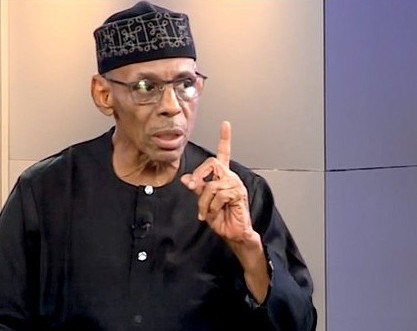
The National Chairman of the Peoples Redemption Party (PRP), Hakeem Baba-Ahmed, has raised alarm over what he described as growing anxiety among opposition parties in Nigeria, warning that most of them now feel vulnerable to possible deregistration.
Speaking on Channels Television’s Politics Today on Friday, Baba-Ahmed said the current political climate, combined with recent court rulings involving party registrations, has created uncertainty and fear within opposition circles.
According to him, no opposition party is entirely relaxed about its legal and political status.
“I don’t think any party in the opposition sleeps with both eyes,” he said when asked if the PRP was concerned about deregistration threats.
When pressed further on whether his own party shared the same fear, he responded bluntly: “Every party, except APC.”
His comments come shortly after a Federal High Court ruling in Lokoja, Kogi State, which invalidated the registration of the Nigeria Democratic Congress (NDC), following a legal challenge that led the court to overturn its earlier decision mandating INEC to register the party.
The ruling followed an application by the Peace Movement Party (PMP), which argued it was not included in the original suit that produced the earlier judgment.
Baba-Ahmed warned that any political party claiming to feel completely safe in the current environment was not being honest about the realities of Nigeria’s democracy.
“Any party that tells you they are absolutely comfortable is not serious about being a political party in this country,” he said, describing the situation as tense and unsettling.
He also used the opportunity to respond to historical claims about the PRP, rejecting the idea that the party’s relevance was tied to the late Northern leader, Sir Ahmadu Bello.
“We were not Sardauna’s party. In fact, we opposed him. We were a thorn in his side,” he said.
On the debate over creating state police, Baba-Ahmed criticised the federal government’s renewed push, arguing that it is poorly timed and unlikely to solve Nigeria’s security challenges.
He insisted that the issue has been on the national agenda long before the current administration and questioned why more effort has not been made to strengthen existing security agencies.
“There are still many things this government can do with the police and military as they are,” he said, listing better funding, improved coordination, and institutional reform as alternatives.
According to him, introducing state-controlled policing without fixing the weaknesses of the current federal system would only worsen insecurity.
“You already have a federal police system that is struggling. Creating parallel structures at state level without fixing the foundation will only compound the problem,” he warned.
Baba-Ahmed maintained that meaningful security reform should focus on strengthening existing institutions rather than creating new layers of policing responsibility.