
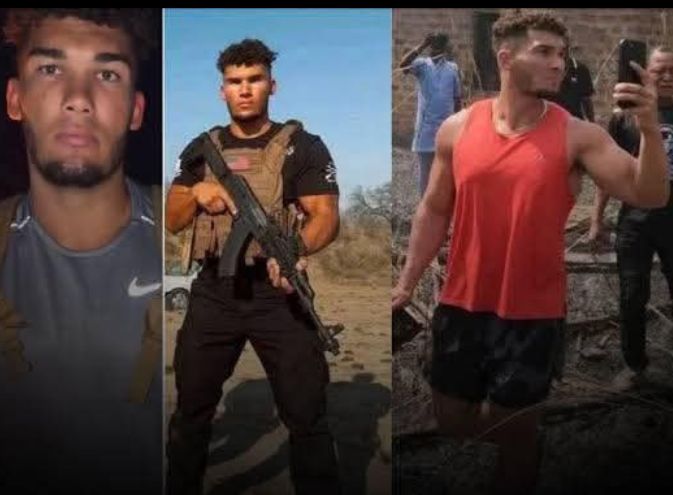
The trending claim around the killings in Plateau, suggesting that a young foreigner, Alex Barbir, represents the hidden hand fomenting crisis in Jos and the wider bloodletting across Plateau State, is an absurd narrative. Whatever one’s view of the self-proclaimed American missionary’s style, claims, or messaging, the attempt to make him a variable in the recurrence of these tragedies collapses under the simplest test: the conflicts in Plateau are older than him.
The violence in Plateau State is best understood as a system with overlapping fault-lines rather than a single religious riot storyline, but I doubt even Alex paused to take account of what led the state here before venturing out to pose as a sectional messiah. He was not born when it all began. Across Jos, across the rural periphery, and across southern Plateau, the same structural drivers keep returning. There is the indigene-settler political economy, there’s the question of who is recognised as belonging, there’s the question of who may compete for office, who receives public goods, and who is treated as a permanent indigene rather than a tolerated guest.
There is also land and livelihood struggle, particularly in rural Plateau and in the wider farmer-herder conflict. And, above all, there is what has kept the crisis going: impunity. When cycles end with mass graves and nobody is held to account, violence ceases to be exceptional and becomes a rational option for spoilers, militias, and political entrepreneurs. This is precisely why Plateau violence persists: the impunity with which the actors get away with murder.
For instance, a large part of what eventually became the Jos crisis hardened around the political geography of Jos North. The creation of Jos North Local Government Area in 1991 altered the city’s political equation and intensified indigene-settler strain. This made leadership of the local council a test of who politically owns the city. Even when elected leaders emerged from the so-called Hausa-Fulani community, perceptions of bias in appointments and indigene certification fed resentment. In 1994, the appointment of Aminu Mato as chairman of the council was interpreted by many indigene groups as the imposition of a settler by a Hausa-Fulani-aligned military power structure, and that perception helped lay the foundation for intercommunal violence. What followed was a nightmare only those who have lived in Jos can explain vividly.
That is why conspiracy talk around conflicts in Jos and beyond is misplaced. These places had already developed a self-sustaining conflict mechanism in which disputes over representation could spiral into violence because belonging and power were dangerously fused. The 2001 riots, linked to the appointment of Mukhtar Muhammad to coordinate a poverty eradication programme in Jos North to manage, despite his rejection as non-indigene by the non-Hausa-Fulani community, and the 2008 Jos North election violence, were part of that pattern, deepening segregation and mistrust.
There was also the Yelwa and Shendam crisis across the southern part of the state, which is often cast as religious violence. But its deeper roots lie in disputes over land, authority, settlement, and political control. Religion became the visible marker, not the fundamental cause. That is the Plateau State paradox. If Jos is the symbolic nerve centre, rural Plateau has long been the bloodiest theatre, where farmer-herder conflict, indigene-settler tensions, militia violence, and reprisals intersect. The killings in Dogo Nahawa in 2010, and more recent attacks across Barkin Ladi, Bokkos, Mangu, Bassa, and Riyom, show how the violence has kept mutating within a low-trust order where fear travels faster than fact.
One pattern that repeats with exhausting consistency in this theatre of deaths is violence, a commission or panel, a pause, and then another round. It’s the inaction. This cycle has persisted because justice has never been seen to be done. Communities identify attackers, report incidents, bury their dead, and still watch perpetrators walk free or never be caught at all. Of course, in such an atmosphere, vengeance becomes predictable, and violence reproduces itself. The result is not only grief but a restructuring of daily life around fear. In Jos, people learned the logic of wrong turns during a crisis. A bus entering the wrong neighbourhood, a car stopping in the wrong district, or a person bearing the wrong name in the wrong place all became matters of life and death.
So, you may save yourself a great deal of embarrassment if you do not attribute the crisis and conflict in Jos, or the wider Plateau bloodletting, to the supposed machinations represented by a boy still in his 20s. And before somebody says this is being soft on him, it is not. If you drop a match into a petrol station, you are not an innocent bystander, yes. But the harder fact is that Plateau’s petrol has been pooling for decades, long before any Alex Babir arrived, and that petrol has names.
As someone who has lived in Jos and experienced the conflict there firsthand, I can say you do not need an Alex Barbir to understand the fire we are playing with. I remember returning to Jos in 2011 after years away and realising, with shame and dread, how far the city’s divide had hardened, how neighbourhoods had become imagined no-go zones and death zones depending on who you were. I remember stopping in Christian-dominated Unguwan Rukuba to see a friend and then struggling to find a motorbike willing to take me to the neighbouring Muslim-dominated Nasarawa Gwom. Every rider I approached was visibly alarmed by the suggestion that he should cross that invisible border. In the end, I had to walk. As I drew close to the crossing point, I watched a crowd begin to gather, and it was only when I reached Nasarawa Gwom that I understood the risk I had taken, as people told me how dangerous, how reckless, it had been to dare that passage. That is the anatomy of a low-trust society. When a riot breaks out, you do not want to be caught in a district populated by people outside your religious group, and it does not matter whether the people there are your employees, your dependants, or your customers.
The point is, Alex Barbir is just a symptom, one more actor who can exploit, amplify, or dramatise a dysfunction that already existed. He would not be politically useful to anyone if there were no such dysfunction to ride. And the worst part is what these conversations are doing to us. They are helping polarisation do its dirty work. We are becoming more invested in mourning corpses that worshipped the way we did, or spoke the language we did, than in dismantling the political engine that manufactures corpses in the first place. The beneficiaries are not the victims. They are the politicians and power brokers who weaponise the binary through sectarian branding and divide-and-rule statecraft to extract sectional advantage.
Plateau needs a political solution, no doubt. But if you know this state, you also know that the habit of searching for an Alex Barbir solution—a scapegoat, a deportation, a single symbol to purge—has been part of the reason we are here. Even if you station a million security personnel in Plateau State, you are going to sleep with one eye open. Unless you fix the real problem: equal citizenship anchored in residency and rights, not ancestry; credible accountability that ends the expectation of getting away with murder; and the demolition of the incentives that make violence profitable.