
By Yusuf Abubakar Onumoh, PhD
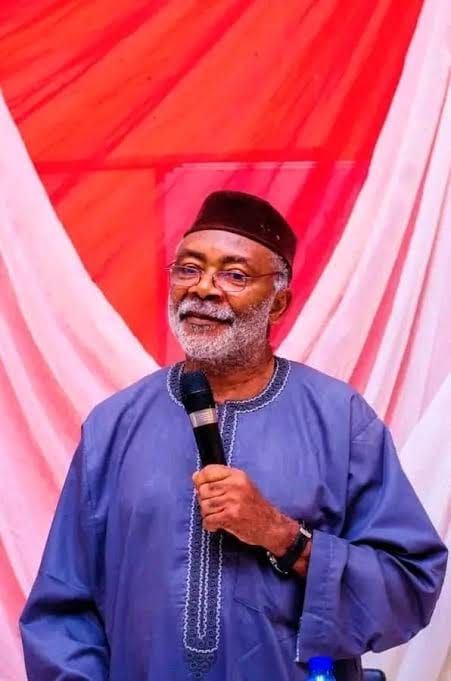
There are teachers who deliver lectures, there are scholars who disseminate knowledge, and there are exceptional intellectuals who leave indelible imprints upon the minds, characters and intellectual trajectories of generations. The latter belong to a rare category of humanity whose contributions cannot be adequately measured by academic titles, professional accomplishments or the number of years spent within the four walls of a university. They are the architects of minds, the custodians of intellectual traditions and the silent engineers of society’s enduring human capital. Professor Adejo Odoh belongs unmistakably to this distinguished fraternity.
To encounter Professor Odoh in the academic environment of Ahmadu Bello University, Zaria, was to encounter a remarkable fusion of intellectual rigour, pedagogical discipline, personal modesty and uncompromising commitment to the sacred vocation of teaching. He was not merely a lecturer by professional designation; he was a teacher by instinct, conviction and temperament. Teaching was not simply what he did for a living. It was, quite evidently, what he was born to do.
Professor Odoh represents an extraordinary example of an academic whose intellectual journey began and found its ultimate institutional expression in the same university. From his undergraduate formation to his eventual attainment of the coveted professorial distinction, Ahmadu Bello University provided the intellectual ecosystem in which his academic identity was nurtured, refined and ultimately consolidated. He is, in the truest sense, a homegrown academic product of the premier university. His story is a compelling testimony to the transformative possibilities of institutional loyalty, intellectual perseverance and an unwavering devotion to one’s calling.
Indeed, not everyone who passes through a university becomes part of its history. Some merely acquire certificates; others acquire knowledge; but a rare few become institutions within the institution. Professor Odoh belongs to the last category.
His classroom was a theatre of intellectual precision. Punctuality was not an occasional virtue but an established culture. He was hardly ever absent from his lectures without a compelling reason. He arrived ahead of schedule, prepared to exhaust his allotted time and, where circumstances permitted, generously extended his engagement by an additional fifteen minutes. His relationship with time was almost scientific. He approached every lecture with an internal timetable, assigning specific minutes to individual topics and ensuring that no important component of the syllabus was sacrificed to casual digression.
Towards the conclusion of his lectures, he would remind his students of the remaining minutes, then proceed to rewind, reiterate, reinforce and summarise the essential arguments. It was a fascinating spectacle of pedagogical choreography: disciplined, deliberate, methodical and intellectually rewarding. His classroom was not a place for academic improvisation without direction; it was a carefully regulated intellectual laboratory.
His treatment of different categories of students further demonstrated his pedagogical sophistication. Whether assigned to Diploma, Higher Diploma, undergraduate or postgraduate classes, Professor Odoh understood that effective teaching required intellectual calibration. He employed different approaches for different levels of academic maturity. He knew when to simplify, when to interrogate, when to challenge and when to demand greater intellectual independence. He was a master of differentiated instruction long before such terminology became fashionable in contemporary educational discourse.
But it was in Research Methods that one encountered the full magnificence of his intellectual craftsmanship.
Research Methods, his distinguished area of academic calling, was never a mechanical exercise in defining variables, constructing hypotheses or memorising methodological terminologies. Under his tutelage, it became an intellectually exhilarating journey into the architecture of knowledge production. He introduced students to the intricate relationships between theories, concepts, propositions, assumptions, empiricism and the persistent quest to fill identifiable gaps in existing knowledge.
He taught us that research was not an ornamental academic exercise designed merely to secure degrees or decorate professional biographies. Its fundamental essence was to identify problems, interrogate established assumptions and generate solutions to societal and human challenges. Knowledge, in his philosophy, must ultimately serve humanity.
This was the intellectual foundation upon which he built generations of researchers. His scrutiny of academic submissions was surgical. No grammatical sophistication, rhetorical flourish or intimidating vocabulary could distract him from the fundamental obligations of scholarly inquiry. He possessed an extraordinary ability to distinguish intellectual substance from linguistic ornamentation. A researcher could deploy the most elaborate vocabulary, but Professor Odoh would patiently dismantle an argument that lacked methodological coherence or empirical justification.
I recall with particular fondness an incident during my MSc defence. One of my reviewers questioned my choice of language, observing that my expression was more journalistic than conventionally academic. Professor Odoh, having examined my thesis, turned to the acknowledgement page and made an observation that has remained permanently etched in my memory. Even the seemingly innocent acknowledgement, he remarked, had not been spared my jaw-dropping grammar!
His advice was characteristically profound. He encouraged me to moderate my linguistic exuberance in the interest of accessibility and public comprehension, reminding me that an approved research document eventually becomes a public document. It was a small intervention, but it revealed the extraordinary attention he paid to detail. He understood that academic excellence is not necessarily synonymous with linguistic complexity. The true test of scholarship is the ability to communicate difficult ideas with clarity, precision and intellectual honesty.
His uncompromising disposition during internal and external academic defences further reinforced his reputation as an authority in the field. Whether examining a post-field submission or participating in a formal postgraduate defence chaired by an external examiner, he approached the task with the intellectual confidence of a scholar who understood the terrain thoroughly. He was neither intimidated by elaborate submissions nor seduced by rhetorical gymnastics. His verdicts were guided by evidence, methodological consistency and academic merit.
Beyond the classroom, Professor Odoh was also an articulate advocate of guided autonomy for local governments, the third tier of Nigeria’s governmental architecture. His intellectual engagement with local government administration and development studies reflected his conviction that grassroots governance must possess sufficient institutional capacity and operational independence to respond effectively to the needs of ordinary citizens. He was an asset to the Department of Local Government and Development Studies and, by extension, to the wider Ahmadu Bello University community.
His personal story is equally instructive. Despite reportedly receiving repeated employment opportunities at the Federal Ministry of Foreign Affairs following graduation, he remained steadfast in his preference for the academic profession. The attraction of teaching, mentoring and producing responsible citizens proved stronger than the allure of alternative career pathways. He chose the chalkboard over the corridors of diplomatic bureaucracy, and history has every reason to celebrate that decision.
He was also the first person to attain professorial distinction in his village, an accomplishment that transcended individual achievement and became a source of collective pride. For Kogi State, particularly the intellectual community from which he emerged, Professor Odoh represents a compelling demonstration that excellence need not be imported to be internationally respectable. It can be cultivated at home, nurtured through discipline and sustained by institutional commitment.
There was, moreover, something unmistakably endearing about his attachment to his identity. Whenever a student inadvertently substituted ‘Udoh’ for ‘Odoh’, he would promptly correct the error, proudly identifying himself as an Igala son of Kogi State rather than someone of Calabar extraction. Even in such seemingly ordinary exchanges, one encountered a man conscious of his heritage and unwilling to surrender the accuracy of his identity to careless assumptions.
When, towards the end of 2022, news emerged of his impending retirement at the glorious age of seventy, I experienced a personal sense of urgency. I immediately obtained the application form for my PhD programme, conscious that the opportunity to benefit from his intellectual fountainhead was becoming increasingly limited. From my undergraduate years through postgraduate studies, I remained an unapologetic student of this academic colossus. I considered it an intellectual privilege that should not be allowed to expire without further engagement.
His retirement, therefore, was not merely the conclusion of a professional chapter. It was the departure of a distinguished generation of academic craftsmen whose understanding of teaching was anchored in discipline, intellectual responsibility and the moral obligation to reproduce excellence.
Professor Adejo Odoh is patient, calm, decisive, firm and uncompromising where academic standards are concerned. He is a no-nonsense elder statesman of the chalkboard, a generalissimo of the lecture theatre and an Amazon of research methodology. His greatness, however, is not simply in what he knows, but in the extraordinary seriousness with which he transfers that knowledge to others.
As the Qur’an reminds us in Surah Al-Mujadilah (58:11), Allah elevates those who believe and those endowed with knowledge to — exalted ranks.
Professor Odoh’s legacy is a living illustration of the enduring nobility of knowledge and its transformative power.
Ultimately, universities are remembered not merely by their imposing edifices, elaborate libraries or institutional rankings, but by the quality of minds they produce and the teachers who make such intellectual transformation possible. Ahmadu Bello University has every reason to celebrate Professor Adejo Odoh. Kogi State has every reason to claim him with pride. His former students have every reason to remain grateful.
And I, as one of those fortunate beneficiaries of his intellectual generosity, can only say that some lecturers teach you courses, some teach you how to pass examinations, but a very rare few teach you how to think, how to question, how to investigate and how to distinguish knowledge from its pretensions.
Professor Adejo Odoh did all these and much more.
His chalk may have been retired, but the intellectual inscriptions it left upon generations of students remain indelible. His classroom may have released him, but his ideas continue to occupy the minds of those fortunate enough to have passed through his tutelage.
He is not simply a retired professor. He is an enduring academic institution, a distinguished ambassador of the ABU intellectual tradition and a worthy testament to the proposition that the noblest monument a teacher can erect is not built with concrete, steel or marble, but with minds that continue to illuminate the world long after the teacher has left the classroom.
Long live Professor Adejo Odoh, the quintessential scholar, the chalkboard generalissimo and the architect of intellectual destinies.
Your students may graduate, your lectures may conclude, and your official service may have ended, but the harvest of your intellectual labour shall continue to multiply across generations.
Yusuf Abubakar Onumoh is a Policy and Development Practitioner, Diplomatic Researcher, Logic Consultant and Public Affairs Enthusiast