
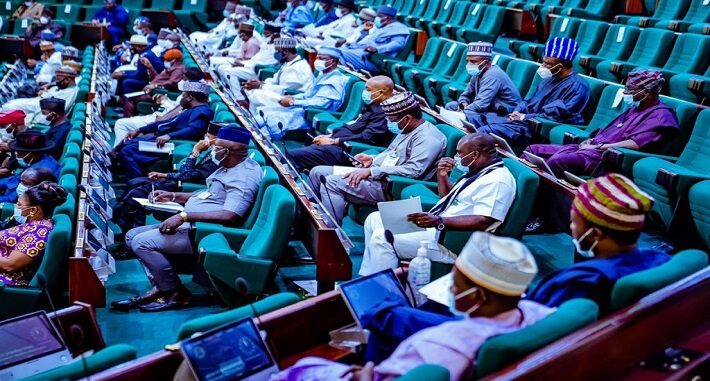
The House of Representatives has tasked university teaching hospitals and allied institutions to prioritise research to protect Nigeria against sudden disease outbreaks.
The chairman of the House Committee on Health Institutions, Patrick Umoh (APC-Akwa Ibom), at the 2026 budget defence session on Tuesday in Abuja, said many teaching hospitals had abandoned their research mandate and were operating mainly as general hospitals.
He criticised some chief medical directors for allocating less than one per cent of their budgets to research.
“Teaching hospitals are centres of research, yet you never raise funding concerns. You talk only about infrastructure. That makes you part of the problem,” Mr Umoh said.
He recalled that the COVID-19 pandemic exposed weak preparedness, adding, “Traditional medicine practitioners appeared to be doing better. You are not doing research.
“I have conducted oversight visits, but no hospital has shown me a facility and said, ‘This is our research centre.’”
Responding, the committee secretary and Jos University Teaching Hospital (JUTH) CMD, Pokop Bupwatda, said the one per cent research allocation had long been the norm.
He explained that research budget lines were often removed during the budgeting process for teaching hospitals.
Mr Bupwatda urged increased funding for the health sector to enable manpower recruitment and improved welfare to curb the ongoing “japa syndrome.”
He said many federal hospitals were critically understaffed, particularly with medical doctors.
“Even when recruitment approvals are granted, very few doctors apply,” Mr Bupwatda said.
Despite challenges, he said that existing personnel continued to deliver quality healthcare and deserved national support and commendation.
Mr Bupwatda said public discourse focused excessively on shortcomings, ignoring progress that had attracted foreigners to Nigeria’s health sector.
He disclosed that in 2025, only 30 per cent of budgeted allocations to federal tertiary health institutions were released.
The lawmaker identified power supply as a major challenge, with hospitals spending heavily on electricity and generator costs.
According to him, hospitals operate under Band A electricity tariffs, worsening financial strain.
Mr Bupwatda welcomed plans for solar mini-grids for teaching hospitals and federal medical centres.
He appealed for takeoff grants for seven newly established federal health institutions to enable the effective commencement of operations.
(NAN)