
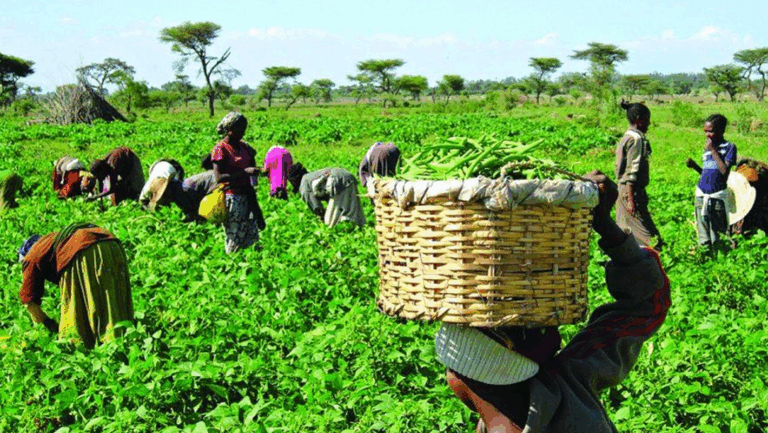
Chua Abbey, the All Farmers Association of Nigeria’s secretary in Rivers, has called on the federal government to collaborate with local farmers in the state to enhance food sufficiency.
Ms Abbey made the appeal in an interview on Thursday in Port Harcourt.
She attributed the food shortage in the state to poor road infrastructure, herdsmen invasion, and lack of government incentives, urging the government to address these issues to enhance agricultural productivity.
According to her, the lack of access roads in most farm settlements around the state makes it difficult for farmers to transport harvested produce to sales points.
“This year’s theme for World Food Day, ‘Hand in Hand for Better Foods and a Better Future’, emphasised the need for stakeholders’ collaboration toward tackling food shortage. We celebrated World Food Day; yet, there is food insufficiency here in Rivers,” said Ms Abbey. “That is why we are urging the Federal and State Governments to collaborate with the local farmers to tackle this challenge.’’
Ms Abbey said that already, on October 1, the national president of AFAN, Faruk Mudi, had inaugurated a digital identification platform for Rivers farmers. She expressed the farmers’ hope for a robust synergy with government at all levels moving forward, but added that the speculated Federal Government support for farmers had yet to reach the state AFAN members.
Ms Abbey urged members to remain calm as Mr Mudi had set a new pace, collaborating with the agriculture minister to ensure that farmers were no longer shortchanged by non-actors.
Ms Abbey noted that at the grassroots level, AFAN was also collaborating with the directors of agriculture across the 23 LGAs in a bid to ensure land availability for mechanised agriculture.
She further said that the agriculture ministry had disclosed that at least 40 tractors had been assigned to the farmers.
On the challenges of the flood in the state, Abbey noted that farmers had started counting their losses, especially in the Gokhana, Khana, and Eleme areas that were badly hit.
She noted that the impact had further raised concerns about a possible increase in prices of staple foodstuffs, especially garri, maize, yams, and plantain, amongst others.
(NAN)